
Unbiased headlines. Facts, not spin.
Every story is an unbiased news briefing written from 110+ sources across the spectrum — sources linked so you can verify it yourself.
 tech
Major Story (7/10)
Event date: September 10, 2026
tech
Major Story (7/10)
Event date: September 10, 2026
25 Fields Medalists Warn of 'Severe Misalignment' as Credit Dispute Erupts Over AI's Navier-Stokes Proof
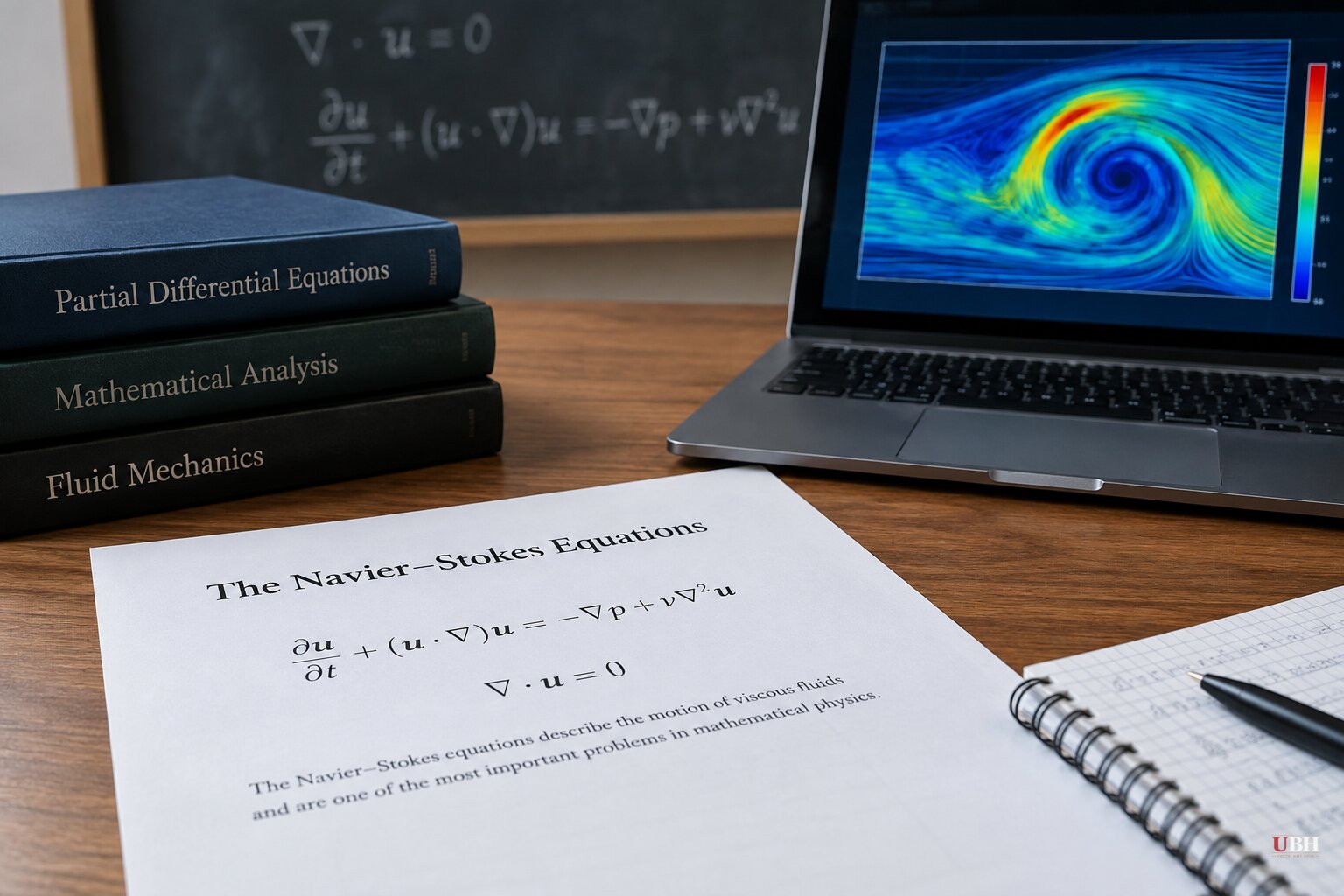
Since OpenAI announced on September 8 that an internal AI system had resolved one of math's six remaining Millennium Prize Problems, the field has been arguing about credit, safety, and whether any of it can be trusted yet.
A Proof, and a Fight Over Who Gets Credit
OpenAI said 10,000 autonomous AI agents, running on a model not available to the public, found a "singularity" in the three-dimensional Navier-Stokes equations, according to Quanta Magazine. The result was checked in the formal verification language Lean, which gives mathematicians some confidence it holds up. The Clay Mathematics Institute, which posted the $1 million prize in 2000, said on September 11 the problem had "apparently" been settled, but stressed its formal evaluation process will be deliberate and unhurried, according to reporting compiled by Vagelis Plevris.
The announcement did not land cleanly. Twelve hours before OpenAI's announcement, NYU mathematician Tristan Buckmaster and Anthropic researcher Levent Alpöge said they had resolved closely related problems using a mix of AI models, according to Quanta. Both teams built on groundwork laid by Diego Córdoba of Spain's Institute for Mathematical Sciences and Luis Martínez-Zoroa of CUNEF University.
Buckmaster has since accused OpenAI of rushing its announcement after learning of his and Alpöge's work, and of trying to influence how credit for the underlying breakthrough would be assigned, according to Wired. OpenAI has not publicly addressed those specific allegations in the reporting reviewed here. The overlapping timing cuts both ways: it could support Buckmaster's account of a company racing to get ahead of a rival result, or it could reflect two teams independently converging on the same recently-published mathematical strategy. No independent adjudication of the dispute has been reported.
25 Medal Winners Sound the Alarm
On September 14, Fields Medalist Alessio Figalli and 24 other Fields Medal winners published a declaration warning of a "severe misalignment" between the goals of AI companies and the goals of mathematics itself, according to Plevris's reporting and confirmed by ETH Zurich's interview with Figalli. The declaration's full list of concerns wasn't detailed in available reporting, but Figalli told ETH Zurich his own worry isn't that AI will replace mathematicians. It's what happens to math education when tools can produce proofs faster than students can learn to reason through them.
Figalli also pushed back on the comparison some have drawn between AI and the microscope. "AI does not make previously invisible phenomena observable for researchers to interpret," he said. "Its main contribution is to accelerate the production of results." He said the Navier-Stokes result didn't surprise him, since researchers had been closing in on it for years and AI likely just compressed the timeline.
A Fields Medalist Chooses OpenAI
The clearest sign of how fast the ground is shifting: Jacob Tsimerman won a Fields Medal at the International Congress of Mathematicians in Philadelphia in late July, and within hours announced he was leaving theoretical mathematics to join OpenAI's safety team, according to Coda Story. Tsimerman has written extensively about what he calls "omnicidal futures involving artificial intelligence." One mathematics professor, speaking to Coda anonymously, called the move "a dick move." Neither Tsimerman nor OpenAI responded to Coda's request for comment.
The Reaction Inside the Field
Cornell's Steven Strogatz, who is publishing a book on the subject in November, told Wired he cried discussing the pace of AI breakthroughs this year. He said 2026 will be remembered as either "an annus mirabilis or annus horribilis for mathematics." His collaborator Alex Townsend told Wired he used ChatGPT to crack a decades-old numerical linear algebra problem, and described feeling "kind of upset" that his peak research skill, after 15 years, has been surpassed.
Cambridge's Tim Gowers, who helped verify one of OpenAI's earlier proofs, wrote that even if the AI models stall out here, mathematicians have "probably entered an era where it will become very difficult for humans to compete with AI at solving mathematical problems," according to Coda Story. Joshua Grochow of the University of Colorado Boulder pushed back on how AI labs are marketing this. "The AI companies' PR pitch is essentially to say, 'Look, we have solved math, the intellectually hardest thing ever, therefore we can solve everything,'" he told Coda, while acknowledging the models are producing genuinely new math, not just recycled results.
Not every mathematician sees a crisis. Miek Messerschmidt of the University of the Witwatersrand told Coda that Anthropic's Claude solved a problem that had stumped him within 30 minutes. "I was relieved, because I didn't have to go down this dead end any more," he said, though he added he was also "disconcerted."
What's Still Unresolved
The Clay Mathematics Institute's formal review of the Navier-Stokes proof has no announced timeline, and until it's certified, the Millennium Prize money hasn't been paid out. Buckmaster's credit allegations against OpenAI remain unadjudicated by any outside body. The full text of the 25 Fields Medalists' declaration, beyond the phrase "severe misalignment," has not been made public in the reporting available. Whether that document produces any actual policy change at OpenAI, Anthropic, or the Clay Institute is the open question the field is now sitting with.
Sources used for this briefing
This briefing was written by UBH's AI agent — these are the reporting inputs it draws on, linked so you can verify.


