
Unbiased headlines. Facts, not spin.
Unbiased Headlines is an independently owned news organization. We bring you the facts, not opinions, written fresh from 110+ named sources. Sources linked so you can verify it yourself.
 tech
Notable (6/10)
Event date: October 28, 2026 ·
Quilty Space Projects 150-Launch Shortfall Through 2030 as SpaceX Winds Down Falcon 9
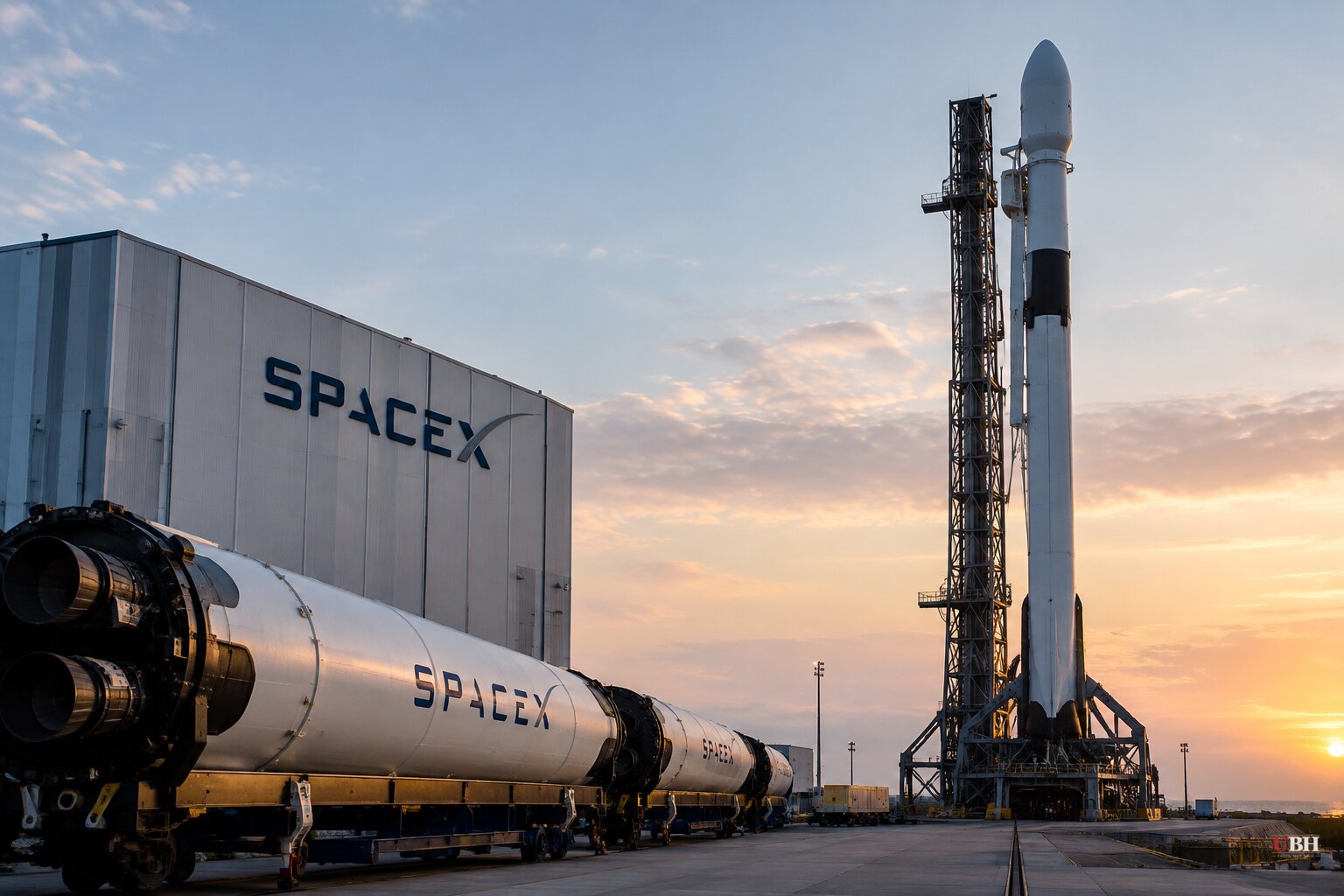
A new report from Quilty Space puts a number on a problem the launch industry has been muttering about all year: roughly 150 missing launches through 2030.
The firm says that is the gap between what satellite operators and civil space agencies want to fly and what rockets are available to carry them, outside China. Add U.S. military demand, and if SpaceX does not extend Falcon 9 and Falcon Heavy to cover it, the shortage could double, according to the report as described by Quilty's director of research, Caleb Henry.
"The launch crisis is more severe than we thought and it will not go away this decade for sure, and it might not abate until sometime late in the 2030s," Henry said.
Where the shortfall sits
Quilty's breakdown, as published, is 113 missing launches from established providers, 12 from emerging providers and 25 rideshare missions. Quilty calls 2028 the most acute year, with slow improvement afterward.
The firm lists several causes. Russian rockets are off the Western market because of the war in Ukraine. Amazon Leo is soaking up capacity. New vehicles, including New Glenn, Vulcan, Neutron, Terran R and Nova, have run late. The most recent factor is the retirement of Falcon 9 as a commercial service.
Demand is rising at the same time. Quilty's forecast, as relayed in industry analysis, is nearly 41,000 satellites between 2026 and 2034.
Henry was blunt about what operators should do. "If you haven't booked your launch already, and you need one, you're late."
SpaceX's pivot
Falcon 9 is the reason the market looks the way it does. SpaceX flew it more than 160 times in 2025. It accounted for 85% of U.S. launches that year and more than half of the nearly 330 spaceflights to low Earth orbit worldwide.
SpaceX is now shifting resources to Starship. Reports surfaced in July that the company was turning away prospective Falcon 9 customers. Space Scout reports that SpaceX is no longer allowing Falcon 9 flights to be booked beyond the end of 2028, and that the last Falcon 9 Starlink launch could come as soon as the end of this year.
Part of the logic is physical space. A new Starship pad is being built at Launch Complex 39A in Florida, and Crew Dragon and all non-Heavy Falcon launches have been moved off that complex. A second Starship pad is planned at LC-37. SpaceX has not publicly laid out a Falcon retirement schedule, and it did not respond to a request for comment on the Space Force's difficulties.
Kathleen Curlee, a senior research analyst at Georgetown's Center for Security and Emerging Technology, said she saw the decision coming. "I'm more surprised that people are so shocked this is happening," she said. In her view SpaceX needs to pivot to Starship, even if that means retiring the Falcon family, and Starlink revenue has bolstered the company's finances more than Falcon 9 has.
Starship is not yet a replacement
The catch is that Starship is not built to take over Falcon's customers today. Quilty's report states that "SpaceX has also stopped affirming Starship as a commercial launcher."
Starship's payload door is designed around Starlink satellites, which are wide and flat and slide out one at a time like a PEZ dispenser. Ars Technica reported this week that there is no evidence SpaceX is developing a conventional payload fairing door, and some customers do not expect one soon. Telesat CEO Dan Goldberg was asked on an earnings call last Thursday which rocket the company's future satellites might use.
Maturity is also an issue. A Falcon 9 booster can fly more than 30 missions. Super Heavy boosters reused so far have flown only twice each, and the Version 3 booster has yet to be recovered or reflown, according to Space Scout.
The Pentagon problem
The national security side is where the shortage turns into a government problem. Space Force contracts on Falcon 9 run through 2028, but Politico reported that SpaceX has so far rebuffed efforts to secure launches after that.
Business Insider, citing two people familiar with the missions, reported that the Space Force recently tried to book rides for three future satellite missions under the National Security Space Launch program. SpaceX declined, and no other company offered to take them. Two of the missions were for the Space Development Agency.
A former Space Force official, speaking anonymously, put it this way: "Everybody's having problems, so the Space Force is freaking out a little bit about launch."
The service's own account is calmer. Brig. Gen. Eric Zarybnisky, acting portfolio acquisition executive for space access, said: "I wouldn't say there [are] missions I'm worried about being able to fly; I would say we're working through the right way to support those customers." He acknowledged that "temporarily, there are some things we'll need to work through, again, as we get new providers flying."
Many military satellites were not designed to fit inside Starship, per Business Insider.
Industry warnings
Mojtaba Akhavan-Tafti, a space scientist writing in The Conversation, argues that retiring Falcon 9 "threatens to suffocate the commercial space industry that it helped bring to life," unless the public and private sectors step up to fill the gap. Curlee's broader point is that anyone relying on a single commercial launch provider is "at their whims."
That is a taxpayer issue as much as a tech one. The government spent years building its launch architecture around one company's rocket, and the second source it was counting on, from Vulcan to New Glenn, has not arrived on schedule. Whether SpaceX extends Falcon 9 and Falcon Heavy availability for national security missions is the open variable Quilty says could most change its numbers. SpaceX has not said whether it will.
Sources used for this briefing
7 links from 7 independent newsrooms (syndicated copies of the same report count once)
These are the sources it draws on, linked so you can verify.


