
Unbiased headlines. Facts, not spin.
Unbiased Headlines is an independently owned news organization. We bring you the facts, not opinions, written fresh from 110+ named sources. Sources linked so you can verify it yourself.
 tech
Major Story (8/10)
Event date: November 3, 2026 ·
New Mexico Judge Orders Meta to Pay $25 Billion for Misleading Privacy Statements After Cambridge Analytica
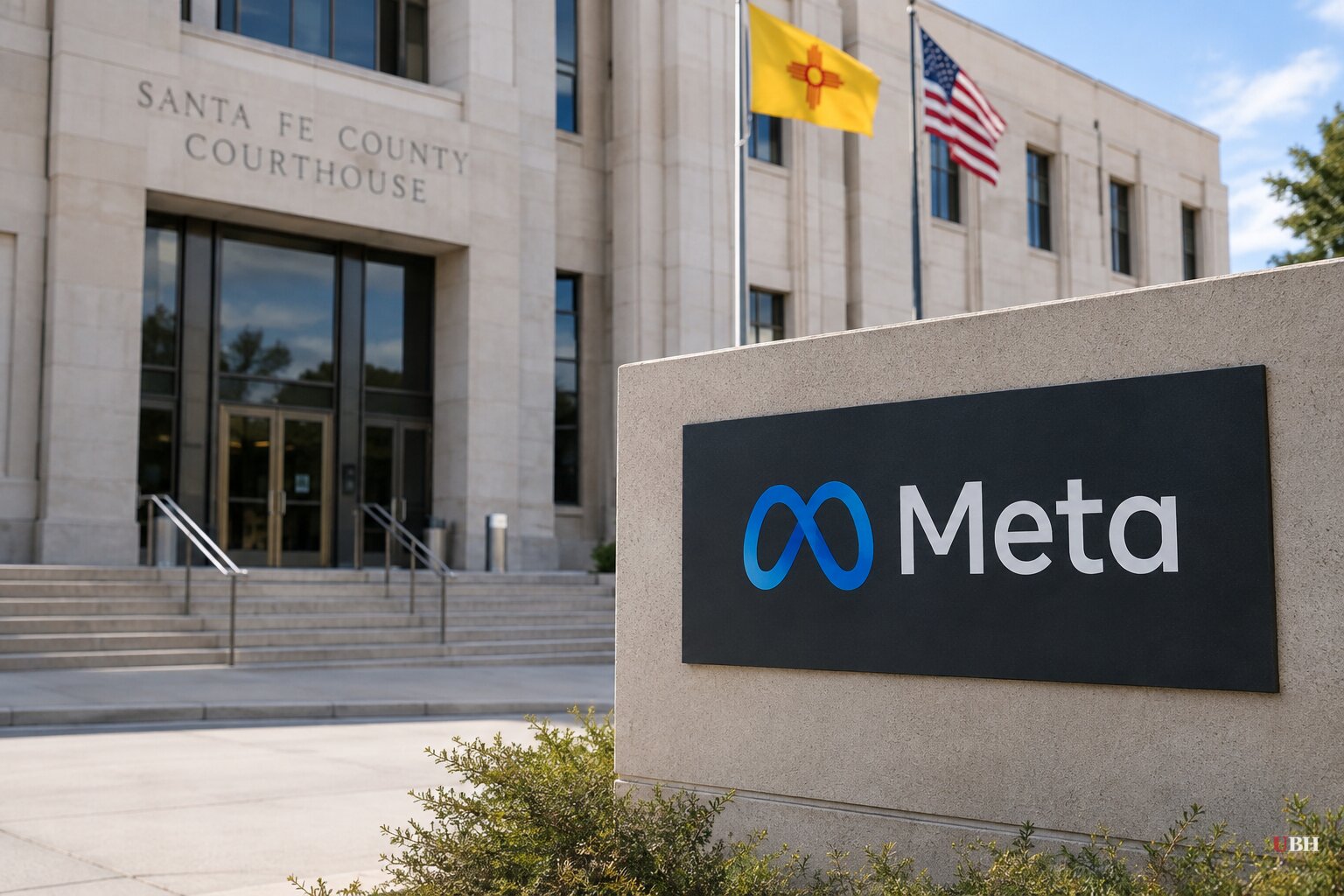
A New Mexico state judge has ordered Meta to pay $25 billion in civil penalties over misleading statements Facebook made about user privacy after the Cambridge Analytica scandal. It is the largest penalty yet imposed on the owner of Facebook and Instagram.
Judge Francis Mathew of the state district court in Santa Fe set the amount. The order is subject to appeal.
How the number was reached
The case went to a jury first. On September 25, jurors found that 26 of 29 public statements by Facebook and its leadership were misleading. Those statements covered the company's response to the Cambridge Analytica breach and its handling of hate speech and misinformation. The jury also found Meta violated New Mexico's Unfair Practices Act more than 43 million times.
The jury decided liability and the violation count. The judge alone set the penalty.
The statutory maximum is $5,000 per violation, which works out to about $219 billion. Mathew found that the maximum was justified, then reduced the amount Meta must pay to $25 billion. In his written order he cited "the involvement of senior Facebook leadership" and the "clear intentional and systematic nature of Facebook's repeated misstatements." He wrote that the wrongdoing went "to the heart of Facebook's core business practices."
The state had asked for between $35 billion and $40 billion.
Meta's position
Meta argued the penalty should be capped at $3.45 billion and that anything far higher would breach its constitutional right to due process. Its trial lawyer, Matt Nicholson, told the court a figure as high as $40 billion would be "shocking to the conscience."
Meta also argued at trial that it does not sell user data, that the state had not shown any consumer was actually misled, and that counting one violation for every New Mexican reached by each statement was unprecedented. After the September verdict, spokesman Alex Burgos said: "We disagree with the verdict and will continue to defend ourselves against efforts to distort our record." Meta has said it will appeal. It did not immediately respond to a request for comment on the $25 billion figure. Meta also argues the case "seeks to impose a tax on speech to enforce new rules for what people can say online."
The gap between the two sides is huge: Meta wanted a cap of $3.45 billion, and the judge ordered $25 billion.
What the state says
New Mexico Attorney General Raúl Torrez called the award "one of the largest, if not the single largest state verdict against a company in American history."
"This judgement should be a signal, an unambiguous message, to Silicon Valley," Torrez said.
Under the New Mexico constitution, consumer-protection penalties go to education spending. "We may have paid for the construction of schools for the next 100 years," Torrez said. He acknowledged the money would be tied up if Meta appeals as expected.
Interest accrues on the penalty during any appeal. CNBC put the rate at 15% a year under the terms of the filing.
Context: other Meta bills
The sum dwarfs the $5 billion Meta paid the Federal Trade Commission in 2020 over the same data scandal. It also exceeds the multistate child-safety settlement of up to $18 billion that Meta agreed to in August.
That August deal, which New Mexico stayed out of, included $459.3 million to settle Cambridge Analytica-related claims held by participating states. The attorneys general who signed agreed, to the extent of their authority, to "fully, finally, and forever" release Meta from "any and all Claims, whether known or unknown, whether accrued or unaccrued."
What the penalty does not cover
The New Mexico penalty punishes what Facebook told the public. It does not punish how the harvested data was used.
Emma L. Briant, a University of Notre Dame political communication scholar, makes that point in an essay for The Conversation. Briant says her research helped expose the scandal through The Guardian's reporting on whistleblower accounts. She argues that Facebook has been penalized for misleading users and regulators, but "has largely escaped accountability for the underlying political exploitation of that data."
The alleged harms include exploiting psychological vulnerabilities, targeting people's fears and discouraging them from voting. Those are allegations. The New Mexico case penalized the misleading statements, not those harms.
Briant points to gaps in earlier investigations. The Senate Intelligence Committee's final report on 2016 Russian interference said it "was unable to obtain the corporate communications of Cambridge Analytica or its parent company SCL Group, which had already been seized by U.K. authorities."
The U.K. Information Commissioner's Office, which took possession of Cambridge Analytica's servers, told Briant in response to her 2021 Freedom of Information request that Senate committee staff made initial inquiries but appear not to have followed up with a formal request. "So no information sharing has taken place," the office said.
Briant adds that U.K. investigations into Cambridge Analytica's use of personal data to influence voting focused on the Brexit referendum, not U.S. events.
She also cites a 2020 documentary she advised, "People You May Know," which raised questions about Cambridge Analytica's work with Gloo, an app marketed to American churches. Briant says that app used psychographic profiling derived from Facebook data.
The judge ruled that Facebook knew its own processes for investigating whether apps misused personal data were inadequate and that it could not enforce deletion of the data. The judge also concluded the company failed to notify users about thousands of applications associated with data misuse.
What comes next
A state court gave a state attorney general a record award over corporate speech, and the biggest legal fight is still ahead. The appeal will test whether a $25 billion penalty, set well below the roughly $219 billion statutory maximum but far above the $3.45 billion cap Meta proposed, survives a due process challenge.
If the award stands, the money is earmarked for New Mexico education. How long it takes to get there, and how much interest builds meanwhile, depends on that appeal.
Sources used for this briefing
7 links from 7 independent newsrooms (syndicated copies of the same report count once)
These are the sources it draws on, linked so you can verify.


