
Unbiased headlines. Facts, not spin.
Unbiased Headlines is an independently owned news organization. We bring you the facts, not opinions, written fresh from 110+ named sources. Sources linked so you can verify it yourself.
 tech
Major Story (8/10)
Hinojosa Promises Data Center Ban Until Legislature Acts, With Abbott's Own Freeze Already in Place
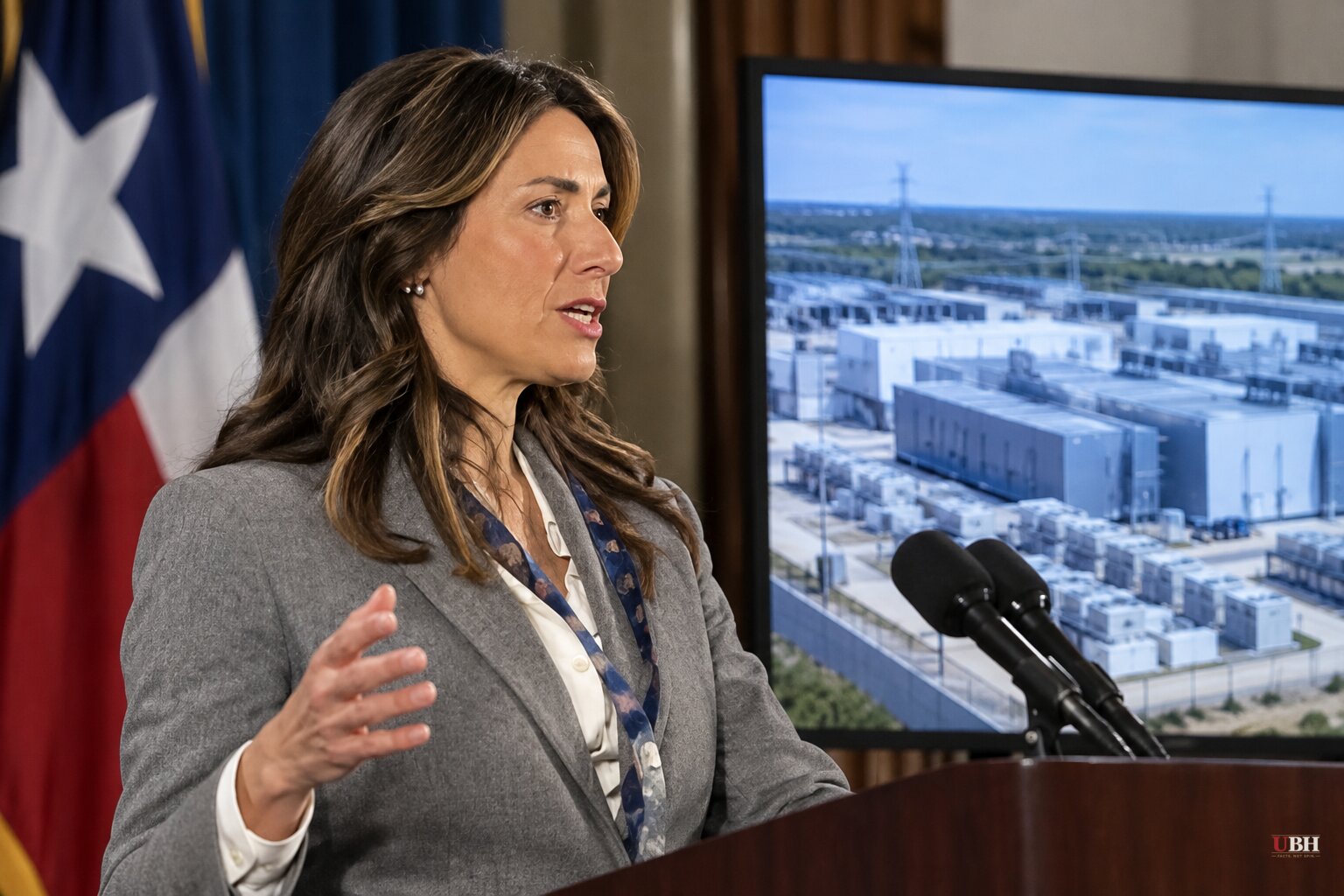
Since Gina Hinojosa defeated Gov. Greg Abbott on Tuesday, Nov. 3, the open question in Texas has moved from who won to what she can actually do about data centers.
She made a promise on the campaign trail. In an Oct. 22 video on X, Hinojosa said: "When I am governor I will issue a moratorium — a ban — on all data center approvals until laws can be passed by the Legislature to protect Texans." She takes office Jan. 19.
Abbott's freeze comes first
Abbott has his own pause in place. Starting in August, he began issuing pauses on data center approvals at the state grid and then at the environmental permitting agency so information about the facilities could be audited and collected. The audit by grid regulators and operators was expected to last until December.
Abbott also demanded that officials collect information on tax incentives and water use, whether data centers were bringing their own power or water supplies, and whether they were taking measures to reduce light and noise pollution for neighbors. He has demanded that data centers pay for their own electrical infrastructure, a process state regulators are still working out.
That is a sharp turn. Last year Abbott said he wanted Texas to be the "epicenter of AI development." Hinojosa called his pause an "election year pause."
The pause has also had gaps. In October, environmental and community advocates identified some data center-related environmental permits they said had been approved anyway despite Abbott's pause, forcing the permitting agency to shut down its online filing system.
What she can and can't do alone
The moratorium Hinojosa described would last until the Legislature meets in January and passes what she calls "real protections so Texans can have a seat at the table." The Texas Tribune reports approvals could stay paused until lawmakers act next year if she keeps her campaign promises.
Her legislative list includes requiring data center operators to hire union workers, protecting community water supplies, and barring nondisclosure agreements that make it harder for the public to track projects. She also wants data centers to pay sales tax on the electricity they use. She told the outlet ENOUGH the current exemption costs Texas more than $1 billion a year.
That list needs votes. Yahoo Finance reports Democrats are on track to take control of the Texas House, while the state Senate appears set to remain under Republican control. PBS, citing the AP, notes that Hinojosa's victory gives Democrats a potent veto pen, but the extent of her power will be tested in a statehouse where Republicans still have a majority.
Hinojosa's record on the subject is not clean. In 2023 she voted for House Bill 3104, which would have expanded tax exemptions for larger data center projects. It failed in the Senate. She told ENOUGH the vote was about letting union contractors benefit, saying "If anybody's getting a tax break, it should go to subsidize Texas jobs."
She has also said Texans should not pay more for electricity because of data centers. Abbott has said the same.
The market read
Wall Street had flagged this race in advance. Wells Fargo's chief equity strategist, Ohsung Kwon, wrote this week that a Democratic win could be "a left-tail event to the AI trade." Raymond James's Ed Mills wrote in a pre-election note that a strong Democratic showing in Texas "could signal a broader electoral wave while increasing concerns about data center moratoriums and more restrictive AI regulation in the nation's largest planned data center development."
After Wednesday's open, shares of SpaceX were down 4% and Tesla down 5%, according to CNBC. CoreWeave and Iren each fell 4% in morning trading. Musk spent at least $474 million on the midterms, including $224 million in Texas, and posted on X early Wednesday: "Data centers in space looking pretty appealing right now."
The picture was not uniform. Alphabet rose 3%, Amazon 7%, Meta 2% and Microsoft 5.5% in the same morning trading. Oracle gained 2%.
Dan Ives, partner at Yorkville Ives & Co., took the dimmer view in a Wednesday note: "There is no way to sugarcoat that Democrats taking control especially over the Senate will create some major hurdles for AI and tech legislation in the Beltway over the next 2 years." He called the Texas election the "biggest worry" of the night for tech investors, since around 25%-30% of data center gigawatts and capacity will come from there. Wells Fargo puts the Texas share of planned data center gigawatts at 27%.
The backdrop was already shaky. The Nasdaq-100 fell into correction territory to end October on concerns that the growth of data center spending by the big hyperscalers and by OpenAI and Anthropic was slowing.
Beyond Texas
Texas was not the only signal. Voters across the country passed local ballot measures aimed at restricting construction. In Ohio alone, voters in at least 14 municipalities passed bans or other restrictions. Democrats also won or retained governorships in data center states Georgia, Pennsylvania and Ohio, according to CNBC.
Hinojosa frames the issue as a trade-off she says does not have to be one. "We can have economic development and we can have protections for Texans," she told Politico in September. "These things are not mutually exclusive."
Money questions
Her fiscal agenda also needs lawmakers. She wants a one-time $1,500 refund to every Texas household, funded from the Rainy Day Fund, which she says holds about $27 billion. She would keep roughly $10 billion in reserve and return $17 billion. The checks require a bill from the Legislature.
The near-term test is the December audit. Abbott's freeze is in place while it runs, and Hinojosa has called for an immediate moratorium on new data centers, with the changes she describes requiring action from lawmakers.
Sources used for this briefing
7 links from 6 independent newsrooms (syndicated copies of the same report count once)
These are the sources it draws on, linked so you can verify.


