
Unbiased headlines. Facts, not spin.
Unbiased Headlines is an independently owned news organization. We bring you the facts, not opinions, written fresh from 110+ named sources. Sources linked so you can verify it yourself.
 tech
Major Story (7/10)
Event date: October 31, 2026 ·
Corning Optical Sales Jump 44% to $2.38 Billion as TrendForce Forecasts Fiber Shortage Through 2028
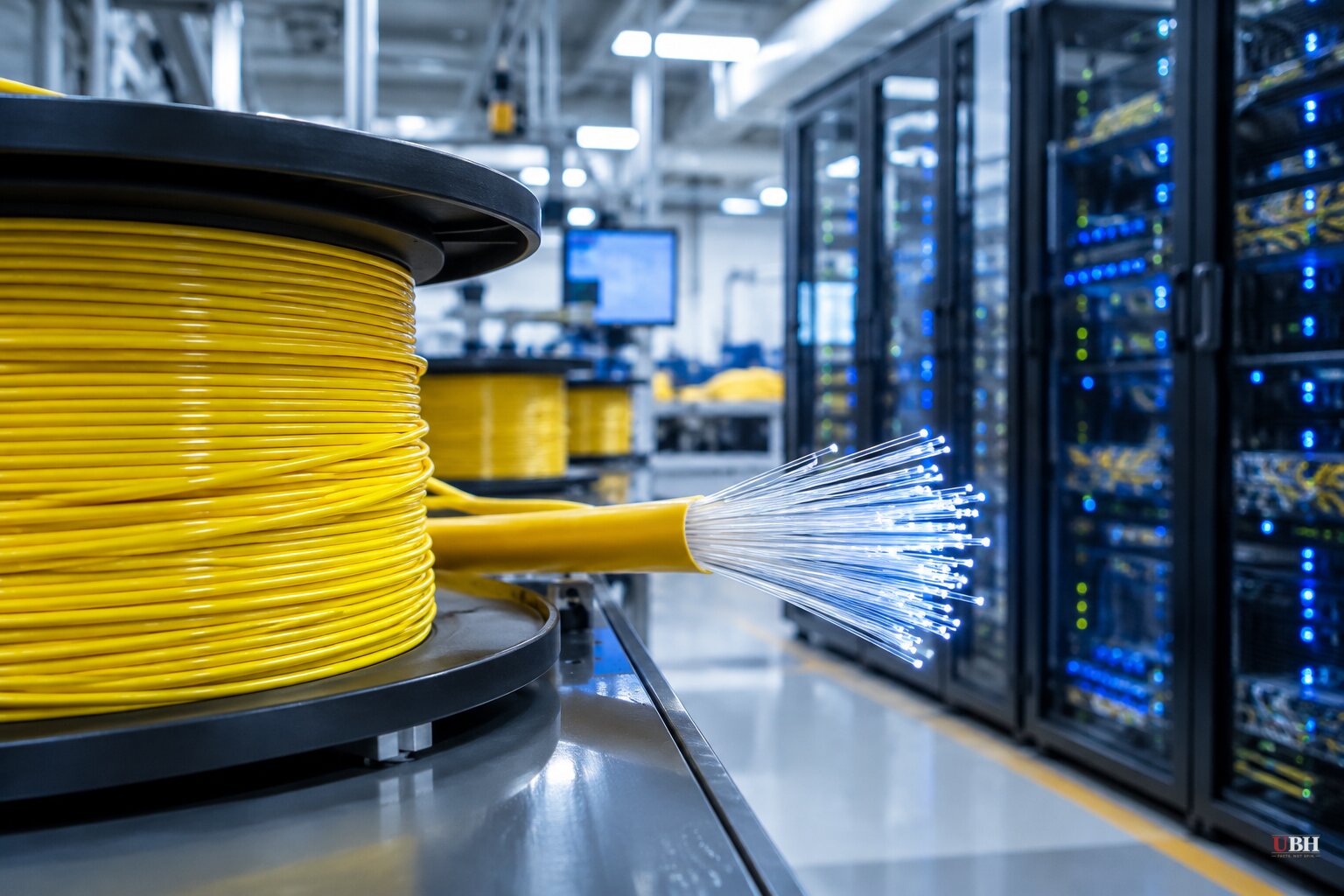
The AI boom is eating fiber faster than the industry can draw it.
Corning's Optical Communications segment reported third-quarter sales of $2.38 billion, up 44% from a year earlier, with net income up 80%, according to the company's results. The company reported in late October. Total core sales hit $5.08 billion, up 19%, and core earnings per share came in at $0.91, ahead of consensus estimates.
What Corning is reporting
Enterprise networks, the part of the optical business tied to data centers, jumped 84%. Corning guided fourth-quarter core sales to $5.2 billion to $5.3 billion and core EPS to $0.96 to $1.00.
Management is aiming for $30 billion in annualized sales by the end of 2028 and $40 billion by the end of 2030. Those are company targets, not results.
CEO Wendell Weeks told investors on the third-quarter call that fiber-to-the-home and data center interconnect are two of the company's largest opportunities. "We're very well positioned for that," he said of carrier deployments.
Corning is also adding capacity. It is investing $585 million to expand manufacturing in North Carolina, and it has started making optical connectivity products in Pune, India, with a larger adjacent plant planned for 2027.
The shortage
Research firm TrendForce, in a forecast published Monday, projects a global fiber shortfall of 180 million fiber-kilometers in 2026 against expected consumption of 577 million. It says shortages could last until at least 2028.
The tightness is visible in the operating numbers TrendForce cites. Industry capacity utilization has climbed to 92%. Inventories have dropped from four months of supply in 2024 to about one month. Some leading suppliers are booked into the first quarter of 2027.
Prices are moving with it. TrendForce expects finished fiber spot prices to average between 2.8 and more than 5 times 2025 levels. By category, that is more than 5 times for the bend-insensitive fiber used inside data centers, about 3.7 times for mainstream telecom fiber and about 2.8 times for AI backbone fiber.
Data centers account for roughly 18% to 20% of global fiber demand this year, TrendForce estimates. It projects that share rising to 30% to 35% in 2027.
Relief is slow. Adding preform capacity takes 18 to 24 months, TrendForce says, because of the deposition equipment and process work involved.
Why AI needs so much glass
Lauren Clark, a managing director at Brown Gibbons Lang & Company, told Business Insider that denser fiber lets computers talk to each other faster, which speeds a large language model's response. Gordon Bell, a partner at EY-Parthenon, said that connecting chips across buildings lets them "function essentially as one gigantic computer."
Single mega-campuses run into limits on electricity and water. Jason Eichenholz, cofounder of Relativity Networks, said communities are also pushing back on giant data center projects. The workaround is more, smaller facilities linked by fiber.
Bell warned that a lack of fiber could mean pricier tokens and longer adoption cycles for AI services.
Customers are locking in supply
Buyers are signing long-term contracts rather than gambling on spot prices.
- Zayo signed a deal with Corning in August covering a significant portion of the fiber it expects to need through the end of the decade.
- AT&T signed a multi-year agreement with Corning in September valued at more than $3 billion. CEO John Stankey said it supports AT&T's goal of reaching 60 million-plus fiber locations by the end of the decade.
- Verizon signed a multi-year deal with Corning in September for more than 80 million miles of optical fiber, delivered between 2027 and 2032. That is roughly 129 million fiber-kilometers.
In July, Verizon also struck a deal worth over $1 billion with Google to provide dedicated dark fiber on several routes to Google's hyperscale data centers. CEO Dan Schulman said the infrastructure Verizon built for a different era turned out to be "exactly the right asset for this one."
Old fiber is getting a second life. Uniti says nearly 80% of its hyperscaler business uses all or part of its existing network, with blended anchor lease-up cash yields of 37%.
Route pricing is a separate matter from glass pricing. Rick Malone of Vertical Systems Group told RCR Tech that prices stay elevated where only one provider has usable capacity on a corridor and fall once a second or third provider lights up nearby.
The risk side
The last fiber boom ended badly. After the late-1990s telecom buildout, an estimated 95% of the fiber laid sat unused by 2002, according to RCR Tech's account, though much of it was eventually lit as traffic grew.
Investors are weighing that history. Corning stock has been volatile all year. At one point it fell roughly 50% from its June highs, even as optical demand boomed. After the third-quarter report, its market capitalization sat at roughly $109 billion to $113 billion.
Part of that pressure comes from unease over AI capital spending: whether the companies pouring money into data centers will keep spending at this pace, and whether valuations already price in years of growth.
Corning's long-term contracts with Verizon, AT&T and Nvidia give it some revenue visibility if that sentiment sours. Those contracts are not a guarantee, and they do not answer what happens if hyperscaler budgets tighten before the new capacity arrives.
The next test is Corning's fourth-quarter report. The company has guided to $5.2 billion to $5.3 billion in core sales, about 19% growth. Its new plants and the preform capacity expansions across the industry are 18 to 24 months from adding meaningful supply.
It is unclear whether AI demand will still be there when they come online.
Sources used for this briefing
7 links from 6 independent newsrooms (syndicated copies of the same report count once)
These are the sources it draws on, linked so you can verify.


