
Unbiased headlines. Facts, not spin.
Unbiased Headlines is an independently owned news organization. We bring you the facts, not opinions, written fresh from 110+ named sources. Sources linked so you can verify it yourself.
 tech
Notable (5/10)
NASA's Swift Observatory Reenters Over Indonesia After 22 Years, 11 Times Its Planned Mission
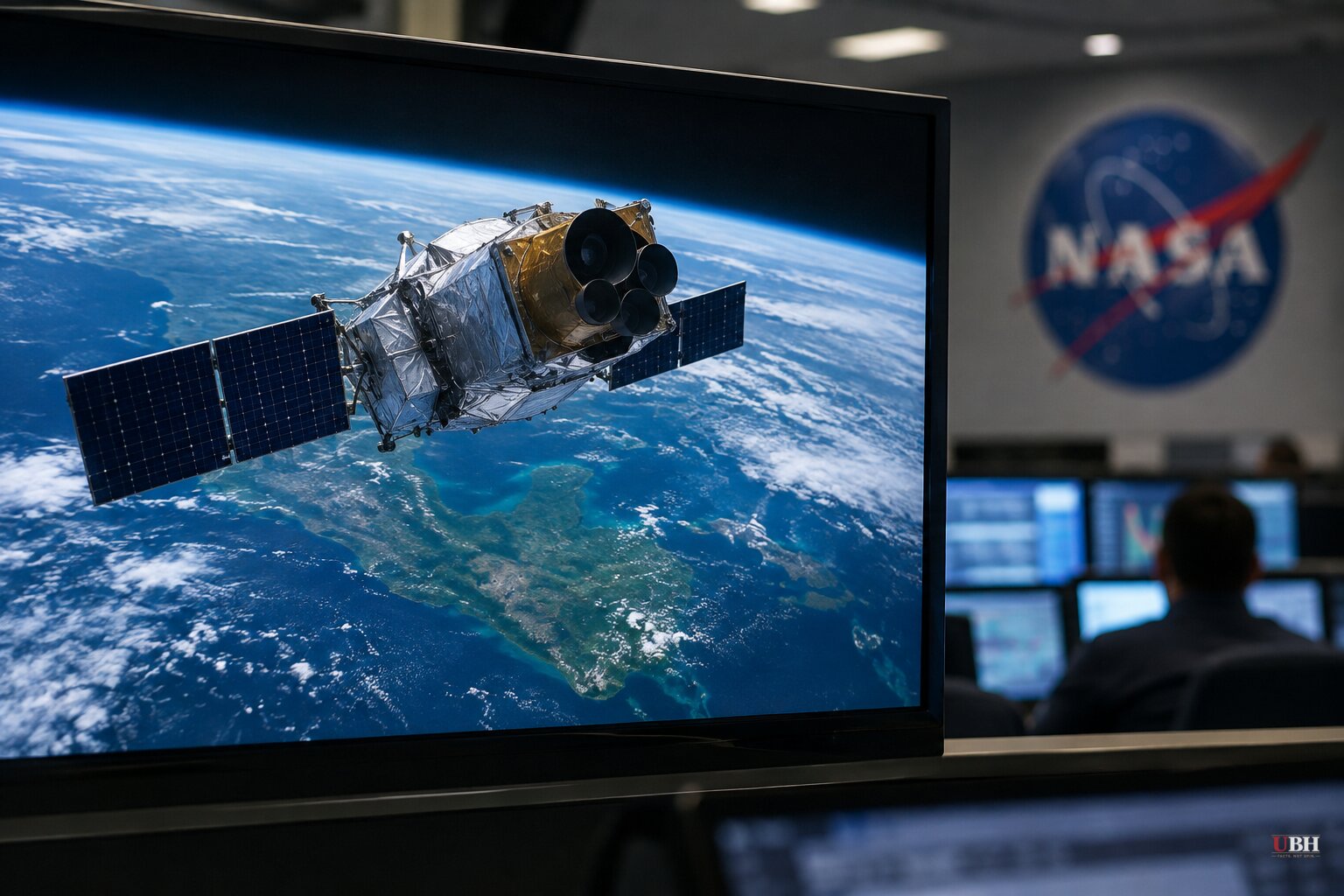
The Neil Gehrels Swift Observatory is gone. The roughly 3,200-pound NASA telescope reentered the atmosphere at 7:39 a.m. ET today, Nov. 4, over the North Sumatra region of Indonesia, NASA said. The U.S. Space Force tracked the descent and confirmed the reentry.
Swift launched on Nov. 20, 2004, on a mission planned to last two years. It ran for 22.
What fell, and where
NASA said much of the spacecraft burned up. It also said some components are expected to survive reentry and could be scattered over a wide area. How much actually reached the surface has not been established.
NASA had predicted reentry at about 3:30 a.m. ET today, with an 11-hour window of uncertainty on either side. The agency had put the risk of harm to anyone on Earth at about 1 in 2,100.
The cause was solar activity. Intense solar output over the past few years swelled the upper atmosphere and dragged Swift's orbit lower.
The failed rescue
NASA hired Katalyst Space to try to push the telescope to a higher orbit. The company built a three-armed robotic craft, named Link, and launched it in July.
It ran into trouble soon after launch and never got within seven miles of Swift. The craft fell back to Earth in September. In August, NASA had already decided to let Swift come down on its own.
The science ended before the fall. NASA stopped Swift's work once its orbit dropped below about 171 miles (275 kilometers), where atmospheric drag kept the telescopes from holding steady on a target. The final observation came Oct. 20.
What Swift delivered
Swift was built to catch gamma-ray bursts, the most powerful explosions in the cosmos. Many fade in seconds, too fast for large telescopes to aim at them. Swift could detect a burst, pass its position to other observatories, and swing its own instruments onto the spot in about a minute, according to Bradley Cenko, the mission's principal investigator at NASA's Goddard Space Flight Center.
NASA's numbers: more than 2,000 gamma-ray bursts observed, more than 1,400 supernovae studied, and data that feeds about 7,000 published scientific papers. In May 2005 it pinned down GRB 050509B, a burst lasting just 0.03 seconds, a first for a short burst.
NASA also described Swift as a first responder for Hubble, Webb and other observatories, which used its alerts to look deeper.
Shawn Domagal-Goldman, director of NASA's Astrophysics Division, called it "an incredible, lasting return on investment for the nation." He said NASA is exploring how to use and augment its existing telescope fleet, including "fast-to-orbit commercial capabilities," to keep rapid-response astronomy going.
John Nousek of Penn State, who led the control team, said the end was never in doubt. "We've known this day would come since before Swift was launched. At least in low-Earth orbit, what goes up must come down. And that end is catastrophic," he said.
Hubble is next in line
The same solar activity is wearing down Hubble. Launched in 1990, it is expected to fall by the mid-2030s, according to recent analyses.
NASA is asking industry whether and how companies could boost Hubble's orbit, upgrade its systems, or guide it to a controlled reentry, or do all three. Any such mission would need to happen by 2032.
Nicky Fox, NASA's science mission chief, said the agency has more time than it did with Swift, which she called a rush job. NASA Administrator Jared Isaacman said in a statement that Hubble "still has important science ahead of it" and that NASA should look at "every reasonable opportunity to keep it delivering for as long as possible."
Swift's rescue was assembled in a matter of months and failed. Hubble gives NASA and its commercial partners roughly six years to avoid a repeat. NASA has not said how it will replace Swift's rapid-response role in the meantime.
Sources used for this briefing
8 links from 8 independent newsrooms (syndicated copies of the same report count once)
These are the sources it draws on, linked so you can verify.


