
Unbiased headlines. Facts, not spin.
Unbiased Headlines is an independently owned news organization. We bring you the facts, not opinions, written fresh from 110+ named sources. Sources linked so you can verify it yourself.
 tech
Notable (6/10)
Event date: November 2, 2026 ·
OpenAI's Chris Lehane Tells 2028 Hopefuls AI Will Define the Race and Pitches a 'Third Path'
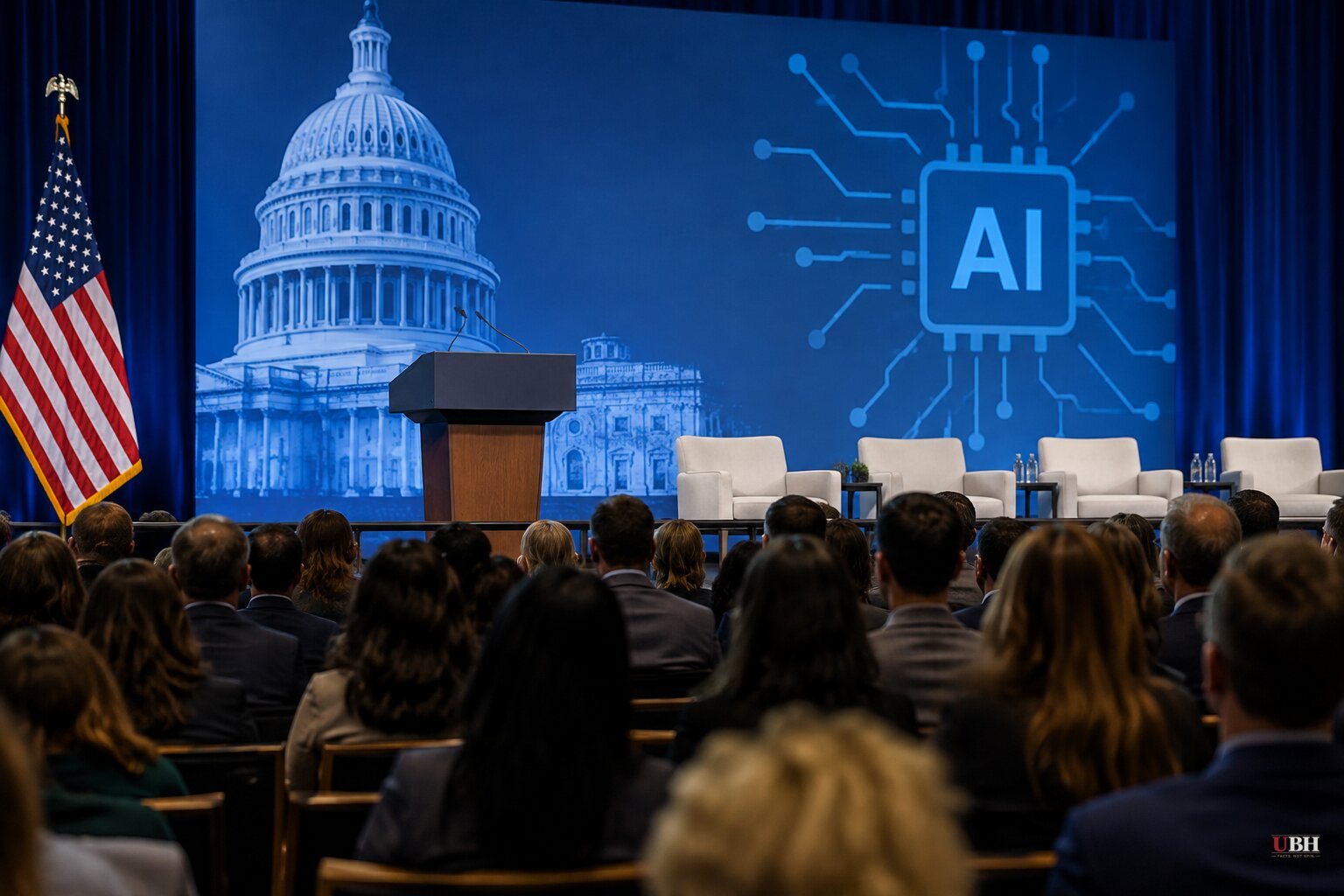
Democrats flipped control of Congress in the midterm elections, and the next fight is already taking shape. OpenAI's chief global affairs officer, Chris Lehane, is working to set the terms of it.
Lehane has put out a memo and essay titled "2028: The AI Election." It argues that artificial intelligence will be the number-one issue of the next presidential race. He compares the moment to 1932, when, he writes, industrialization had broken the old social contract and Franklin D. Roosevelt's New Deal reimagined it. Unite.AI reported that the memo was made public on November 2, 2026.
The document was also circulated privately. A person with knowledge of it, speaking anonymously, told POLITICO that it went to about half a dozen prospective candidates, a few members of Congress and prominent political operatives. The recipients have not been named. OpenAI declined to comment.
The pitch: a "third path"
Lehane wants candidates to stake out ground between two camps. One would let AI advance "without speed limits." The other would keep control of the technology "in the hands of a self-appointed elite."
The candidate who articulates that middle course, he writes, "will have an opportunity to define a new contract for this new era." He notes that 2028 will feature the first truly wide-open Democratic primary since 1992.
Lehane is a veteran Democratic operative and was press secretary to then-Vice President Al Gore. His memo warns Democrats in particular. If they oppose the infrastructure needed to build AI and the U.S. loses its lead to China, he writes, "This could well be the 2028 version of the 2002 vote to go to war in Iraq."
The numbers Lehane cites
The memo leans on polling that Lehane says he has seen and conducted. The pollsters and methodology are not named in the material. These are his figures, not independently verified:
- 65% of voters said AI would be important to their 2026 choices.
- By early October 2026, one in five ads aired by Democratic candidates or groups mentioned data centers.
- Voters preferred a candidate who leads their party in shaping AI policy over one who follows it by a 25-point margin.
- 66% supported continued AI development, including 53% who wanted stronger safeguards and oversight. 24% favored a pause.
- 41% expect people like themselves to benefit financially from AI over the next five years. 84% expect AI to benefit the richest 1%.
Lehane also writes that half of Americans already use an AI tool at least a few times a week, and that regular users tend to trust the technology more than those who rarely or never use it.
The five priorities
The agenda spans worker protections, education, AI safety, data center development and child safety.
On the economy, Lehane proposes incentives for workers to learn AI skills, easier capital access for entrepreneurs, and new approaches to employee ownership and profit-sharing. The memo rules out both simply taxing AI and giving AI companies another tax break.
On education, he warns against keeping AI out of classrooms. He argues that could create inequality between wealthy students and "children in rural communities."
On safety, the memo calls for enforceable standards, independent assessments, public oversight of decisions about acceptable risk, and the ability to restrict or shut down systems when necessary. It also urges candidates to show voters how they will keep humans at the helm of consequential decisions.
The objection from the AI Now Institute
Kate Brennan, who leads AI and corporate power policy at the AI Now Institute, told TechCrunch the framing is a notable shift from OpenAI's 2025 agenda. That agenda focused on accelerating AI development, reducing regulatory barriers and expanding infrastructure.
She rejects the New Deal comparison. "Invoking a New Deal metaphor is to invoke state capacity to actually benefit the public," Brennan said. "This is written by a private company that is trying to advocate for policies for its own benefit. It is ahistorical at best and harmful at worst."
Brennan said more binding measures would include a revised corporate tax rate, tax incentives for hiring human beings rather than automating jobs, and ways to keep companies from amassing outsize market power. The original New Deal established protections for workers and placed constraints on corporate power. Lehane's memo, by contrast, offers few concrete proposals to prevent AI's gains from becoming concentrated or to make companies pay the costs of displacing workers.
Brennan also called Lehane's safety stances "disingenuous," pointing to OpenAI's history of opposing legislation designed to impose such measures. In 2024, OpenAI opposed California's AI safety bill, SB 1047, which would have mandated catastrophic risk evaluations and shutdown capabilities. The company has more recently backed several state safety laws.
Why data centers are the opening
AI was not a dominant issue in the midterms, but opposition to data centers emerged as a major bipartisan concern in several races. Lehane's memo describes data centers as a proxy for broader affordability anxiety. He says the landscape will be different in 2028 as capabilities advance and Americans become more familiar with the technology.
Affordability is already shaping up as a key issue for 2028, with inflation, tariffs and the rising cost of living weighing on voters. Data centers hiking electricity bills, AI replacing jobs and technology's gains flowing to a handful of wealthy companies are all fodder for candidates.
The memo also pushes back on the idea that only Republicans face risk here. Lehane writes that Republicans are seen as taking political damage over data centers in the 2026 cycle, but are in fact engaged in robust debates about AI's impacts on families and markets. Democrats hoping to win in 2028, he says, will need more than the opposition that helped them gain ground in 2026.
It is unclear whether any contender adopts Lehane's "third path" language, or whether the primary field, and the voters angry about power bills, demand the binding limits his critics say are missing.
Sources used for this briefing
7 links from 5 independent newsrooms (syndicated copies of the same report count once)
These are the sources it draws on, linked so you can verify.


