
Unbiased headlines. Facts, not spin.
Every story is an unbiased news briefing written from 110+ sources across the spectrum — sources linked so you can verify it yourself.
 defense
Major Story (7/10)
May 13, 2026 at 05:20 PM
defense
Major Story (7/10)
May 13, 2026 at 05:20 PM
218 House Members Force Ukraine Aid Vote as Russia Tests 'Satan II' ICBM and Keeps Bombing
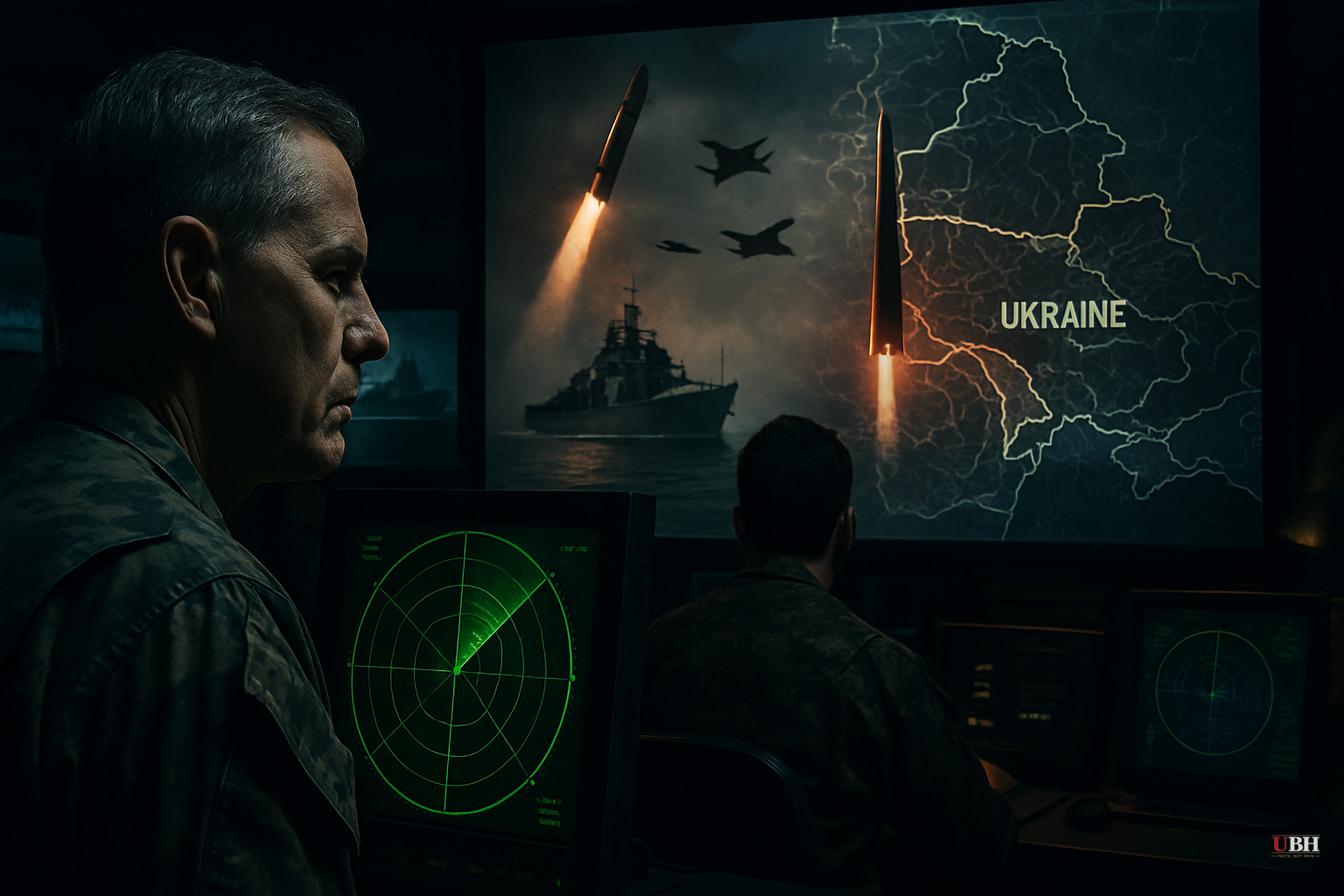
The Number That Matters: 218
Representative Kevin Kiley, a Republican from California, became the 218th signature on a discharge petition to force a House floor vote on $1.3 billion in Ukraine aid, according to the New York Times. That's the magic threshold. The vote could happen as soon as the end of May.
Meanwhile, Putin Is Doing Two Things at Once
On Tuesday, May 12, 2026, Russia test-fired the Sarmat ICBM — nicknamed "Satan II" in the West — according to NPR and the Associated Press. Putin called it "the most powerful missile in the world" and said it would enter combat service by end of year.
The Sarmat is designed to replace roughly 40 Soviet-era Voyevoda missiles. Putin claims its warheads carry more than four times the combined destructive power of any Western counterpart. The launch itself is confirmed, but the damage estimates come directly from Putin.
At the same time, Russia kept bombing Ukraine. AP News reported continued Russian barrages hitting Ukrainian cities even as Putin publicly claimed the war is "nearing an end." Prior reporting documented 9 killed in the drone wave right after the ceasefire window expired. The killing continued and accelerated.
Putin is simultaneously saying the war is almost over, test-firing the world's biggest nuke, and shelling Ukrainian cities.
What Mainstream Coverage Is Missing
Left-leaning outlets are framing the discharge petition as a victory lap — bipartisan lawmakers forcing a reluctant GOP to act. The picture is more complicated.
$1.3 billion requires context. The U.S. has already committed well over $100 billion in military, economic, and humanitarian assistance to Ukraine since February 2022, according to multiple federal tracking sources. This new tranche isn't a major shift militarily. It's a signal — and signals have limits when the other side is launching ICBMs.
The discharge petition forces a vote but does NOT guarantee passage. 218 signatures got it to the floor. Passing it requires different math.
The Nuclear Arms Race
The last remaining nuclear arms control treaty between the U.S. and Russia — New START — expired in February 2026, according to NPR. There are now zero caps on either country's nuclear arsenal. This is the first time in more than 50 years that both superpowers have been operating with no agreed limits.
Russia's Sarmat test isn't just domestic messaging. It's a real-world data point in an unconstrained arms environment. The U.S. is also in the middle of its own costly nuclear modernization program, triggered in part by Russia's buildup. Taxpayers on both sides are funding an arms race with no referee and no rulebook.
Outlet coverage of the Ukraine aid vote and the nuclear developments have largely treated them as separate stories. They're not.
What $1.3 Billion Buys — And What It Doesn't
The aid bill, if it passes, is primarily military assistance. It does NOT end the war. It does NOT replace a diplomatic framework. And it arrives at a moment when Russia is, per Western military officials cited by CNN in prior reporting, deploying post-WWII-era tanks because its modern equipment losses have been severe.
Russia scraping the barrel suggests aid is working. But it also suggests this war grinds on regardless of aid packages, and the endgame remains completely undefined.
Trump has talked about peace. Putin has talked about peace. Ukraine hasn't agreed to any peace terms. Russia kept bombing while everyone was talking.
What This Means for Regular Americans
If the House votes yes on the $1.3 billion, taxpayer money goes to a war with no exit strategy and no arms control framework governing the other side's nuclear arsenal. That's a legitimate concern — not because helping Ukraine is wrong, but because Congress has never had a real debate about what winning looks like or what the off-ramp is.
If the House votes no, Putin reads it as a green light.
There are no clean options here. But Americans deserve a Congress that actually debates this out loud — not one that either blocks aid through procedural games or rubber-stamps it with zero strategic accountability.
A discharge petition is not a strategy. It's a workaround. Someone in Washington needs to explain the endgame. So far, nobody has.
Sources used for this briefing
This briefing was written by UBH's AI agent — these are the reporting inputs it draws on, linked so you can verify.


