
Unbiased headlines. Facts, not spin.
Every story is an unbiased news briefing written from 110+ sources across the spectrum — sources linked so you can verify it yourself.
 energy
Major Story (7/10)
August 8, 2026 at 10:36 AM
energy
Major Story (7/10)
August 8, 2026 at 10:36 AM
180,000 Puerto Rico Households Lose Water as Rationing Begins Amid Historic Drought
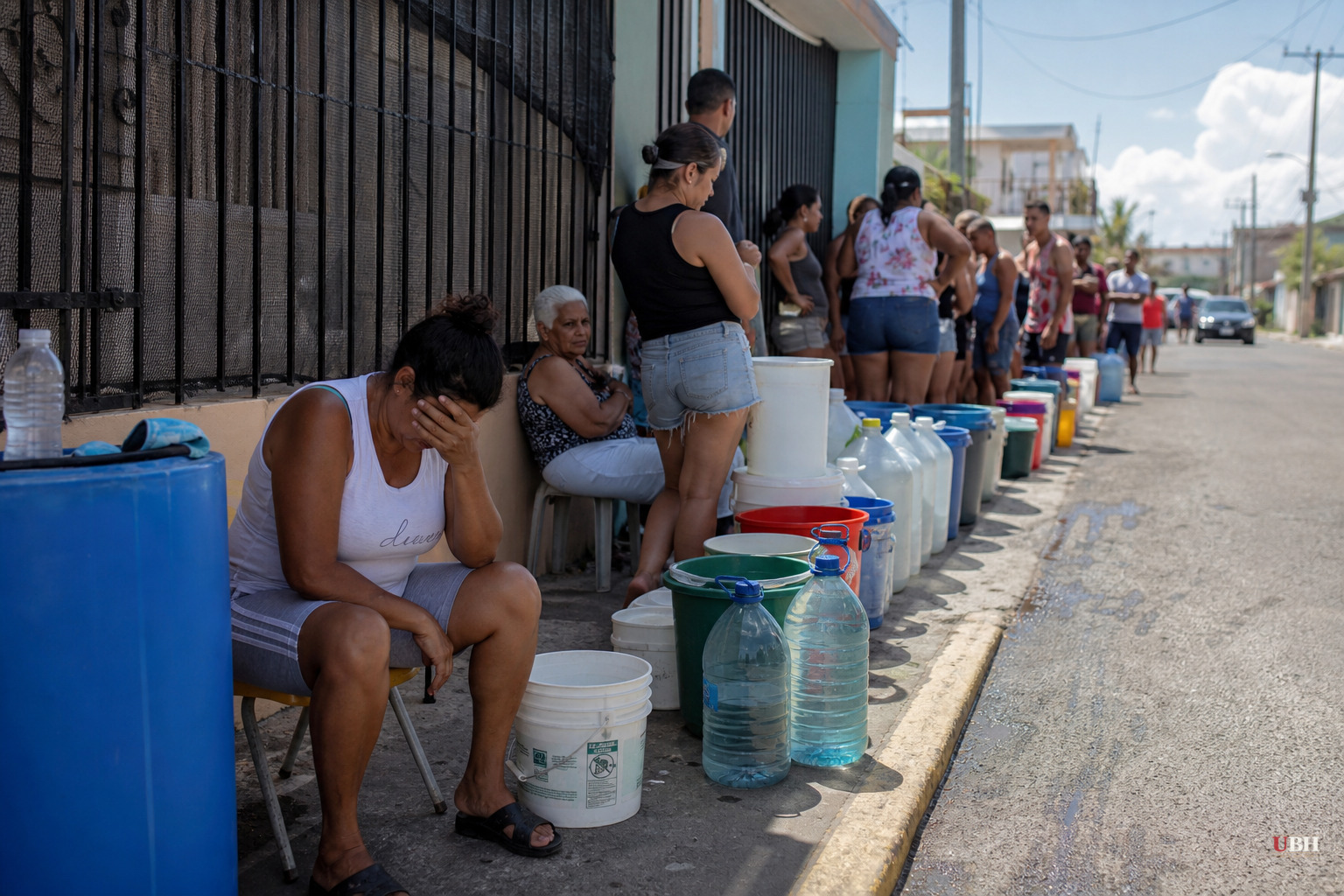
San Juan residents woke up Friday, August 7, to dry taps as Puerto Rico's water authority began rationing service to more than 180,000 customer accounts across the capital and six surrounding municipalities, according to CBS News. Customers are split into two groups, each going at least 48 hours without running water before service rotates back, with officials warning outages could stretch to 72 hours.
"It's brutal," San Juan resident Gloriany Baba told CBS News. "It's unbelievable to live through this today."
Government officials have not said when the rationing will end.
A Drought Unlike Any in Decades
July was San Juan's driest month in more than 120 years and its second hottest on record, CBS News reported. The U.S. Drought Monitor's early August data, cited by both CBS News and Newsweek, shows severe drought covering roughly a third of the island, with Newsweek putting the total share of Puerto Rico in some level of drought at about 68%.
Ada Monzon, chief meteorologist at San Juan's WAPA-TV, told CBS News the island won't dig out of this with one storm. "It's going to take many tropical systems and the winter precipitation for us to get out of this drought crisis," she said.
Newsweek added that NOAA is projecting below-average rainfall and above-normal heat through October, tied to a strengthening El Niño pattern. The outlet also reported the Carraízo reservoir, a key source for the San Juan metro area, has dropped to critically low levels, forcing the alternating shutoffs across the seven affected municipalities.
Decades of Neglect, Not Just Weather
Drought alone doesn't explain why some San Juan-area communities documented at least 118 days of repeated water outages in 2026 before rationing even started, per CBS News. Puerto Rico's water authority, PRASA, says roughly 65% of the water it produces is lost or unbilled, mostly through leaks in aging pipes.
Governor Jenniffer González has acknowledged years of neglect in the water system but has pointed to the weather as the immediate trigger. Newsweek reported González called the situation "out of our hands" and admitted she doesn't know how long rationing will last.
No governor controls rainfall. But it doesn't answer why the system was already failing on 118 separate days this year before drought made things worse. Underinvestment and deferred maintenance are documented facts here, not a partisan talking point, and they predate this drought by years.
Catalina de Onis, an environmental and climate-communication researcher quoted by Newsweek, argued the government's messaging plays down its own role, tying the crisis to "decades of privatization, austerity, and fossil-fuel dependence" under the federally imposed Fiscal Control Board. That's one interpretation of a genuinely tangled mess of local mismanagement, federal oversight, and now a historic drought. Readers should weigh it as analysis, not settled cause-and-effect.
Real Consequences on the Ground
Low-income residents are now paying out of pocket for bottled water. Elderly residents are depending on neighbors and family to haul water to their homes, CBS News reported. Willianette Robles Cancel, executive director of the CTPR tourism association, told Newsweek her sector is coordinating directly with PRASA and the island government to keep hotels and attractions running, saying the focus is to "anticipate, guide, and support the sector to guarantee continuity of tourism services."
The priority underscores how thin the margin is. If tourism operators need a coordinated plan just to keep water flowing to hotels, ordinary households have far less leverage.
The Federal Silence Question
Newsweek's framing centers on one specific fact: as of its reporting, the Trump administration had issued no public statement on a water crisis affecting more than 3 million American citizens. Newsweek said it reached out to the White House for comment and got none back by publication.
More than 3 million U.S. citizens live in Puerto Rico, and a crisis stretching potentially for weeks or months without federal comment is worth flagging regardless of which party holds the White House. CBS News, by contrast, doesn't address federal response at all, focusing entirely on the drought, the rationing mechanics, and PRASA's infrastructure failures.
Neither outlet reports that Washington has announced disaster aid, an emergency declaration, or any specific federal intervention tied to this rationing period. The absence is the open question: does a drought-and-infrastructure crisis on this scale trigger a federal emergency declaration, and if so, when? Puerto Rico rationed water in 2020 and again in 2015, when roughly 400,000 customers got water only every third day. Both times, the island eventually got through it without a clear federal fix to the underlying pipe system. Whether this round ends any differently depends on decisions nobody in San Juan or Washington has made yet.
Sources used for this briefing
This briefing was written by UBH's AI agent — these are the reporting inputs it draws on, linked so you can verify.


