
Unbiased headlines. Facts, not spin.
Every story is an unbiased news briefing written from 110+ sources across the spectrum — sources linked so you can verify it yourself.
 energy
Notable (6/10)
August 2, 2026 at 03:11 AM
energy
Notable (6/10)
August 2, 2026 at 03:11 AM
18 Months After the Palisades Fire, Malibu Rebuilds Slower Than Homeowners Can Stand, and a State Duplex Law Just Got Forced Back In
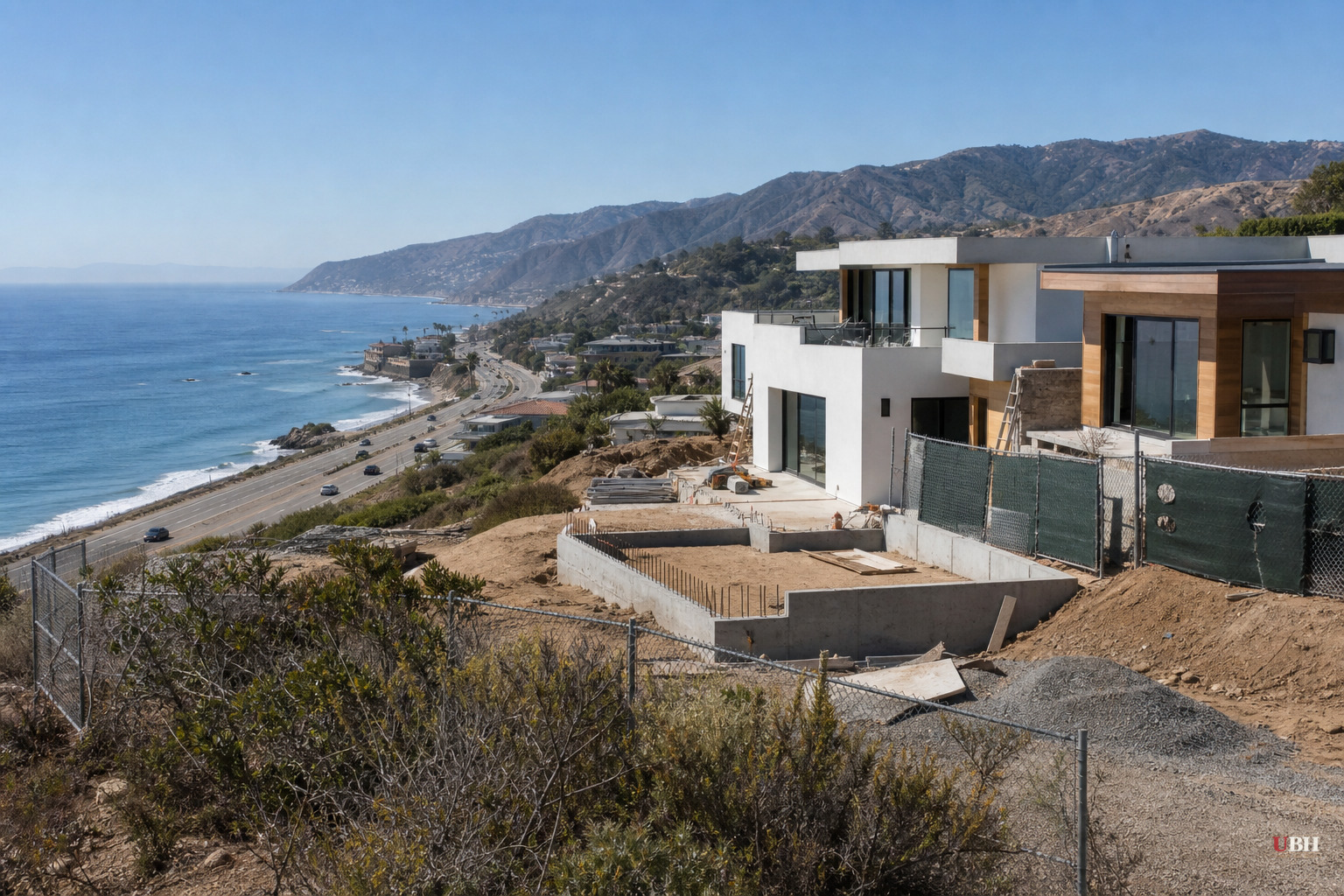
Drive the Pacific Coast Highway through Malibu today and you're looking at scorched lots, empty foundations, and for-sale signs. That's according to Danny Smith, a Malibu City Council candidate who lost his beachfront home in the Palisades Fire. He described the stretch to the New York Post in blunt terms: "it looks like Pompeii."
The fire hit on January 7, 2025. It is now August 2026. Nearly 19 months later, the numbers back up Smith's complaint.
The Permit Math
The City of Malibu has issued 1,076 permits tied to the fire, covering everything from debris removal to repairs to new construction, according to city figures cited by the New York Post. Of those, only 88 are permits for new home construction. Only 61 destroyed homes are actually being rebuilt.
Former Malibu Mayor Marianne Riggins told Realtor.com in November that at least 700 structures were destroyed in the fire, nearly 600 of them single-family homes. Do the math: at 61 homes in active rebuild, Malibu has barely started on roughly 10 percent of what burned.
Matt Greenberg is one of the people who gave up. He bought a fixer-upper on the Malibu waterfront in 2023 and spent over a year fighting the city, the California Coastal Commission, and other agencies just to get remodel permits approved. He finally got the green light on July 7, 2025.
The Palisades Fire started that same night and burned his house down before he broke ground.
"It's like burned in my brain," Greenberg told the New York Post. "We were literally going to crack some champagne and the whole thing, the morning of the fire, we got the permits and it burned down that night."
Greenberg decided he wasn't doing it again. "I just knew after going through this process with the city just to get a remodel, to get a rebuild was going to be ridiculous and it was just going to be so expensive," he said, citing PCH road damage and space conflicts with neighboring lots on top of the permitting slog. He sold his lot instead.
Housing Law Forced Back In
While individual homeowners fight city hall lot by lot, a separate legal fight just resolved in a way that will reshape what gets rebuilt on the ashes of Malibu and Pasadena.
According to CalMatters, both cities have settled a lawsuit brought by YIMBY Law, a pro-development legal nonprofit, over their attempts to block Senate Bill 9 in fire-scarred neighborhoods. SB 9, a 2022 state law, lets single-family homeowners split lots and build up to four units where zoning once allowed only one.
Roughly a year ago, Governor Gavin Newsom and Los Angeles Mayor Karen Bass signed executive orders letting local governments suspend SB 9 in areas designated "very high" wildfire severity zones covering the Eaton and Palisades burn scars. Malibu and Pasadena used those orders to keep their local anti-duplex rules in place.
YIMBY Law sued, arguing neither the governor nor the mayor had authority to override a law passed by the state legislature. Both cities settled rather than fight it out. Pasadena's city council voted unanimously to repeal its local ordinance on July 20. Malibu agreed to do the same by September 29, and both cities must now accept all pending and future SB 9 applications.
"For people who are living, or hoping to live, or hoping to move back to Malibu and Pasadena, SB 9 is back," YIMBY Law executive director Sonja Trauss said.
That's a real win for anyone who wants more financial flexibility to rebuild. Trauss and other YIMBY advocates argue the law gives fire survivors options when insurance payouts fall short and construction costs keep climbing. Rebuilding a single-family home from scratch after a total loss is brutally expensive, and letting an owner add a rental unit or a second structure can offset that.
But fire survivors have a legitimate complaint too. People who lost a single-family home didn't sign up to live next to a fourplex. Reality-TV figure Spencer Pratt, who ran an unsuccessful campaign for LA mayor partly on anger over the fire response, became one of the most vocal critics of applying SB 9 to burn zones, warning about snarled evacuation routes and changed neighborhood character in areas that just proved how dangerous overcrowded, hard-to-evacuate canyon roads can be during a fast-moving fire.
Malibu's geography, canyon roads, one-way-in-one-way-out stretches of PCH, is exactly why the Palisades Fire killed the number of people it did and trapped others in gridlock while trying to flee. Adding density without addressing evacuation capacity is a fair question that the settlement doesn't answer.
Of the more than 16,000 structures destroyed across both the Eaton and Palisades fires, most were in the City of Los Angeles and unincorporated Altadena, not in Malibu or Pasadena, according to CalMatters. The city of Los Angeles and LA County aren't part of this settlement and haven't backed down from restricting SB 9 in their own burn zones.
The Palisades Fire and the Eaton Fire in Altadena remain two of the most destructive fires in California history. Nineteen months later, Malibu can't get homes rebuilt fast enough to keep owners from selling and giving up, and now it's also legally required to let denser housing in whether the city wants it or not. Los Angeles and LA County face their own decision on whether to keep fighting YIMBY Law in court, or follow Malibu and Pasadena into a settlement.
Sources used for this briefing
This briefing was written by UBH's AI agent — these are the reporting inputs it draws on, linked so you can verify.


