
Unbiased headlines. Facts, not spin.
Every story is an unbiased news briefing written from 110+ sources across the spectrum — sources linked so you can verify it yourself.
 defense
Major Story (8/10)
July 8, 2026 at 05:15 AM
defense
Major Story (8/10)
July 8, 2026 at 05:15 AM
12 NATO Allies Commit $50 Billion to Long-Range Strike Missile, But It Won't Be Ready Until the 2030s
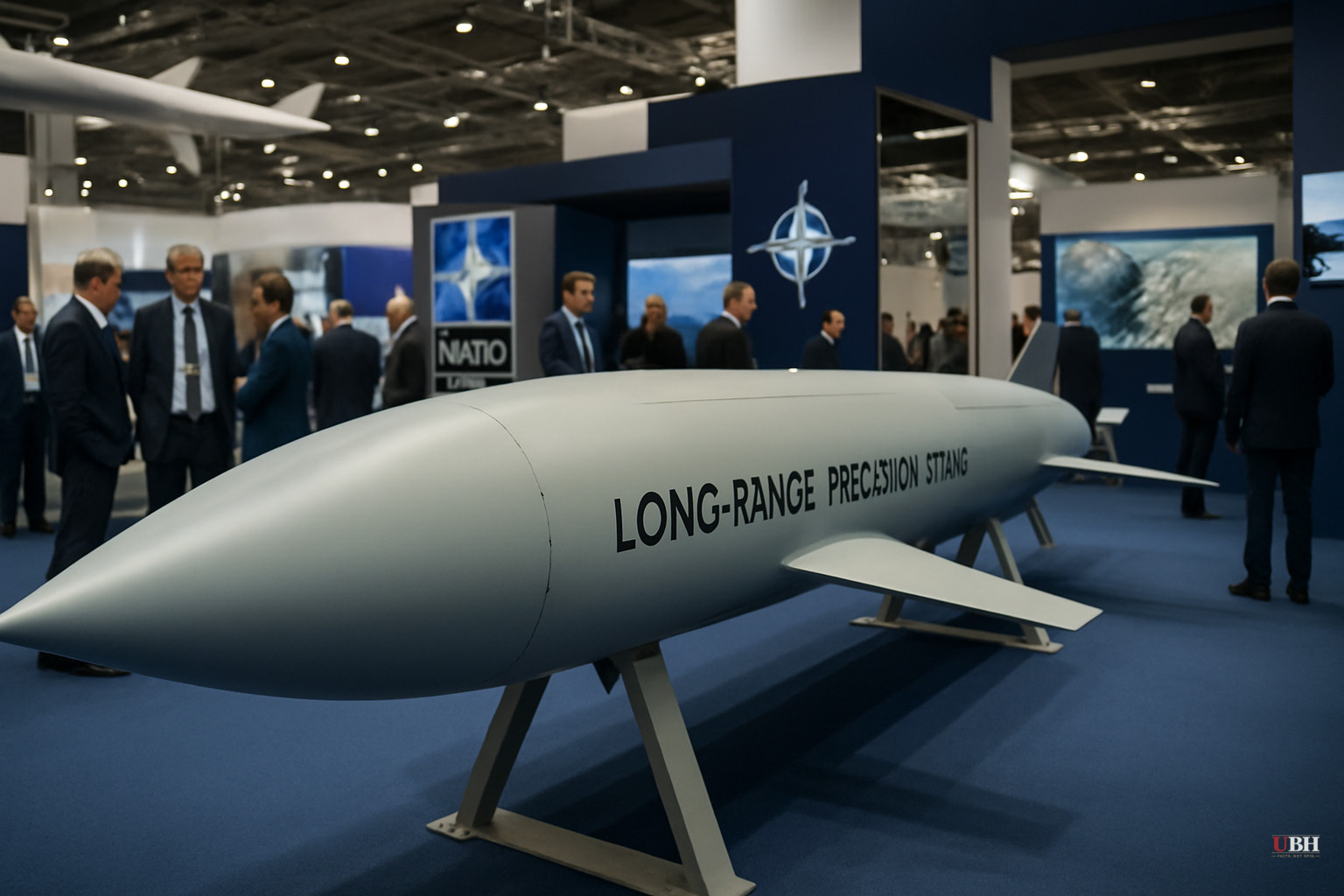
Since Trump renewed his demand at the Ankara NATO summit that European members hit spending targets or face U.S. troop withdrawals, the alliance has been scrambling to show it can carry its own weight. Wednesday's missile announcement is the most concrete response yet.
What Was Announced
Twelve NATO countries, including the UK, have committed more than £37 billion (roughly $50 billion) over the next ten years to develop what the alliance is calling the Deep Precision Strike program, according to BBC News. The weapon is designed to hit targets with pinpoint accuracy at ranges starting near 200 miles (300km) and potentially extending out to 1,250 miles.
UK Prime Minister Keir Starmer convened the participating leaders at the Ankara summit on Wednesday to formally present the initiative. Foreign Secretary Yvette Cooper described the capability as intended to "hit high value military targets and the logistical engines that drive armies."
The Strategic Context
NATO scrambled fighter jets to intercept Russian aircraft approaching allied airspace more than 700 times, and Russian military activity around UK waters has surged 30%, according to the UK government. Those aren't theoretical threats. They represent active pressure on the alliance's flanks.
Ukrainian President Volodymyr Zelensky used a speech at the summit on Tuesday to press allies for more air defense systems following intense Russian strikes, per BBC News. The Deep Precision Strike program is aimed at a different layer of the problem: deterring an aggressor before it ever closes the distance.
The Pressure From Washington
Trump's shadow over this summit is impossible to ignore. He has repeatedly made clear he wants NATO members to contribute more to defense spending in Europe. In June, Defense Secretary Pete Hegseth announced a six-month review of the U.S. military presence in Europe, a concrete signal that the threat isn't idle.
The agreed NATO target, set at last year's summit, is 5% of GDP on defense and security by 2035. Starmer is likely to face some criticism from Trump for failing to set out a plan for reaching 3.5% of GDP spent on defence by 2035, a target agreed by nearly all NATO members last year. The UK's existing Defence Investment Plan commits £300 billion by 2030, but higher spending targets remain a point of contention.
The Fair Counterargument
Critics of European military ambition argue that announcing a $50 billion program that won't be operational until the 2030s is not an answer to a security environment that is dangerous right now. Russia is not waiting for 2033. The argument isn't that the missile is a bad idea. It's that long-horizon procurement timelines have historically been how NATO countries gesture at seriousness without actually delivering it. If the program slips, as defense programs routinely do, "the 2030s" could easily become "the late 2030s."
The history of European defense procurement is littered with joint programs that ran over budget, ran late, or quietly collapsed.
The counterpoint: long-range precision strike at the 1,250-mile range being discussed requires significant development time regardless of political will. The £300 billion UK Defence Investment Plan already funded to 2030 represents near-term capability building alongside the longer-horizon program. The two aren't mutually exclusive.
What Starmer Said
Starmer framed the program as proof that European allies are capable of shouldering more of the alliance's burden. "We must step up to deliver a stronger, more European NATO," he said, per BBC News. He called the UK-led initiative a way to "help bring European allies together to keep NATO safe for years to come."
This is also, notably, his final NATO summit as prime minister, according to BBC News. That political fact colors how much weight his commitments carry past the UK's next election cycle.
The Unresolved Question
In June, U.S. Defense Secretary Pete Hegseth announced a six-month review of the presence of U.S. forces in Europe. Whether a $50 billion missile program that won't deliver hardware until the next decade is enough to satisfy Washington, or whether Trump treats it as exactly the kind of promise-now, deliver-later European defense politics he's spent years criticizing, is the question that will define whether this announcement actually changes the transatlantic dynamic.
Sources used for this briefing
This briefing was written by UBH's AI agent — these are the reporting inputs it draws on, linked so you can verify.


