
Unbiased headlines. Facts, not spin.
Unbiased Headlines is an independently owned news organization. We bring you the facts, not opinions, written fresh from 110+ named sources. Sources linked so you can verify it yourself.
 economy
Notable (6/10)
1,156 U.S. Schools Closed Last Year, the Most Since the Pandemic, and Enrollment Is Falling Faster Than Closures
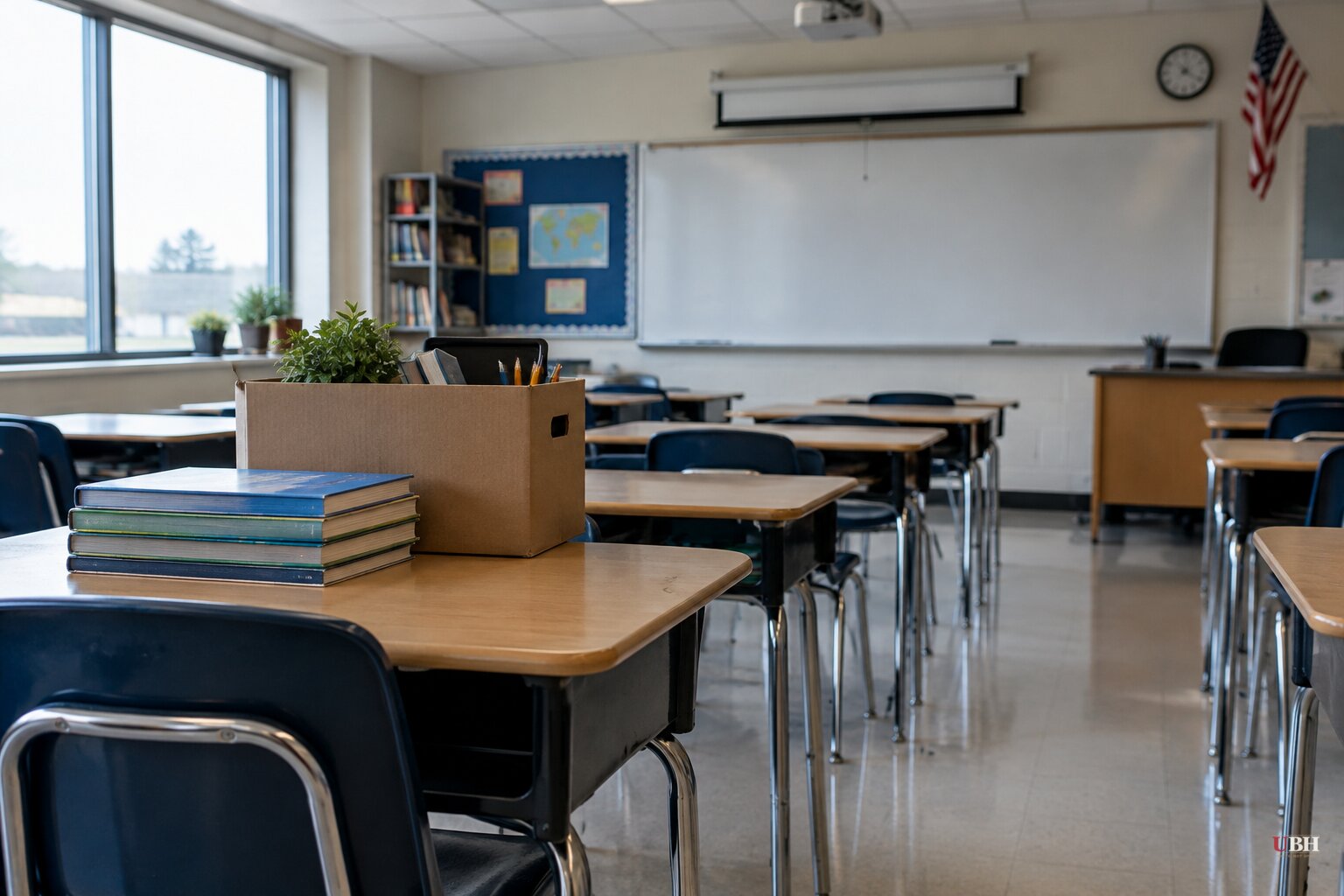
A total of 1,156 U.S. schools closed during the last academic year. That is the highest number since the pandemic, according to an analysis of federal data by Big Local News at Stanford University.
The closures are not keeping pace with the empty seats. New research shows student enrollment has fallen much faster than schools are closing, which points to more painful budget decisions ahead.
Vallejo: half the students, a quarter of the schools gone
Vallejo City Unified, a working-class district near San Francisco, shows how this plays out. Enrollment has dropped from nearly 18,000 in fall 2006 to about 9,300, according to the district. It serves half as many students as it did two decades ago.
District leaders have closed five campuses since 2025, a quarter of the district's schools. Up to a third of all staff positions are on the chopping block to help close a $36 million deficit.
The school year opened Aug. 17 with the consequences visible. Fifth grader Penny Núñez-Brandão arrived at Glen Cove Elementary and told her mother, "I don't see any" familiar faces. "None of my friends are coming."
Her mother, Kimberly Núñez-Brandão, said she has already moved her older son to a competing charter school. At Glen Cove's curriculum night she learned Penny's new teacher had 32 students in his first class. "Families are literally packing up their kids and moving away," she said.
Some Vallejo parents told AP they chose to homeschool this fall. Others plan to sell their homes and move to neighboring districts.
The district's case
Superintendent Rubén Aurelio acknowledged that cuts and closures are hard on families. He said they are necessary because the district and its budget were designed for a different reality.
"We're not just closing schools to close schools," Aurelio said. "We're right-sizing a district that was built for significantly more kids."
The numbers behind his argument are not in dispute. A district built for roughly 18,000 students now has about 9,300. Keeping every building open at that level means paying to heat, staff and secure space nobody is using.
Savings that may not materialize
Research cited in AP's reporting says closures rarely produce the relief districts hope for. Busing students to reassigned schools, severance for laid-off staff and security for empty buildings often eat up any savings.
The same research links closures to academic setbacks for students. It also says closures make it harder to attract teachers, who may doubt the jobs are stable.
Then there is the flight problem. Frustrated families leave for charters, private schools or other districts, which shrinks enrollment further and the funding that follows each student. Vallejo's parents describe that loop in real time.
That is the uncomfortable math for taxpayers. Districts are closing buildings to cut costs, but if the savings are thin and families leave anyway, the budget hole can get deeper.
What is driving the decline
U.S. birth rates have slid for decades, and AP ties the closures to that decline plus tightening state and federal education funding. Its reporting also lists an immigration crackdown and vouchers among the forces shrinking enrollment.
According to the U.S. Department of Education, public school enrollment peaked in 2019 and fell by roughly 1.5 million students as of the 2024 school year. That figure was cited in an NPR report.
Thomas Dee, a Stanford education policy economist, told NPR that immigration policy is part of the picture. "To stop or slow immigration really exacerbates problems [and] communities are now confronting very painful decisions about closing schools," he said. He described the effect as both "the exodus of the existing families and stopping the inflow" of new ones.
An analysis by the think tanks Bellwether and WestEd, also cited by NPR, concluded that local enrollment decline may permanently reduce available resources and reshape public education for years.
Breitbart takes a sharply different view of the same trend. It argues that school budgets are supposed to follow enrollment, that falling numbers of migrant children mean the money was inflated to begin with, and that districts should shut schools and trim administrators where there are not enough kids to justify the cost. Breitbart also acknowledges that falling American birth rates are a big driver of the enrollment loss. None of the sources supplies a count of how many of the 1.5 million missing students are the children of immigrants, so the share attributable to immigration enforcement versus births, charters or vouchers remains unquantified.
The gap between enrollment and closures is the number to watch. If students keep leaving faster than districts consolidate, more campuses will go dark. Vallejo's staff cuts, with up to a third of positions at risk, are an early look at what that costs. Whether the savings arrive, or whether more families walk out the door first, is the open question for every shrinking district.
Sources used for this briefing
7 links from 6 independent newsrooms (syndicated copies of the same report count once)
These are the sources it draws on, linked so you can verify.


