
Original briefings. Zero spin.
Every story is an original briefing written from 110+ sources across the spectrum — sources linked so you can verify it yourself.
 defense
Major Story (7/10)
August 29, 2026 at 09:56 AM
defense
Major Story (7/10)
August 29, 2026 at 09:56 AM
113,000 Russians Fled to Georgia in a Week as Mobilization Fears Spread
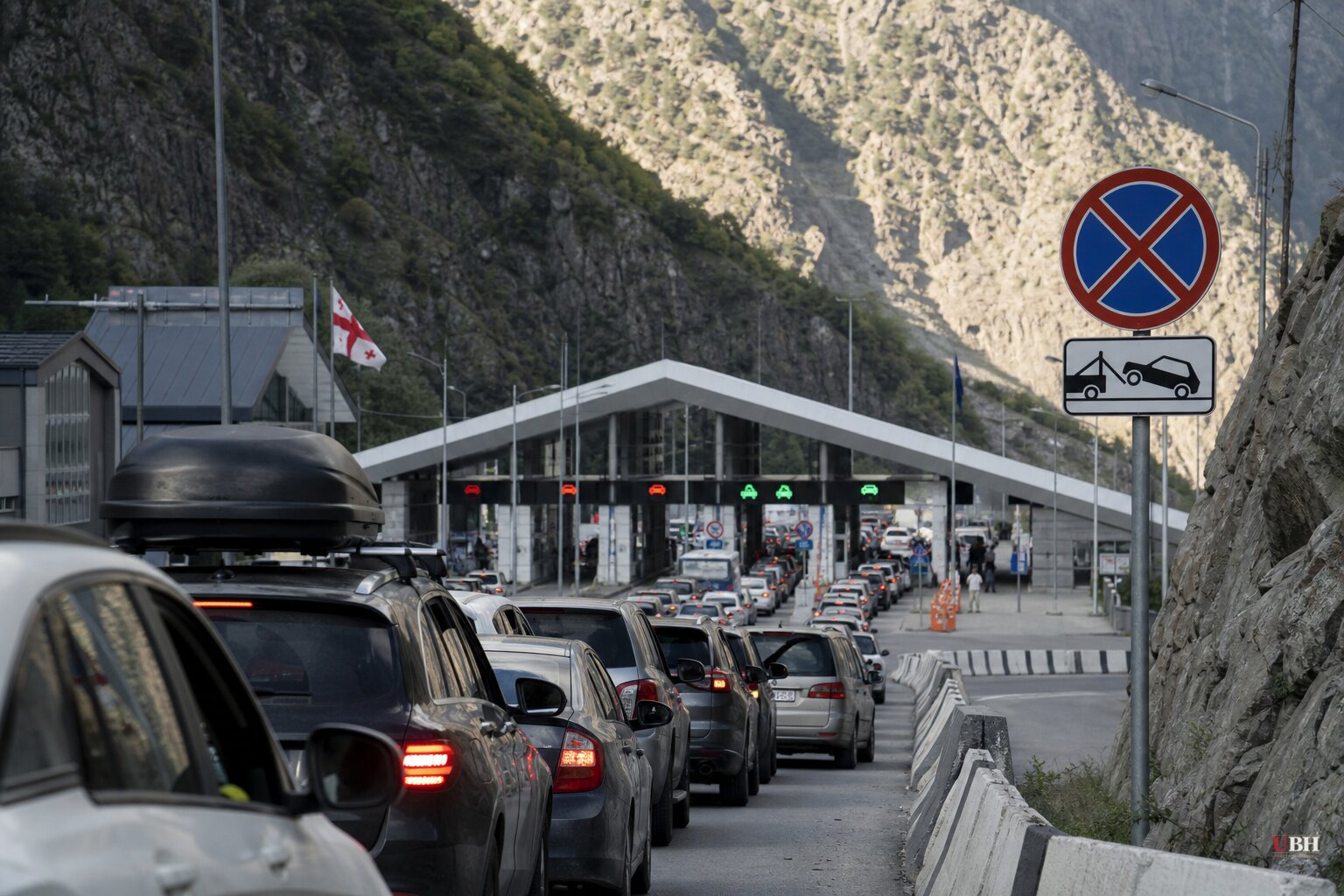
More than 113,000 Russians crossed into Georgia through the Verkhny Lars checkpoint in a single week, according to Politico. On August 20 alone, more than 20,000 people crossed, a figure Russia's Federal Customs Service says significantly exceeds prior years, as reported by United24Media.
The exodus is being driven by fear, not fact. Russia's Permanent Representative to the UN, Vasily Nebenzya, said on August 20 that a new mobilization is "not planned and not expected." Kremlin spokesman Dmitry Peskov went further this week, telling reporters the mobilization rumors are "being planted by the Ukrainian authorities" to "ideologically destabilize the situation," according to the Kyiv Independent.
When tens of thousands of military-age men vote with their feet in a single week, official denials don't carry much weight.
Why Russians don't trust Moscow
Ukraine's Presidential Office warned on August 27 that Russia plans to mobilize 600,000 recruits across 2026 and 2027, citing a briefing from Ukrainian military intelligence (HUR). The plan, as described, calls for 300,000 men this year and another 300,000 next year.
The Presidential Office's stated reasoning: Russia's political leadership sees a new mobilization wave as a response to losing the initiative in the war, mounting personnel losses, and a serious slowdown in contract recruitment across Russian regions.
Russia has failed to recruit more than 30,000 contract soldiers in any month this year, with some months dropping as low as 27,000, according to United24Media. If the Kremlin can't fill its ranks with volunteers, reservists become the next option.
President Volodymyr Zelensky said in early August that Ukrainian intelligence expects a "rapid mobilization" of several hundred thousand men by year's end. Speaking to reporters this week, Zelensky said Russia plans to mobilize roughly 300,000 people after the State Duma elections in September, and will reportedly avoid targeting major cities to limit public backlash.
Alexey Tabalov, founder of the Russian human rights group School of the Conscript, told Politico his organization has seen a spike in legal-assistance requests from men of military age, "primarily from those in the military reserve." Tabalov also told sovanews.tv that Putin appears to want to avoid an official mobilization because it "would mean that things on the frontline are going poorly, and that Putin is a bad commander-in-chief."
Georgia has seen this movie before
This isn't Georgia's first mass influx. In September 2022, when Putin announced a partial mobilization drafting roughly 300,000 men, Georgia took in more than 100,000 Russians in a single week, according to Politico's reporting cited by both the Kyiv Independent and sovanews.tv. Georgia remains one of the few countries bordering Russia that allows visa-free entry, making it a default escape route.
Armenia may become a second landing zone. Alen Simonyan, Speaker of Armenia's National Assembly, told TV Rain that Yerevan won't stand in the way of Russians avoiding the front. "To a Russian person, I can say only one thing: 'Welcome to Armenia,'" Simonyan said, according to United24Media's citation of the Moscow Times.
The underlying mood in Russia backs up the border numbers. A July 2026 poll by the state-run Russian Public Opinion Research Center (VTsIOM) found 66% of Russians believe "difficult times" are ahead, a 16-point jump since the start of the year. United24Media reports that level of anxiety hasn't been seen since the 1991 Soviet collapse and the 1992 hyperinflation crisis.
A NATO nerve already on edge
None of this is happening in isolation. Fox News reported that Polish Deputy Defense Minister Cezary Tomczyk told Super Express on August 17 that Poland is "preparing for war, hoping that it never happens." The Polish Embassy in Washington told Fox News Digital that Warsaw's defense buildup, now near 5% of GDP, is meant to deter aggression, not signal that war is inevitable.
A European diplomat, speaking to Fox News on condition of anonymity, said Poland sees "a pattern of escalating Russian pressure" through disinformation, cyberattacks, sabotage, and repeated tests of Polish air defenses. The diplomat was careful to separate that concern from ordinary Russian citizens, saying Poland wants Russia as "a good neighbor, business partner."
Whether Putin actually announces a new mobilization wave, and when, remains unconfirmed. Russian officials keep denying it publicly while, according to Ukrainian and Georgian reporting, quietly expanding reservist data collection and National Guard authority. The next marker to watch is Russia's State Duma elections next month, the point Zelensky says Moscow may use as cover to move on any new call-up.
Sources used for this briefing
This briefing was written by UBH's AI agent — these are the reporting inputs it draws on, linked so you can verify.


