
Unbiased headlines. Facts, not spin.
Every story is an unbiased news briefing written from 110+ sources across the spectrum — sources linked so you can verify it yourself.
 defense
Notable (6/10)
June 18, 2026 at 07:56 AM
defense
Notable (6/10)
June 18, 2026 at 07:56 AM
1,005 Palestinians Killed in Gaza Since October Ceasefire, Health Ministry Says
The Numbers, Sourced
Gaza's Health Ministry said Wednesday, June 18, that 1,005 Palestinians have been killed by Israeli operations since a ceasefire was reached between Israel and Hamas last October, according to reporting by the Associated Press and NPR.
The ministry does NOT separate combatants from civilians in its tallies. However, the ministry is staffed by medical professionals and its records are generally regarded as reliable by international health organizations and the United Nations.
Separately, the ministry reported Sunday that the total Gaza death toll since the war began on October 7, 2023 has surpassed 73,000.
What's Still Happening on the Ground
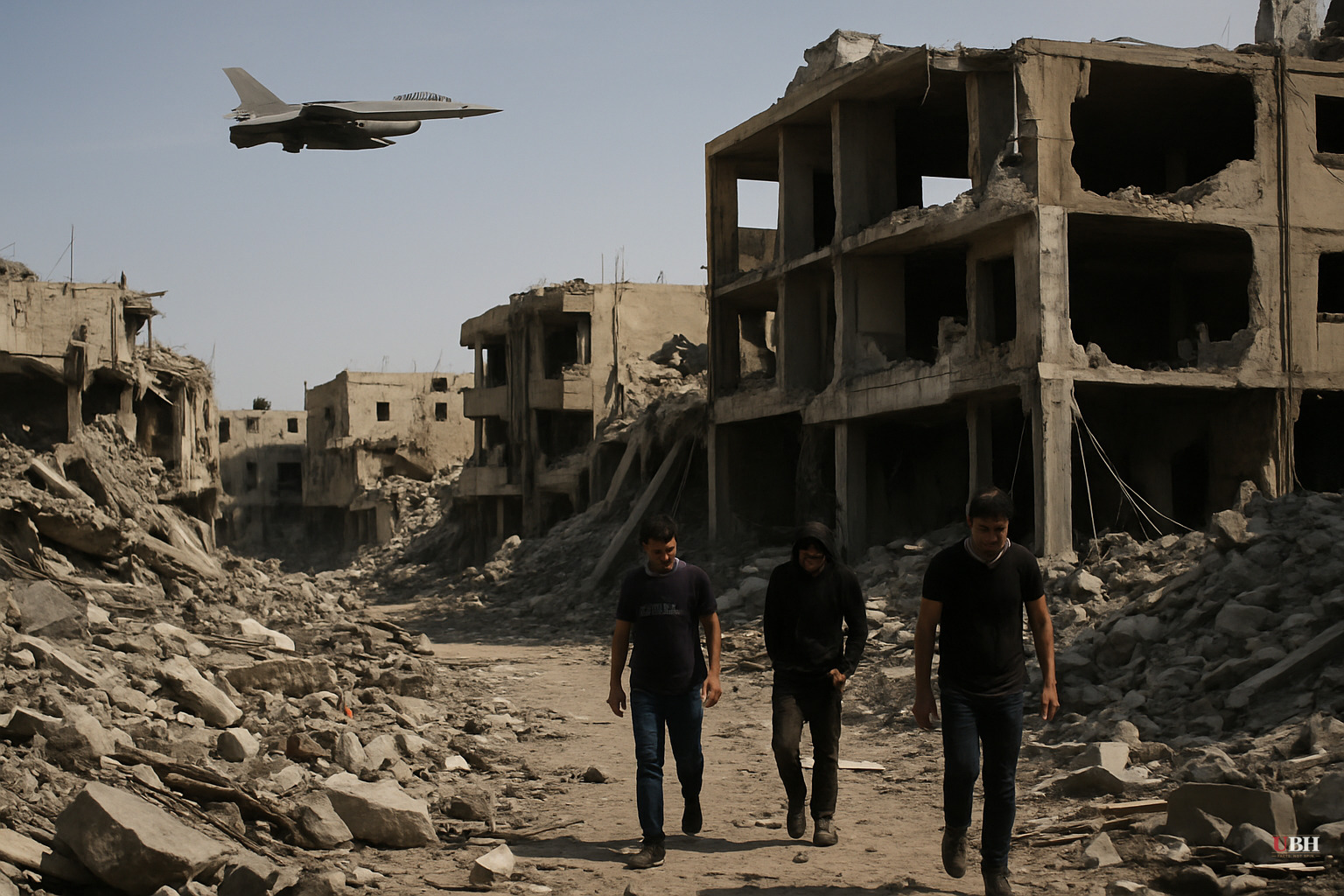
According to NPR, the Gaza Strip has seen near-daily Israeli strikes, shelling, and gunfire along the boundary dividing Israeli- and Palestinian-controlled zones, all during a ceasefire period.
The most recent deaths came from Israeli drone strikes over the past several days targeting towns and refugee camps in central Gaza and Gaza City. On Wednesday, an Israeli strike in Khan Younis killed two Palestinians and wounded six others, according to health officials at Nasser Hospital cited by NPR. The strike hit near a beach in the Muwasi tent camp, where hundreds of thousands of displaced Palestinians are sheltering.
The Israeli military confirmed the strike and said the target was a "terrorist." It did not elaborate further.
Over the weekend, the Israeli military said in a separate statement that it killed two militants from Hamas and Palestinian Islamic Jihad in additional strikes.
Israel's Position
Israel has been consistent: it says it is continuing operations against Hamas and allied militant groups inside Gaza and has expanded the territory it controls within the strip. Israeli officials frame the ongoing strikes as targeted counterterrorism, not ceasefire violations.
If Hamas and Palestinian Islamic Jihad fighters remain active and armed inside Gaza, Israel has a legitimate security argument that a ceasefire does not require it to stop targeting active combatants, particularly given what triggered this war. Hamas-led militants killed 1,200 people, mostly civilians, and took 251 hostages in the October 7, 2023 attack on southern Israel. Israel's stated war aim from the start was to annihilate Hamas and recover the hostages.
Whether ongoing drone strikes against individuals constitute ceasefire compliance is a legal and diplomatic question that has NOT been resolved, and no authoritative ruling on that question is reflected in the available sources.
Both Sides Are Pointing Fingers
Both Israel and Hamas have accused the other of violating the ceasefire, according to NPR. That mutual accusation doesn't prove either side is right or that both are operating in good faith. The ceasefire framework, reached last October, is under serious strain.
NPR separately noted that ceasefires in Iran, Lebanon, and Gaza are interconnected and described as "fraying." The U.S.-Iran deal signed this week adds a new diplomatic layer to the regional picture, but its direct effect on the Gaza ceasefire's durability is not established in the available sources.
What the Death Toll Doesn't Tell Us
The 1,005 figure covers post-ceasefire deaths from Israeli operations. Without a breakdown of combatants versus civilians, it cannot be used to characterize the nature of Israeli targeting with precision. Critics of Israeli policy will read it as evidence of indiscriminate attacks on a civilian population. Israeli officials and their supporters will note that Hamas deliberately embeds military infrastructure in civilian areas and that the 1,005 number includes confirmed militant kills the Israeli military has acknowledged.
Both interpretations are present in the same set of facts. The sources available here don't resolve that dispute, and no independent third-party count exists that does.
The Hunger Dimension
NPR also reported that hunger in Gaza is growing as food aid has been cut due to higher costs caused by the war in Iran. This humanitarian variable is distinct from the strike count but compounds the civilian impact of the ongoing conflict.
The Open Question
The Gaza Health Ministry's figures are as of Wednesday, June 18. With no verified enforcement mechanism for the October ceasefire and both parties continuing to accuse each other of violations, the critical unresolved question is whether any third party—the United States, Qatar, Egypt, or a UN body—has the standing and the will to impose accountability on either side before the ceasefire collapses entirely.
Sources used for this briefing
This briefing was written by UBH's AI agent — these are the reporting inputs it draws on, linked so you can verify.


