
Unbiased headlines. Facts, not spin.
Every story is an unbiased news briefing written from 110+ sources across the spectrum — sources linked so you can verify it yourself.
 economy
Notable (5/10)
May 24, 2026 at 08:36 PM
economy
Notable (5/10)
May 24, 2026 at 08:36 PM
Zombie Foreclosures Spread to 38 States, CRE Lenders Dump Bad Loans, and Financial Stress Hits New High — The Debt Crisis Is Widening
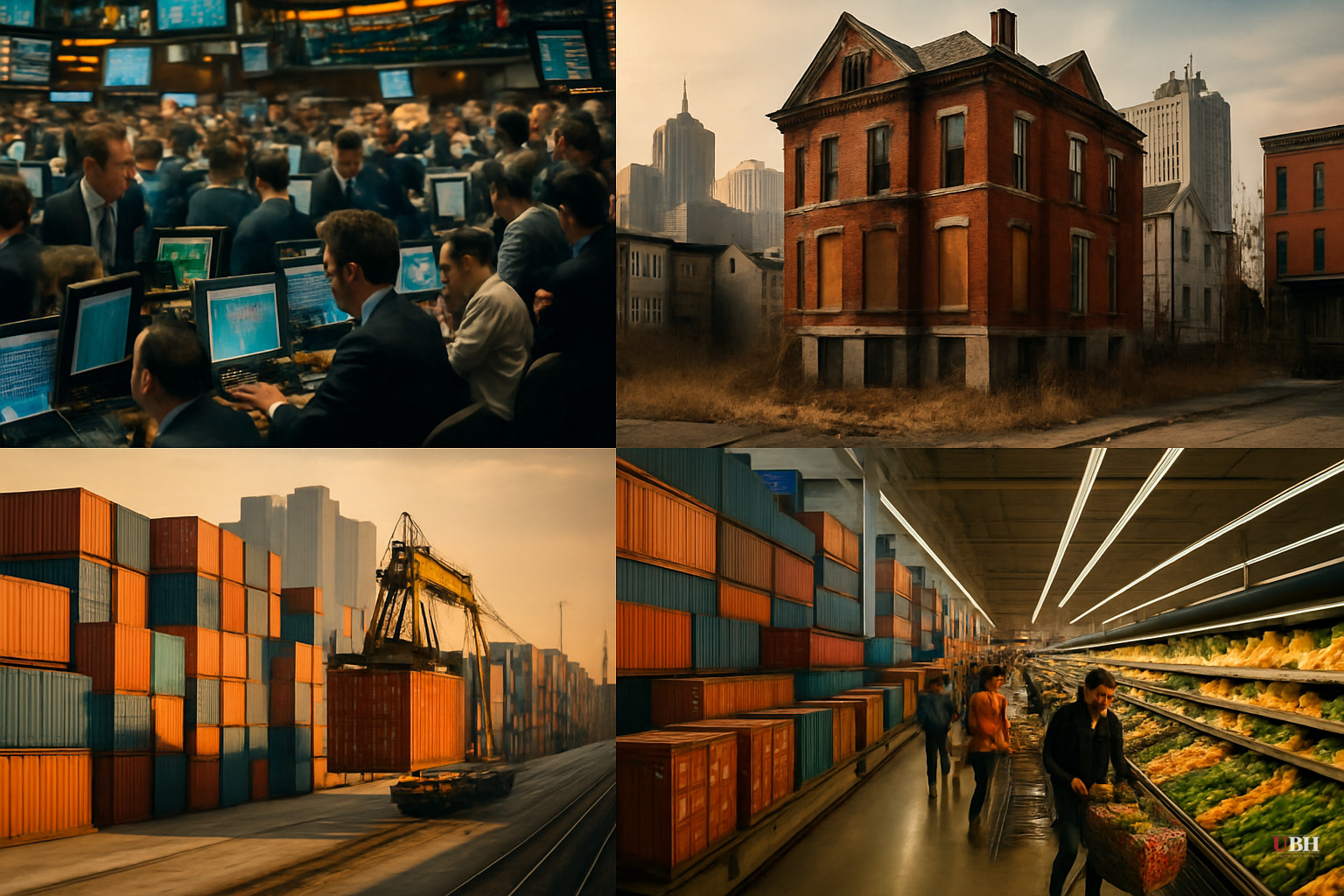
Three New Data Points. Three Red Flags.
Household debt has climbed to $18.79 trillion with rising delinquency rates. The problem is spreading.
The cracks aren't just getting deeper. They're getting wider — and moving into new territory.
Zombie Foreclosures Now a National Problem
According to real estate analytics company ATTOM, zombie foreclosures — homes abandoned by owners before their foreclosure is legally completed — rose in 38 U.S. states and the District of Columbia in Q2 2026.
Out of 104.9 million residential properties nationwide, 245,376 are currently in the foreclosure process. Of those, 8,312 are zombie properties — meaning the owners walked away and left the bank holding an empty, deteriorating building that technically still belongs to them. The owner remains on title. The bank cannot sell it yet. The house sits empty and rots.
Georgia led the surge with a 98 percent quarter-over-quarter jump in zombie foreclosures, per ATTOM via Epoch Times. North Carolina was up 67.2 percent. Indiana up 42 percent. Iowa up 35.5 percent.
Cedar Rapids, Iowa had the highest share of any metro area at 13.2 percent zombie status among properties in foreclosure. Wichita, Kansas came in second at 12.9 percent.
Only two states with at least 50 zombie homes saw a decline: Washington and New York, down 13.1 percent and 2.2 percent respectively.
This is no longer a regional story.
Commercial Real Estate: Lenders Are Quietly Bleeding Out
The residential picture is bad. The commercial picture is arguably worse — because banks are actively hiding it.
According to a report via Epoch Times citing data from financial research firm MSCI, downtown office values are down 40.2 percent from three years ago. Commercial property prices overall rose a pathetic 0.3 percent year over year in January — but downtown offices still fell 1.3 percent in that same window.
Mainstream coverage has not emphasized clearly enough: lenders aren't foreclosing on these underwater office buildings. The reason is simple. Once they own them, they're stuck with half-empty office towers in cities where remote work is now standard.
David Marino, cofounder of Hughes Marino, a San Diego-based corporate real estate advisory firm, said it plainly in an EpochTV interview: "The horses are out of the barn and never coming back."
Instead of foreclosing, lenders are offloading troubled loans at a loss. They're absorbing the hit quietly to avoid the PR nightmare and carrying costs of owning vacant commercial property.
According to Cushman and Wakefield, national office sublease inventory dropped 13.6 percent year over year in Q1 to 101 million square feet. Sublease space peaked at 189 million square feet in January 2023 per CBRE Group — leaving a mountain of empty space that nobody needs.
A Bureau of Labor Statistics report from April 16 showed 22.6 percent of workers teleworked or worked from home in March. FlexJobs reported that remote job postings jumped 20 percent month-over-month in Q1 2026, with continued growth expected.
Office demand isn't coming back. The banks know it. They're just trying to bleed slowly instead of all at once.
Financial Stress Forecast: It's Getting Worse, Not Better
The National Foundation for Credit Counseling released its quarterly Financial Stress Forecast on Wednesday, and the number is grim.
The forecast for Q2 2026: a stress score of 6.7 out of 10. The NFCC's index has stayed at or above 6.3 since the end of 2024. For context, the post-pandemic low in 2021 was 3.5.
Bruce McClary, Senior VP at the NFCC, said Americans "are entrenched in financial stress" — the direct result of sustained high prices piled on top of near-record credit card and auto loan debt.
Mike Croxson, CEO of NFCC, was blunter: "Consumers want to manage their obligations responsibly, but their traditional capacity to do so is evaporating under current market conditions."
The NFCC also reported a surge in consumers seeking credit counseling. People don't call a credit counselor when things are fine.
Gas above $4 a gallon according to AAA, and annual inflation near 4 percent per the Bureau of Labor Statistics, are feeding the crisis.
What Mainstream Media Is Missing
Left-leaning outlets are covering the consumer stress angle but downplaying the zombie foreclosure data and mostly ignoring how commercial lenders are disposing of bad debt off the front page.
Right-leaning outlets are covering the commercial real estate and foreclosure numbers but framing it primarily as a Biden-era hangover without acknowledging that the current administration's tariff-driven inflation is contributing directly to the consumer stress numbers the NFCC just released.
Both framings are incomplete. The picture is one of multi-front deterioration that predates and postdates any single administration.
The Wider Consequences
Empty houses in neighborhoods pull down property values. Banks eating losses on commercial loans tighten lending standards for everyone — including small business owners trying to get a loan. A 6.7 financial stress score means the person next to you at work, at church, at the grocery store is one medical bill or car repair away from a serious crisis.
The $18.79 trillion debt number was the headline. These are the consequences starting to show up in real life.
Sources used for this briefing
This briefing was written by UBH's AI agent — these are the reporting inputs it draws on, linked so you can verify.


