
Unbiased headlines. Facts, not spin.
Unbiased Headlines is an independently owned news organization. We bring you the facts, not opinions, written fresh from 110+ named sources. Sources linked so you can verify it yourself.
 health
Low Interest (4/10)
Zimbabwe's New HIV Infections Fell From 79,000 to 15,000 Since 2010, but a Nurse and a Physician Warn Young People Are Dropping Their Guard
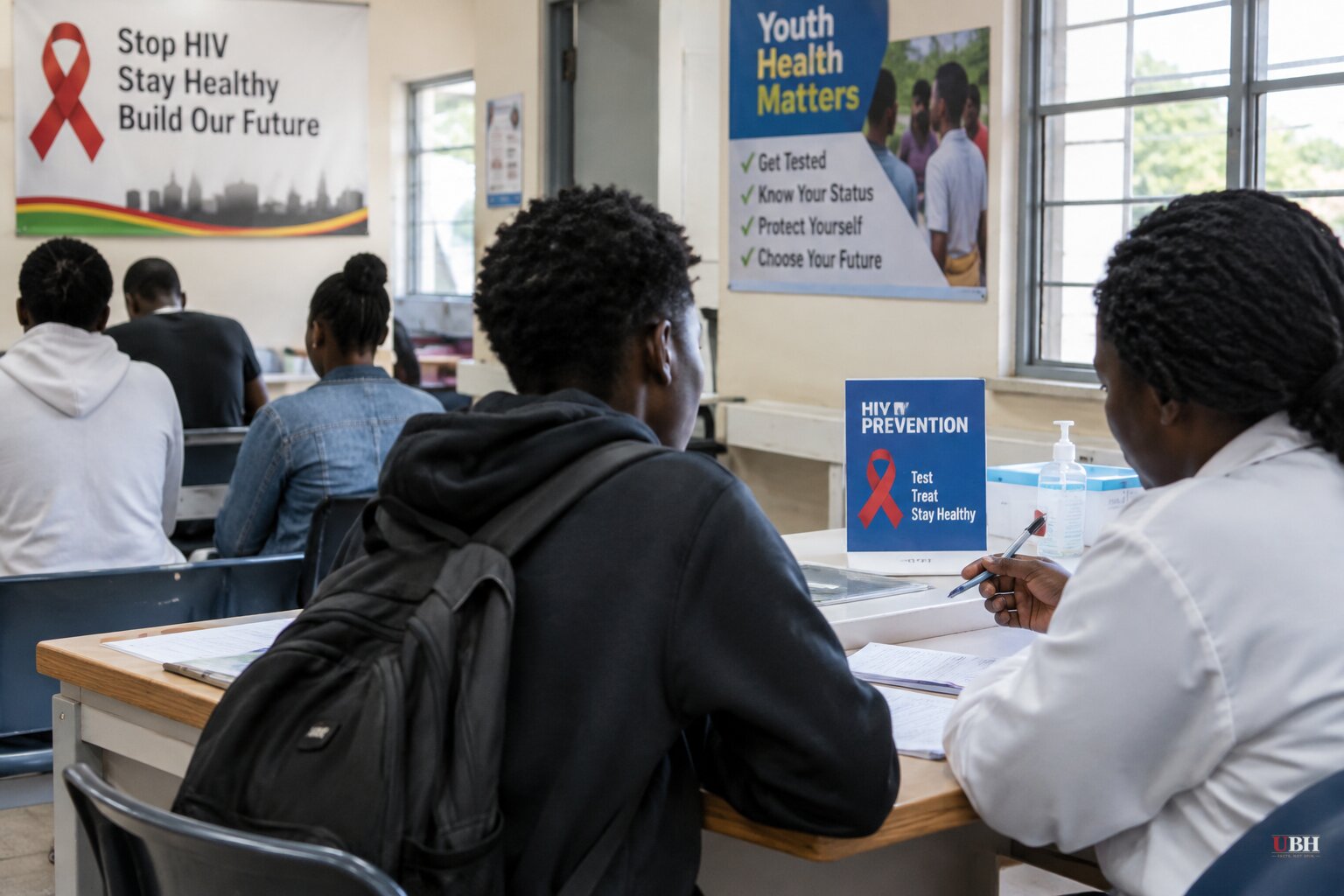
Zimbabwe has done something few countries in the region can claim. It has driven new HIV infections down sharply in little more than a decade.
UNAIDS estimates annual new infections fell from 79,000 in 2010 to 15,000 in 2023. Among people aged 15 to 24, the estimate dropped from 27,000 to 4,400 over the same period.
Now the people on the front line say the next stretch is harder.
A nurse who remembers the wards
Shaun Moyo, 48, started nursing at Parirenyatwa Hospital in Harare in the late 1990s. She remembers wards full of patients and funerals as a familiar part of everyday life. She now works locum shifts at two major public hospitals in the city.
"Seeing today's youth who are blessed with condoms, ARVs and PrEP meds makes me furious," Moyo said. "In the 90s every weekend was a trek to cemeteries, not weddings."
Her worry is about perception. Antiretroviral treatment means HIV is no longer the quick death sentence it was once widely understood to be. In her view, some young people have started to underestimate the consequences of infection.
She recalled conversations involving her son and his friends on Facebook. One comment suggested that "getting blood pressure is worse than HIV."
That is one anecdote, not a survey. The reporting itself notes that her observations are personal, not scientific evidence of changing attitudes among young people.
A physician's warning
Dr Misheck Ruwende, a Zimbabwean family physician and advocate for reducing HIV stigma, raised the alarm in a public address on Twitter in September.
"The sad part is that this is coming at a time we have the best options to prevent HIV, from rapid testing, PrEP, condoms, PEP to injectables," Ruwende said. "It wasn't like that in the late 90s to early 2000s. It looks like we are now reversing all this huge success we had notched in recent times."
Ruwende's claim is a warning from the clinic and the community. The UNAIDS estimates cited here end in 2023, so they cannot confirm or refute a reversal. Neither Ruwende nor Moyo has offered new national figures.
The tools he lists were not available in the late 1990s or early 2000s. Whether young people understand them, can reach them and choose to use them is the open question.
The gap is not only attitude. Young people are navigating relationships, economic pressures and uneven access to youth-friendly health services. UNAIDS also reported in March 2025 that disruptions to US-funded HIV programmes in Zimbabwe had affected services for key populations, including access to PrEP, testing and counselling.
Men are the weak link in the testing chain
The national numbers also hide a gap between the sexes.
A cross-sectional study of adult men drew on the Zimbabwe Population-based HIV Impact Assessment, conducted between late 2019 and early 2020. The Ministry of Health and Child Care ran that survey, with technical cooperation from the U.S. Centers for Disease Control and Prevention and funding from the President's Emergency Plan for AIDS Relief (PEPFAR).
Adult male prevalence was 10.2 percent. More than 15 percent of infected men were unaware of their diagnosis. The study found that this diagnostic gap was the single largest vulnerability in the male care pathway.
Men trailed women at every stage:
- Awareness of status: 84.3% for men versus 88.3% for women.
- Antiretroviral uptake: 95.9% versus 97.6%.
- Viral suppression: 89.0% versus 91.0%.
Zimbabwe is among seven countries that have reached the UNAIDS 95-95-95 targets overall. Those targets call for 95% of people with HIV to know their status, 95% of those diagnosed to be on sustained treatment, and 95% of those treated to achieve viral suppression, all by 2030. The national average obscures the male shortfall.
The map does not match the burden
The study also found a geographic mismatch. The southwest has the highest infection prevalence. Diagnostic blind spots are disproportionately concentrated in northern and eastern territories.
That challenges traditional burden-based resource allocation. Spending that follows prevalence alone would miss the men who are not being diagnosed.
The survey was conducted in 2019 and 2020. It predates the current generation of young adults coming of age, so it cannot say how 15-to-24-year-olds behave today.
What comes next
The decline since 2010 is documented in UNAIDS estimates. The warning that it is slipping is, for now, a clinician's judgment.
The test is whether newer national estimates show infections among 15-to-24-year-olds staying near the 4,400 level or climbing back. Until those numbers come in, the case for sustained testing, especially of undiagnosed men in the north and east, rests on figures from 2023 and earlier.
Sources used for this briefing
6 links from 5 independent newsrooms (syndicated copies of the same report count once)
These are the sources it draws on, linked so you can verify.


