
Unbiased headlines. Facts, not spin.
Every story is an unbiased news briefing written from 110+ sources across the spectrum — sources linked so you can verify it yourself.
 economy
Notable (6/10)
August 13, 2026 at 12:59 AM
economy
Notable (6/10)
August 13, 2026 at 12:59 AM
Zhu Rongji, Architect of China's Market Reforms, Dies at 97 in Beijing
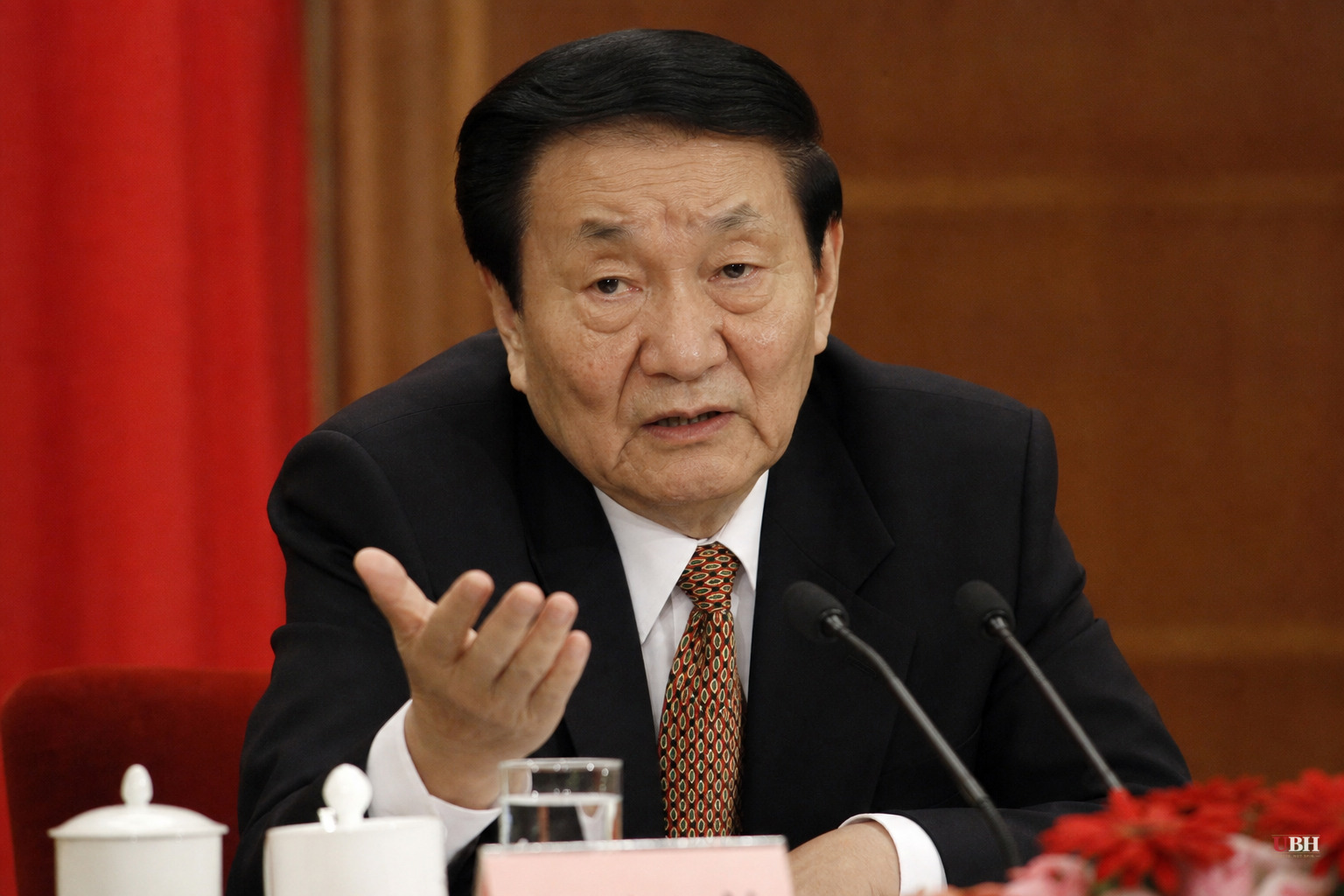
Zhu Rongji, the former Chinese premier who tore apart the country's Soviet-style command economy and forced it into the global market, died Wednesday in Beijing. He was 97, according to NPR, the Guardian and the South China Morning Post. Chinese state media Xinhua and CGTN listed his age as 98, citing Chinese customary age reckoning. State media said the cause was illness.
Zhu ran China's economy through the 1990s and served as premier from 1998 to 2003, working under then-Communist Party leader Jiang Zemin. An obituary jointly issued by the CPC Central Committee, the Standing Committee of the National People's Congress, the State Council and the National Committee of the Chinese People's Political Consultative Conference called him "an excellent Party member" and "an outstanding proletarian revolutionist, statesman and leader of the Party and the state," according to Xinhua.
A technocrat who broke China's economy open
Zhu was a trained engineer, not an ideologue. He took charge of an economy still reeling from the 1989 Tiananmen crackdown and the collapse of the Soviet Union, at a moment when hardliners in Beijing wanted China to turn inward, according to the Guardian. Zhu pushed the opposite direction.
He gutted China's bloated, inefficient state-owned enterprise sector, rebuilt the tax and banking systems, and did it while publicly threatening corrupt officials. "I have prepared 100 coffins here — 99 for corrupt officials and one for myself," Zhu said in 1998, according to China's People's Daily, as reported by the Guardian. He once fired a provincial governor on the spot for missing growth targets. That earned him the nickname "the Boss."
By the end of the 1990s, Zhu could credibly say China had become "the factory of the world," the Guardian reported. That description still holds three decades later.
The WTO deal that changed American manufacturing
Zhu's defining legacy is China's 2001 entry into the World Trade Organization, a deal six and a half years in the making. Charlene Barshefsky, the former U.S. trade representative who negotiated directly with Zhu, told NPR he "embraced the notion of a China whose economic system was more compatible with that of the West," one with "very limited state intervention" — at least on paper.
The negotiations nearly closed in 1999 when Zhu visited Washington, but President Bill Clinton pulled back from signing amid the fallout from the Monica Lewinsky scandal, according to the Guardian. Zhu was furious. He reportedly told his own officials he was in awe of Washington's incompetence.
The deal finally closed in 2001 after the U.S. Senate voted in 2000 to grant China permanent normal trade relations. Kenneth Lieberthal, a former national security adviser to Clinton who negotiated with Zhu directly, told NPR the talks were real substance, not just posturing. "This was not talking points. It was a lot of give and take," Lieberthal said.
The deal built the modern Chinese export machine and made a lot of American and Chinese businesses rich. It also hollowed out American manufacturing towns that never came back, and helped fund the buildup of a Chinese state that today is Washington's chief strategic rival. Zhu wanted a more market-driven China. He got one that still answers to the Communist Party first.
Contested legacy, muted farewell
Zhu retired in 2003 and was replaced by his protégé, Wen Jiabao. Unlike some retired Chinese leaders, he largely vanished from public life for the next 23 years, according to NPR.
His reforms remain contested inside China itself. He freed up enormous amounts of labor and capital that generated three decades of growth, but critics say the same reforms left the financial system exposed to risks that Beijing is still managing today, NPR reported.
Reaction outside the mainland has been more uniformly warm. Hong Kong Chief Executive John Lee Ka-chiu issued a statement Wednesday thanking Zhu for his support of the city and offering condolences, according to the South China Morning Post.
What's missing from the state obituaries out of Xinhua and CGTN is any acknowledgment of the harder edges of that legacy: the mass layoffs from state-enterprise restructuring, the corruption crackdowns that also served to consolidate power, or any debate at all about whether his opening of China's economy ultimately strengthened the Party's grip rather than loosening it. That's not surprising from state media. It is a gap in the record.
No successor has been named to any specific memorial post, and Beijing has not announced funeral arrangements as of Wednesday evening. The scale of any state memorial will be one signal of how the current leadership under Xi Jinping wants to frame a reform era it has, in practice, partly reversed.
Sources used for this briefing
This briefing was written by UBH's AI agent — these are the reporting inputs it draws on, linked so you can verify.


