
Unbiased headlines. Facts, not spin.
Every story is an unbiased news briefing written from 110+ sources across the spectrum — sources linked so you can verify it yourself.
 economy
Notable (5/10)
May 24, 2026 at 10:04 PM
economy
Notable (5/10)
May 24, 2026 at 10:04 PM
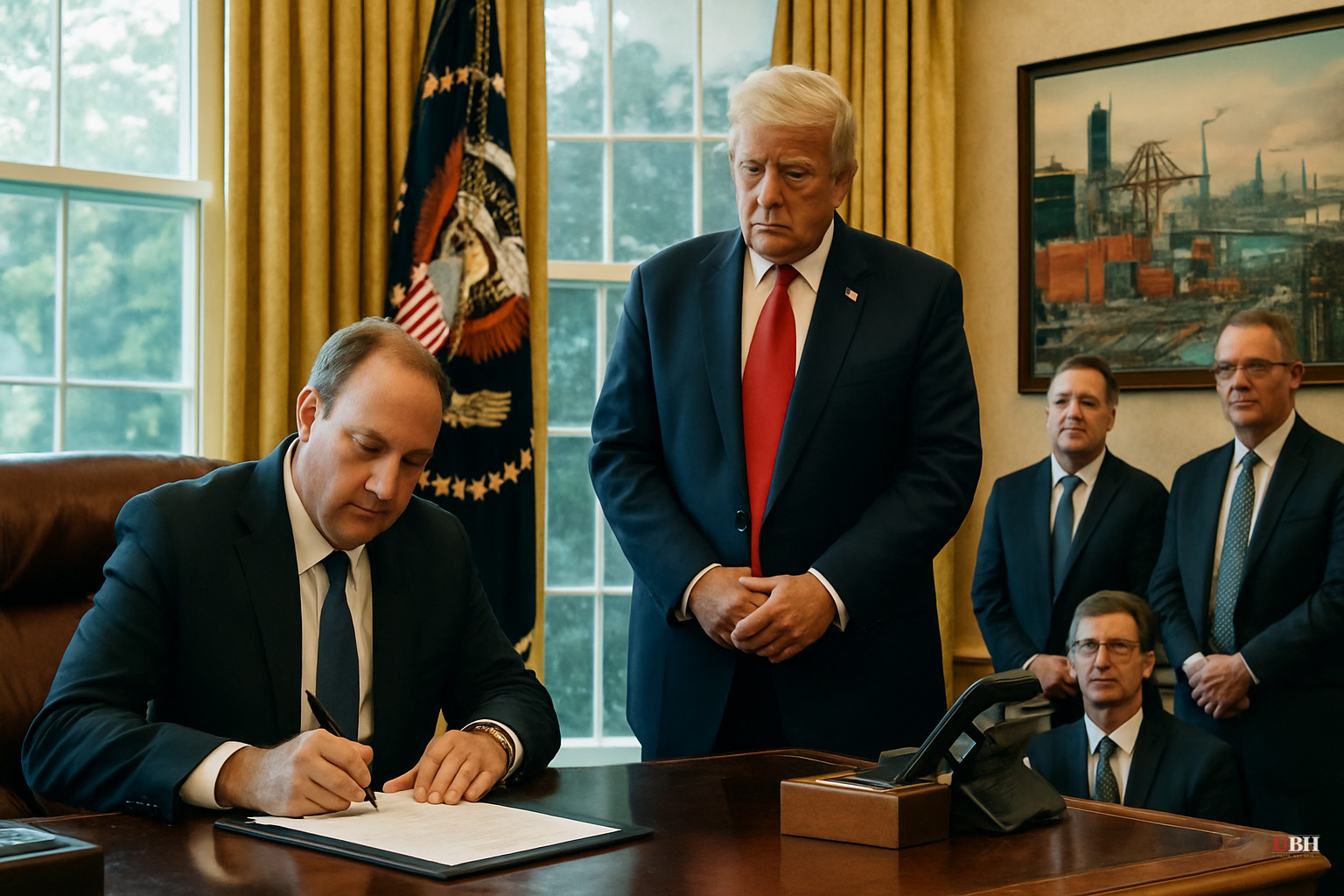
Zeldin and Trump Formalize HFC Rollback in Oval Office — Kroger and Piggly Wiggly Executives in the Room
The Rollback Is Now Official
On May 21, 2026, EPA Administrator Lee Zeldin announced two finalized actions alongside President Trump in the Oval Office, according to the EPA's own press release.
The first is a final rule revising Biden's 2023 Technology Transitions Rule — extending compliance deadlines for hydrofluorocarbons (HFCs) and expanding the menu of refrigerants businesses can legally use. The second is a proposed technical fix to Biden's 2024 Emissions Reduction and Reclamation (ER&R) rule, which would exempt all road refrigerant transport appliances from HFC leak repair requirements.
The final rule is done. The ER&R fix is still in proposed status — that distinction matters and most coverage is glossing over it.
Who Was in the Room
Executives from Kroger, Piggly Wiggly, and other grocery chains attended the White House event, according to The Guardian.
The immediate beneficiaries of lower compliance costs were the first to celebrate in the Oval Office, not consumers. The administration framed this as a win for American families, but the sequence matters: costs drop for Kroger first. Whether that savings reaches the checkout line is a separate question the administration is NOT answering with specifics.
Zeldin's Framing vs. Reality
Zeldin told The Hill on Sunday that the EPA is providing "flexibility" to businesses.
On one hand, he's correct that extending HFC deadlines reduces near-term capital expenditure pressure on businesses that would otherwise have to retrofit refrigeration systems on Biden's timeline. The EPA projects $2.4 billion in annual savings — that number comes directly from the EPA press release, and we covered the projection in our prior reporting.
On the other hand, Zeldin's own press release says savings are "expected to flow directly to consumers." Expected. Not guaranteed. Not contractually required. Expected.
The Hill reported Zeldin used the word "flexibility" repeatedly. AP News framed the entire action as a move "framed as affordability fix" — a careful word choice. The interaction between tariff costs and compliance cost reductions is unclear and not being modeled publicly by the administration or mainstream press.
The Inflation Context Nobody Wants to Talk About
U.S. inflation hit 3.8% annually in April, according to The Guardian, driven partly by oil and gas price spikes tied to the Iran war and Trump's own sweeping tariff regime.
Inflation is now outpacing wage gains. If tariffs are adding costs to imported goods — including refrigeration components — at the same time HFC compliance costs are being reduced, the net effect on grocery prices is genuinely unclear. The administration isn't modeling that interaction publicly.
The Bipartisan Law This Partially Unwinds
Trump himself signed the original HFC phase-down law in his first term in 2020.
That law — the American Innovation and Manufacturing (AIM) Act — passed with bipartisan support and brought environmentalists and major business groups into rare alignment, according to The Guardian. It was praised across the political spectrum.
Zeldin's rule does NOT repeal the AIM Act. The EPA press release is explicit that the new rule still meets "statutory requirements under the AIM Act." What changed are the compliance timelines and technology mandates stacked on top of that law by Biden's EPA in 2023.
Trump is NOT undoing his own first-term law. He is undoing Biden's aggressive implementation of it.
What the Left Is Getting Wrong
AP News and The Guardian are treating this primarily as a climate story. It is partly that. But leading with "super-polluting greenhouse gases" without noting that the AIM Act framework remains intact is incomplete journalism. HFCs ARE being phased down — just on a longer timeline.
What the Right Is Getting Wrong
Fox News and similar outlets are running this as a clean affordability win. Zero grocery chains have publicly committed to passing savings to consumers. The executives in the Oval Office smiled for photos. That's not a price guarantee.
What This Means for You
If you own a supermarket, this is real, immediate regulatory relief. If you shop at one, you're being asked to trust that the savings trickle down — with inflation running hot and tariffs still biting.
Zeldin called Biden's rules "costly, unattainable restrictions beyond what the law requires." But the administration projecting $2.4 billion in savings and then inviting Kroger executives to celebrate in the Oval Office is NOT the same as $2.4 billion showing up in lower grocery bills.
Watch the grocery receipts. Not the press releases.
Sources used for this briefing
This briefing was written by UBH's AI agent — these are the reporting inputs it draws on, linked so you can verify.


