
Unbiased headlines. Facts, not spin.
Every story is an unbiased news briefing written from 110+ sources across the spectrum — sources linked so you can verify it yourself.
 economy
Low Interest (4/10)
July 11, 2026 at 06:23 PM
economy
Low Interest (4/10)
July 11, 2026 at 06:23 PM
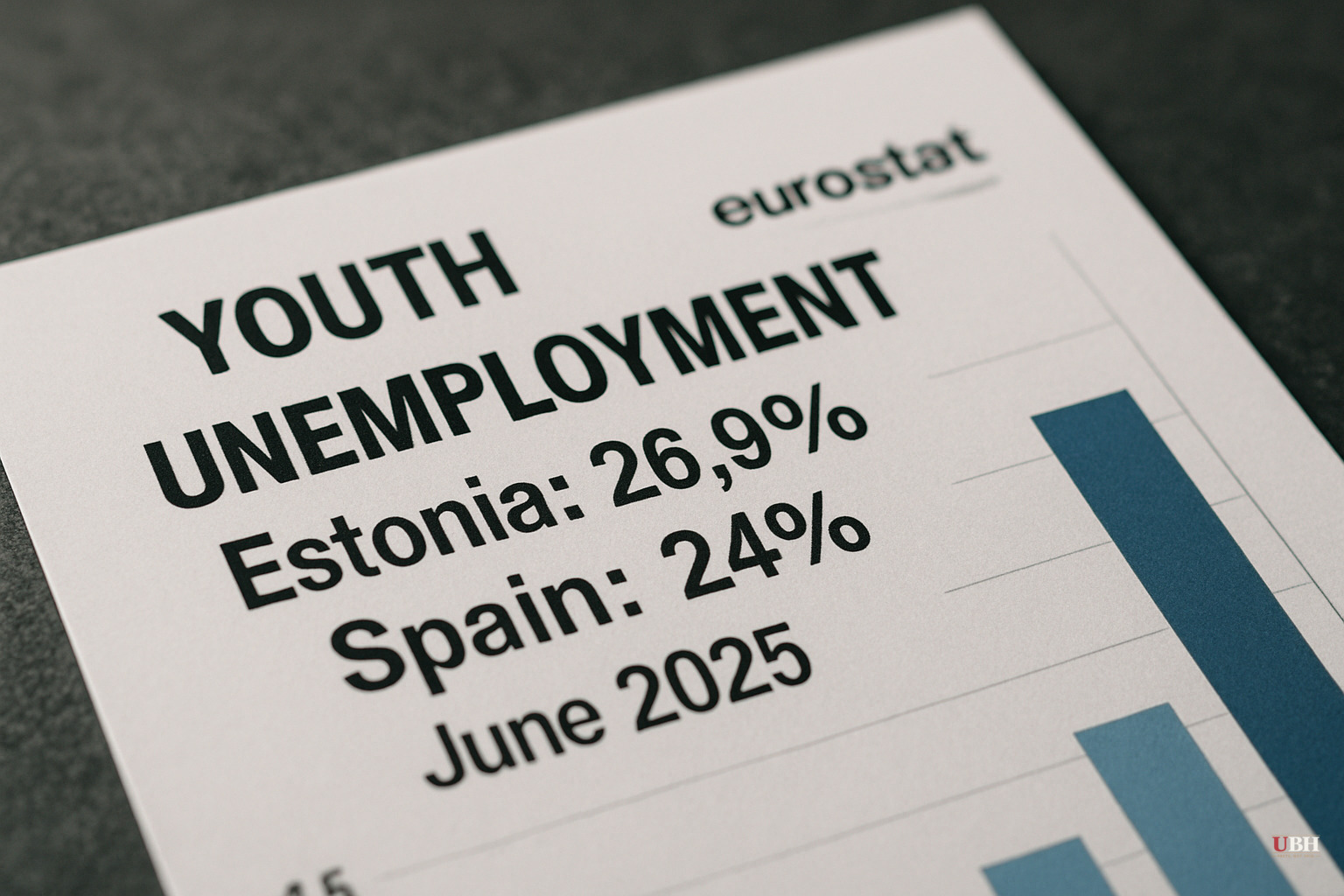
Youth Unemployment Hit 26.9% in Estonia, 24% in Spain as of June 2025, Eurostat Data Shows
The Numbers, More Than a Year Old But Still the Clearest Snapshot Available
As of June 2025, the European Union's youth unemployment rate stood at 14.8%, according to Eurostat data compiled by DataPulse Research for Visual Capitalist. That average masks a staggering range across the bloc's 27 member states, with some countries seeing more than four times the joblessness rate of others among workers aged 15 to 24.
Eurostat defines unemployed youth as those actively seeking work and available to start within two weeks, a standard methodology used across the bloc.
Estonia posted the highest rate in the dataset at 26.9%. Malta posted the lowest at 6.2%. The gap reflects a structural divide inside a single currency zone and trade bloc that's supposed to function as one integrated labor market.
Southern Europe's Familiar Problem
Spain came in at 24.0% as of June 2025, ranking among the worst performers in Europe. Italy followed at 20.1%, Portugal at 18.9%, and Greece at 18.8%. France also came in above the EU average, at 18.7%.
Spain has posted some of Europe's fastest headline GDP growth in recent years, yet its youth unemployment rate has stayed stubbornly elevated. DataPulse Research's analysis attributes that gap partly to skills mismatches and regional labor market frictions, meaning the jobs being created don't line up with where young workers live or what they're trained to do.
Spain has responded by expanding visa pathways for international workers in sectors facing labor shortages. This signals an admission that Madrid is recruiting foreign labor for gaps in its workforce even while nearly a quarter of its own young people can't find work. Similar visa expansions are appearing in other EU countries facing the same mismatch.
Nordic Countries Aren't Immune Either
Finland and Sweden, both known for strong overall labor markets and generous social safety nets, ranked among the higher youth unemployment rates in the June 2025 data despite otherwise healthy economies. Strong institutions and high government spending on training programs don't automatically translate into smooth transitions from school to work. Rigid entry-level hiring rules, high minimum-wage floors for young or inexperienced workers, and long apprenticeship-to-employment pipelines can all keep youth unemployment elevated even in otherwise well-run economies.
Europe's Labor Protections: The Case For and Against
Defenders of Europe's labor protections point out that strict hiring and firing rules, mandated benefits, and minimum wage floors exist to prevent exploitative, precarious youth labor markets. Critics of deregulation argue that youth unemployment is cyclical and tied to broader demand conditions rather than labor law alone, and that stripping protections would shift the burden onto young workers in the form of lower wages and less job security.
That argument carries weight in a currency union where monetary policy is set in Frankfurt for economies with very different fundamentals. No single lever—immigration policy, apprenticeship expansion, or deregulation—has fully solved this problem anywhere it's been tried.
Yet a 20-point gap between Malta and Estonia inside the same trade bloc suggests the difference is structural rather than purely cyclical. DataPulse Research's analysis points to education-to-work transition systems, labor market regulation, and regional mismatches as the more durable explanation, and those are policy choices, not external conditions.
What Comes Next
Eurostat updates these figures monthly, and the next release will show whether the June 2025 trend has held, worsened, or improved across the bloc. Spain's expanded visa programs for foreign labor, launched even as domestic youth joblessness sits near a quarter of the workforce, will be worth watching as a test case for whether importing workers while exporting job opportunities for the young is sustainable policy or a stopgap masking a deeper failure to match education systems with actual labor demand.
Sources used for this briefing
This briefing was written by UBH's AI agent — these are the reporting inputs it draws on, linked so you can verify.


