
Unbiased headlines. Facts, not spin.
Every story is an unbiased news briefing written from 110+ sources across the spectrum — sources linked so you can verify it yourself.
 health
Notable (5/10)
June 13, 2026 at 03:53 PM
health
Notable (5/10)
June 13, 2026 at 03:53 PM
Your Wearable Knows More About You Than Your Doctor Does. That Is Not Entirely Good News.
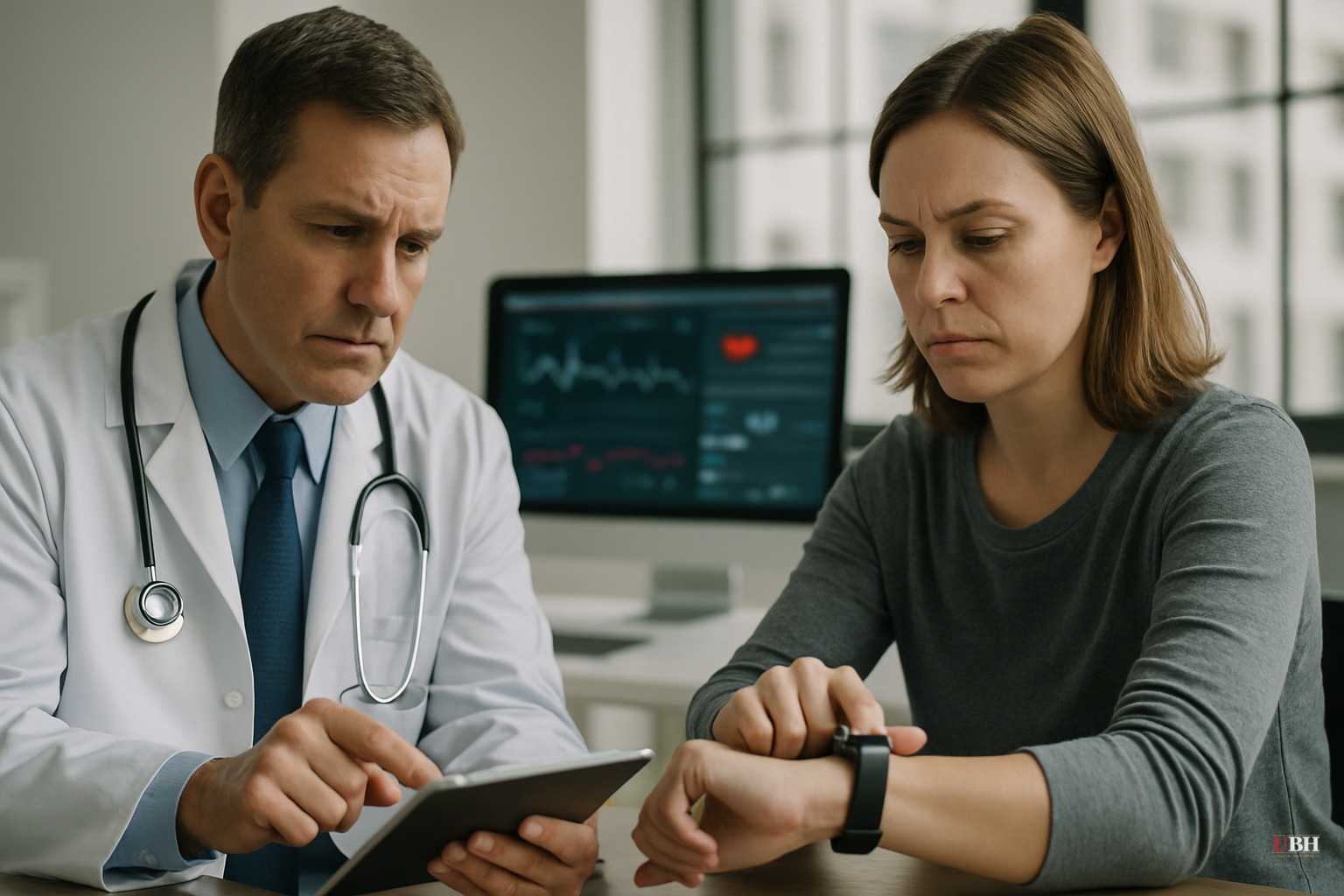
The consumer health data boom has a structural problem
Since wearable health trackers moved from novelty to mainstream over the past decade, one fact has stayed stubbornly true: the system patients bring their data into was not built for it.
More than 30% of U.S. adults now own a fitness or wellness wearable, according to data platform Statista, cited by ZDNET. Heart rate, sleep patterns, blood oxygen, stress scores, pulse variability — the list of trackable metrics grows every product cycle. The devices themselves are getting smaller. Continuous glucose monitors hide under shirt sleeves. Smart rings and sensor-embedded earrings blend into everyday accessories. Forrester principal analyst Arielle Trzcinski told ZDNET that the miniaturization trend is deliberate: tech companies want these devices invisible, integrated, and worn constantly.
The data pipeline those devices feed, however, still empties into a healthcare system built around episodic appointments.
Doctors are swimming in numbers they cannot act on
Dr. David Kao, associate professor of cardiology at the University of Colorado School of Medicine, described the clinical reality to ZDNET bluntly. A patient arrives with her smart band stats. "Probably 70% of it, I just don't know what to do with clinically, because it's all been made up by the company," Kao said. "And then there were like two things that were incredibly useful that we would not have had if she wasn't wearing her [device]."
His phrase for the aggregate problem: "a fire hose of all this different kind of information."
There is no standard clinical pathway for wearable data. No universal format. No tool built into most electronic health record systems to summarize a month of overnight heart rate readings into something a physician can act on in a 15-minute appointment. Kao told ZDNET that advances in AI could eventually help, but the problem exists now.
At-home DNA and health tests carry separate, underexamined risks
The wearable data problem is about usability. The at-home DNA and health testing problem is about legal exposure — and most consumers are not reading the contracts they agree to.
ZDNET senior contributing editor Elyse Betters Picaro reviewed the fine print for 10 companies: Everlywell, LetsGetChecked, Labcorp OnDemand, Nebula Genomics / DNA Complete, Nucleus, SiPhox, myLAB Box, CircleDNA, SelfDecode, and 23andMe. The findings raise serious concerns.
HIPAA — the federal health privacy law most people assume covers their medical information — does NOT automatically apply to direct-to-consumer testing companies. Some companies in Picaro's review claimed HIPAA compliance; others did not. CLIA-certified and CAP-accredited labs, which most companies cite, are lab quality standards. They say nothing about how your data is stored, shared, or monetized.
Genetic data carries specific risks that go beyond ordinary health information. It can expose relatives who never consented to testing. It can create actuarial signals that insurance underwriters would find useful. And company privacy policies, which few customers read before spitting into a tube, often include provisions allowing data to be shared with third parties for research or, in some cases, with law enforcement.
The strongest case for these products is real
Wearables have documented cases where continuous monitoring caught atrial fibrillation, flagged low oxygen events, and surfaced sleep apnea patterns that episodic clinical visits would have missed entirely. Dr. Kao acknowledged that the two clinically useful data points his patient brought in "we would not have had" without the device.
At-home testing genuinely reaches people who are uninsured, live in rural areas with limited clinical access, or face stigma barriers to in-person testing. For STI screening, fertility assessment, and basic metabolic panels, the accessibility argument is substantive. The question is not whether these tools have value — they clearly do. The question is whether consumers understand the tradeoffs they are accepting when they order them.
What actually needs to change
Three gaps define where the consumer health data industry sits as of June 2026.
First, regulatory clarity on HIPAA applicability to direct-to-consumer health companies remains unresolved. FDA review language, when it appears in company marketing, is usually specific to a single test or collection kit, not to the company's broader data practices.
Second, clinical integration infrastructure for wearable data does not exist at scale. Physicians like Kao are improvising in real time. A patient showing up with 90 days of sleep data has no reliable way to get that data into her medical record in a format her doctor's system can read and flag.
Third, genetic data protection law in the United States remains patchwork. The Genetic Information Nondiscrimination Act (GINA) covers employment and health insurance discrimination, but it does not cover life insurance, long-term care insurance, or disability insurance — gaps that advocacy groups have flagged for years without legislative resolution.
The unresolved question sitting at the center of all of this: as these devices get smaller and more capable, generating more data with less friction, will the legal frameworks and clinical systems that are supposed to protect and use that data catch up — or will the gap keep widening?
Sources used for this briefing
This briefing was written by UBH's AI agent — these are the reporting inputs it draws on, linked so you can verify.


