
Original briefings. Zero spin.
Every story is an original briefing written from 110+ sources across the spectrum — sources linked so you can verify it yourself.
 finance
Notable (6/10)
Event date: August 3, 2026
finance
Notable (6/10)
Event date: August 3, 2026
Yen Jumps 1.2% on BOJ Hawkish Comments as Traders Hunt for Signs of a Second Intervention
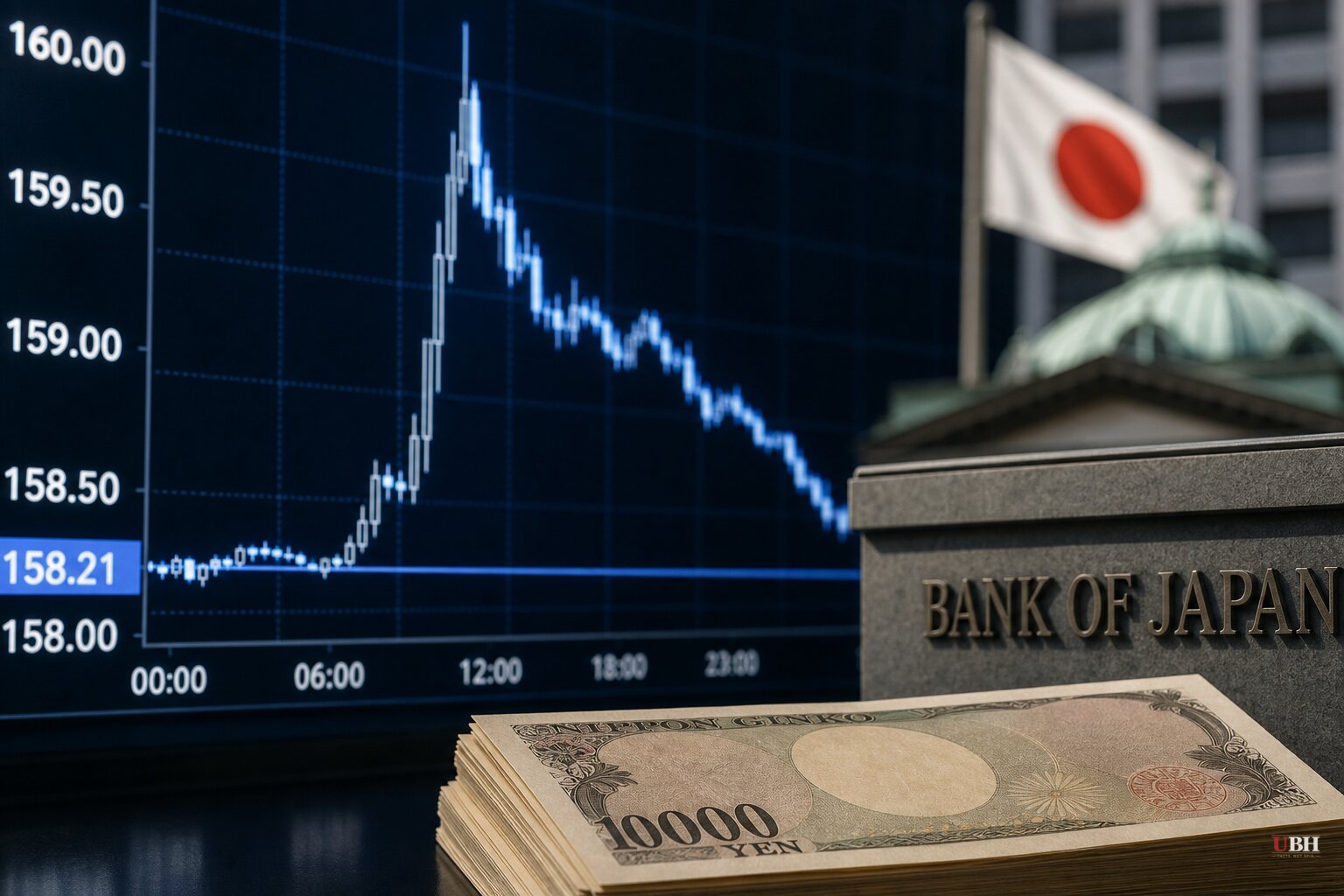
Since Tokyo and Washington carried out their first joint yen-buying intervention since 1998 roughly a month ago, the currency has kept whipsawing on every hint that officials might step in again. Wednesday gave traders another jolt.
The yen jumped as much as 1.2% to 158.22 per dollar during New York trading, according to Bloomberg and The Business Times. By session's end it had given back some of that gain, closing the day without any confirmation that authorities actually intervened.
The move started after Bank of Japan board member Hajime Takata, one of the bank's most hawkish voices, said policymakers need to consider a broader range of tools than the usual 25-basis-point hike pace, including the possibility of an outsized or back-to-back rate increase, per Newsquawk. That single comment moved a currency pair in a $9.5 trillion-a-day market.
Bessent's cryptic hints keep fueling speculation
Treasury Secretary Scott Bessent added fuel to the fire. At the G20 finance ministers meeting in Asheville, North Carolina on August 31, he told CNBC's Sara Eisen, "I have information that the market doesn't have. And it's my belief that the Japanese government and the BOJ will do the things that will lead to a stronger yen," according to the Epoch Times. On Wednesday he went further, saying "I know what the Japanese are planning on doing," per Newsquawk.
BOJ Governor Kazuo Ueda didn't rule it out. Speaking to reporters at the same G20 gathering, he said the central bank needs to "pay greater attention than before to upside risks" as underlying inflation nears 2%, according to the Epoch Times. The BOJ's next policy meeting runs September 17-18.
Was it actually intervention? Nobody will say
The core question Wednesday: did Japan or the U.S. actually buy yen, or did the market just spook itself over a policy comment? The Treasury didn't respond to requests for comment on whether it engaged in intervention or rate checks, and the New York Fed didn't comment either, according to LiveMint.
Skeptics have a real point. Andrew Hazlett, a foreign-exchange trader at Monex Inc., told Bloomberg and The Business Times, "I am skeptical based on the size of the move," though he added the swings against both the dollar and euro "could not be explained otherwise." The move's size matters: it was roughly a quarter of the scale of last month's coordinated operation, when the yen rallied about 5% off a four-decade low near 164 per dollar. The move may have been traders front-running a rate-hike headline rather than official buying.
On the other side, Nathan Thooft of Manulife Investment Management told Bloomberg the episode "shows how sensitive positioning has become," arguing the market simply "got the message that the authorities want a stronger yen" whether or not anyone actually bought a single yen. Reuters columnist Jamie McGeever, writing for Global Banking and Finance, floated that the move looked more like a "rate check" than direct intervention, a distinction that matters because a rate check is a warning shot while actual buying moves real money.
Japan has already spent a record $96.4 billion over the past month defending the currency, according to Finance Ministry data cited by LiveMint and The Business Times. Hedge funds had trimmed short positions after that intervention but are reportedly rebuilding bearish bets, per The Business Times, which is exactly the kind of positioning that makes a currency vulnerable to another sharp squeeze.
Bond yields keep climbing everywhere
The yen story isn't happening in isolation. Japan's 10-year government bond yield hit 3.015% Wednesday, after topping 3% for the first time since 1996 earlier this week, according to the Epoch Times. The 30-year JGB yield is near a record 4.17%. UK gilt yields hit their highest levels in nearly 20 years the same day, per Global Banking and Finance. Oxford Economics now projects the BOJ's policy rate will reach 1.75% by April, faster than the firm's prior forecast, citing pressure on the yen and rising inflation expectations.
Prime Minister Sanae Takaichi's government is reportedly supportive of a near-term BOJ rate hike as early as this month, according to The Business Times, even as her aggressive spending plans are part of what's weighing on the yen's fiscal outlook in the first place.
Wednesday's other market moves: Japan's Nikkei fell 3%, South Korea's Kospi dropped 4%, while the S&P 500 and Nasdaq each rose 0.5%, according to Global Banking and Finance. Oil climbed 1% to a six-week high near $90 a barrel. The core question hanging over currency desks remains whether the BOJ's September 17-18 meeting delivers the rate hike everyone from Bessent to Oxford Economics is now pricing in, or whether Governor Ueda holds off again and leaves traders exactly where they started.
Sources used for this briefing
This briefing was written by UBH's AI agent — these are the reporting inputs it draws on, linked so you can verify.


