
Original briefings. Zero spin.
Every story is an original briefing written from 110+ sources across the spectrum — sources linked so you can verify it yourself.
 finance
Major Story (8/10)
September 3, 2026 at 03:32 PM
finance
Major Story (8/10)
September 3, 2026 at 03:32 PM
Anthropic's Private Shares Hit a $1.4 Trillion Valuation as Its Pentagon Feud Ends in Court, While a Top Defense AI Official Cashed Out Millions in Rival Stocks
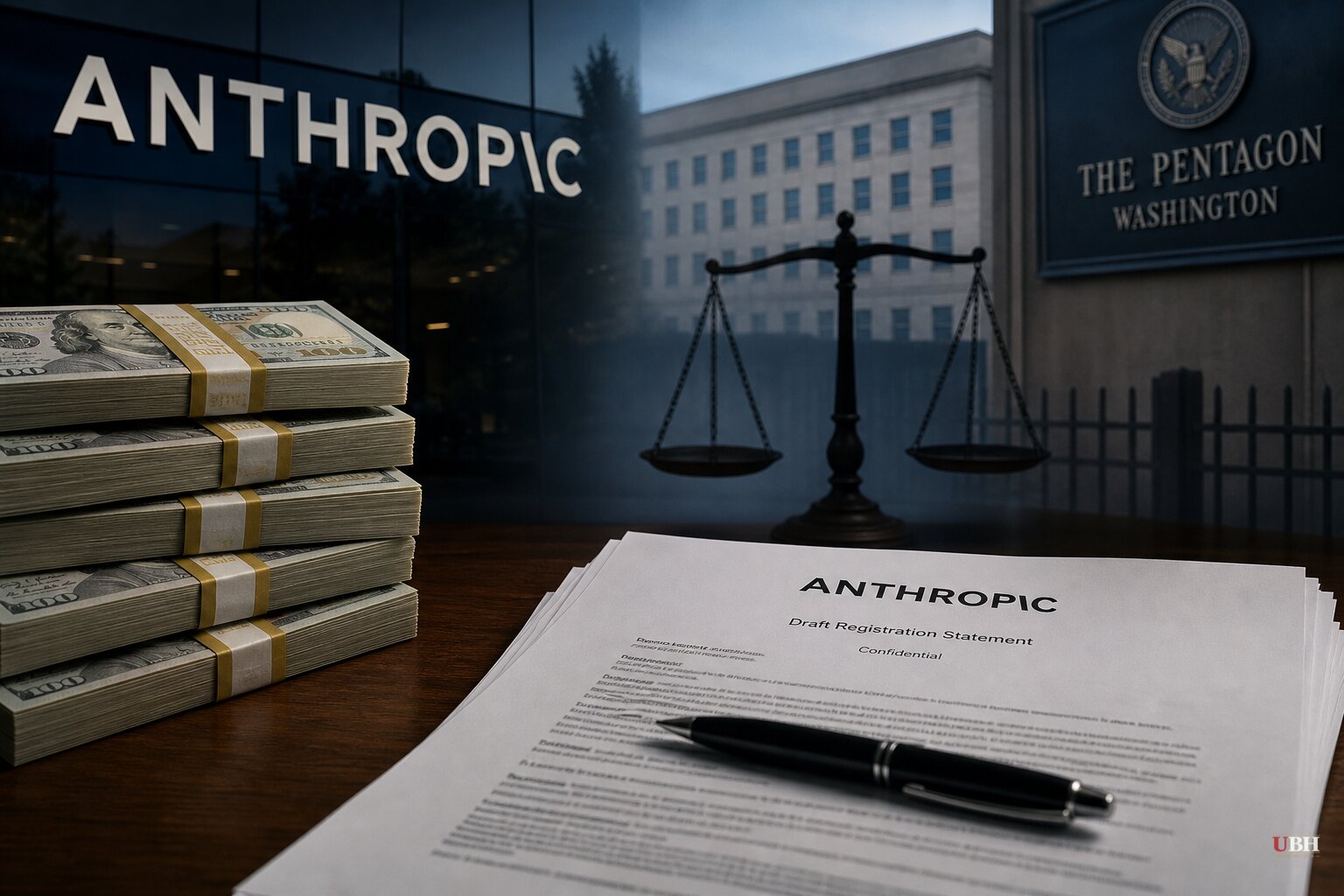
Anthropic can't sell shares fast enough, and the U.S. government can't decide if it wants to do business with the company at all. On the private markets, Anthropic is the hottest ticket in tech. Caplight, a private-markets data platform, puts the company's secondary-market valuation at roughly $1.4 trillion, up more than 400% year-over-year, according to CEO Javier Avalos. Avalos told Fortune he's tracked about $1.5 billion in buyer interest for Anthropic shares since the start of the second quarter of 2026 alone. Getting in isn't cheap. Clara Vydyanath, general partner at Underline Capital, told Fortune that tickets below $25 million are "difficult" and that most deals now clear at $50 million or more against that $1.3 to $1.4 trillion valuation range. Christine Healey, founder of Healey Pre-IPO, said demand is outstripping supply by "3x, 4x, 5x," even for buyers ready to write $100 million checks. Vydyanath's read: "OpenAI feels underpriced and Anthropic feels overpriced. In reality, OpenAI is a phenomenal deal right now." Anthropic is reportedly moving to cash in on that frenzy. The Motley Fool, citing a report from The Information, says Anthropic plans to release its IPO prospectus after the Labor Day holiday, which falls Monday, September 7, with a public listing targeted for late September or early October. The company is reportedly seeking to raise at least $130 billion, which would put its valuation north of $2 trillion. The numbers behind that ambition are real, if third-party estimates are to be believed. Analysts cited by the Motley Fool put Anthropic's second-quarter 2026 revenue at $10.9 billion, up from $4.8 billion in the first quarter, with a first-ever operating profit of about $559 million. Its annualized run rate reportedly topped $65 billion at the end of July, up from roughly $9 billion at the end of 2025. Anthropic is reportedly considering longer lockup periods than the standard 180 days and letting existing shareholders sell as part of the IPO itself, a structure meant to avoid the kind of swing SpaceX saw after its June IPO, when shares hit $226 before dropping to $105 and settling around $141 as of September 2.
The Pentagon's Own AI Money Problem
While Anthropic courts Wall Street, its relationship with the Pentagon has been troubled. Emil Michael, the Pentagon's undersecretary of defense for research and engineering and its chief technology officer, disclosed selling his stake in Perplexity AI in June for between $5 million and $25 million, according to financial disclosures reviewed by The Guardian and reported by Decrypt. Michael sat on Perplexity's advisory board before stepping down in early 2025, ahead of joining the Trump administration that May. It wasn't his first big exit. Michael also held a stake in Elon Musk's xAI, reported at $500,000 to $1 million when he entered government, and sold it on January 9 for between $5 million and $25 million, a gain of up to 4,800%, according to IBTimes UK. The Office of Government Ethics issued him a divestiture certificate for the xAI holdings on December 18. Four days later, the Pentagon signed an agreement to deploy xAI's Grok on its classified networks. Michael didn't actually sell until January 9, after that deal was in place. Richard Painter, a former White House ethics lawyer under President George W. Bush, told The Guardian that Michael "should have sold all interest in the company before" taking the job. There's no indication Michael broke any law or ethics rule, no investigation has been announced, and his ethics agreement bars him from profiting off unvested Perplexity shares, though the disclosures don't clarify whether June's sale involved vested or unvested stock. The sequencing is what draws scrutiny, not any charge or finding of wrongdoing. Michael has also been the public face of the Pentagon's fight with Anthropic, a Claude developer competing directly against Perplexity and xAI for defense dollars. President Trump ordered federal agencies to stop using Anthropic's technology on February 27, and the Pentagon branded the company a "supply chain risk" days later, barring military contractors from working with it. U.S. District Judge Rita Lin ruled last week that the designation illegally retaliated against Anthropic for refusing to let its models be used for mass surveillance and autonomous lethal operations, vacating the blacklist and issuing a permanent injunction, according to Decrypt and Breitbart. By the time the ruling landed, OpenAI had already absorbed the Pentagon contract once slated for Anthropic, and the department had signed classified-network deals with seven other AI firms, including xAI. Anthropic CEO Dario Amodei, for his part, has said the industry can only win back public trust through actual scientific results, not promises, according to Breitbart. His framing: Americans increasingly suspect AI hype is deceptive, and the only fix is delivering something like a cancer cure.
The Money Behind the Midterms
The same industries fueling those valuations are now the biggest corporate spenders in Washington. U.S. companies spent a record $517 million on the 2026 House and Senate races in the 15 months ending in the first quarter, topping the prior two-year record of $461 million set for the 2024 cycle, according to data compiled by Public Citizen and reported by Reuters via Vijesti. Crypto, AI and online gambling companies are now leading that spending, displacing the traditional Wall Street, pharma and oil interests that dominated for decades, per strategists from both parties interviewed by Reuters. Rick Claypool, Public Citizen's research director, argues the money crowds out kitchen-table issues. "When corporate money can flood the political debate, there's less room to talk about what people really care about," he said, pointing to gas prices and health care getting sidelined by narrow crypto and AI regulatory fights. Supporters of the spending counter that it simply gives emerging industries the same voice legacy sectors have long enjoyed in Washington. Progressive Senate candidates James Talarico in Texas and Abdul El-Sayed in Michigan have built campaigns partly around opposing that influence, according to Reuters, and polling cited in the report shows most Americans already believe there's too much money in politics generally. What's still unclear: whether the Office of Government Ethics will scrutinize the timing of Michael's stock sales any further, whether Anthropic actually files its prospectus on the reported post-Labor Day timeline, and how much of that record corporate political spending accelerates once Anthropic's IPO and any related lobbying push get underway ahead of the November 3 midterms.
Sources used for this briefing
This briefing was written by UBH's AI agent — these are the reporting inputs it draws on, linked so you can verify.


