
Original briefings. Zero spin.
Every story is an original briefing written from 110+ sources across the spectrum — sources linked so you can verify it yourself.
 finance
Notable (5/10)
September 3, 2026 at 08:35 AM
finance
Notable (5/10)
September 3, 2026 at 08:35 AM
Yen Gives Back Most of Its Wednesday Spike as deVere CEO Warns of Hidden Portfolio Risk
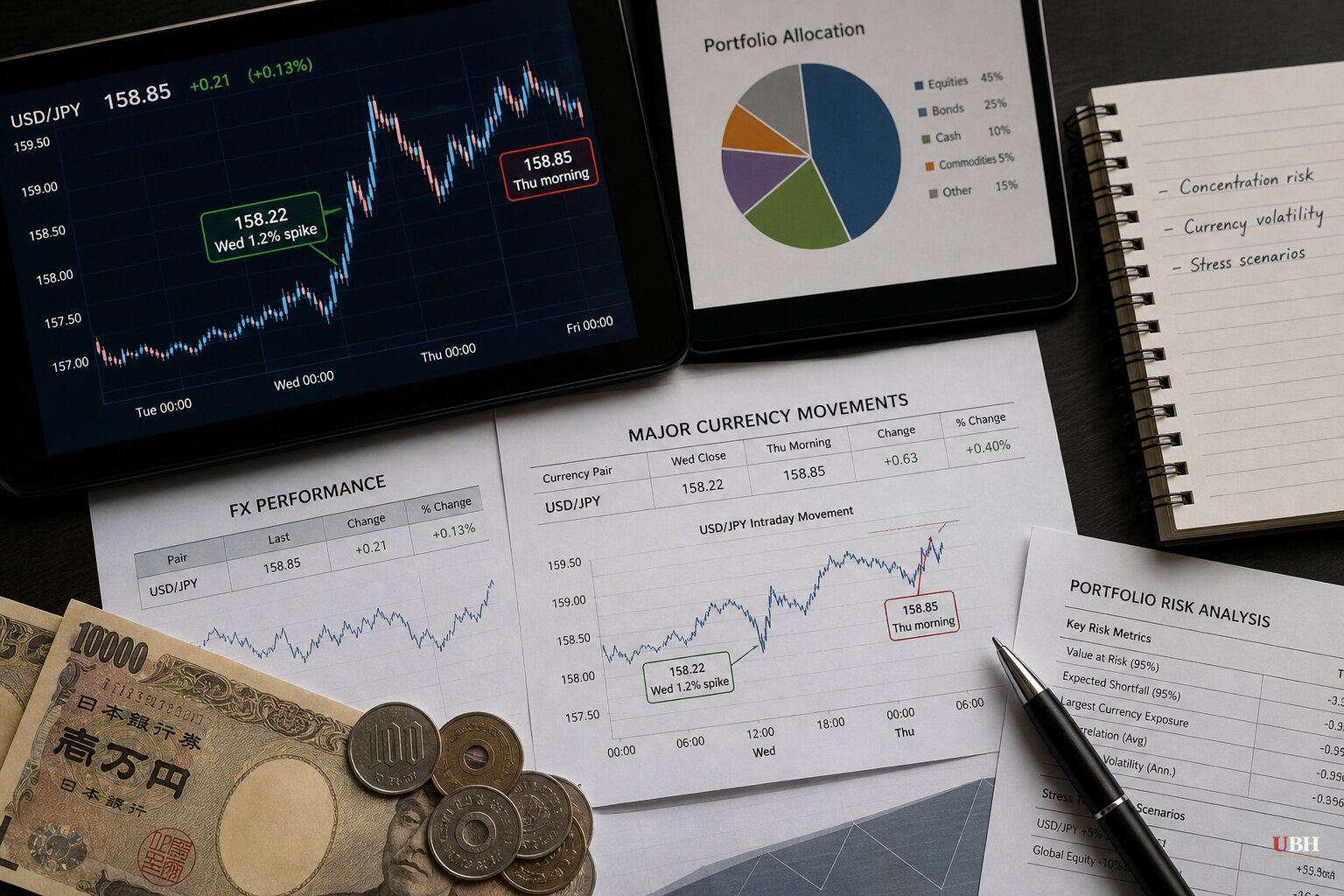
Since the yen's 1.2% intrahour spike to 158.22 per dollar on Wednesday, September 2, the currency has given back most of that move. By Thursday morning in Tokyo it had slipped to 158.85, down 0.1% on the day, according to deVere Group.
The spike itself came after a Bank of Japan board member floated the idea of an outsized or back-to-back interest-rate increase. Swaps markets are now pricing in a hike at the BOJ's policy meeting later this month, deVere reported.
The reversal doesn't mean the story is over. Nigel Green, deVere Group's chief executive, says the fact that a single policymaker comment moved the yen more than 1% in under an hour shows positioning across global currency markets has gotten dangerously stretched.
"A currency moving more than 1% in under an hour on a single comment from a policymaker tells you positioning has become incredibly stretched," Green said. "Markets this jumpy don't need a shock to move hard, a rumour is enough."
The Move Didn't Stay in Tokyo
Green's bigger concern isn't the yen itself. It's what moved alongside it.
A broad measure of dollar strength slipped as much as 0.3% during the spike. Emerging-market currencies climbed. The yen jumped roughly 1% against the euro within minutes, according to deVere Group's account of the trading session.
Green argues that this is the real warning for anyone who thinks a global portfolio is automatically diversified. "A lot of investors assume their portfolio is diversified until a shock like this hit, and suddenly their emerging-market bonds, their multinational equities and their dollar exposure are all moving together," he said.
His point: companies with heavy Japanese revenue, global bond funds holding yen-denominated debt, and emerging-market currencies that trade in sympathy with the yen can all get hit in the same afternoon, by the same trigger. Most portfolios get stress-tested against a stock market crash. Few get tested against a currency moving 2% in a single session, Green said, and this week showed that scenario doesn't need much warning to play out.
The Intervention Backdrop
This isn't happening in a vacuum. Japan spent a record $96.4 billion defending the yen over the past month after it slid to its weakest level in roughly four decades, clawing back about 5% from that low through a coordinated buying operation, according to deVere Group.
That's the same intervention campaign traders were reacting to when Bank of America foreign-exchange strategist Alex Cohen said the market remained "on high intervention alert" during an earlier bout of yen volatility, as reported by ZeroHedge. At the time, Monex Inc. trader Andrew Hazlett said he was skeptical the moves reflected actual intervention given their size, but added the swings against both the dollar and the euro "could not be explained otherwise" by ordinary flow.
Green points to an even smaller trigger from earlier this year. In January, a single phone call from Japanese currency officials to banks was enough to send the yen surging 1.75%. "Authorities have shown they can move a currency with a phone call, never mind an actual rate decision," he said.
The Skeptic's Case
Not every trader buys the intervention narrative for every wobble. Hazlett's skepticism about the size of some of these moves is a fair point worth taking seriously. Stop-hunts and thin liquidity can produce sharp, short-lived spikes that have nothing to do with the Ministry of Finance or the BOJ picking up the phone. Attributing every fast move to official action risks crying wolf.
But that skepticism doesn't erase the pattern. Japan has intervened at scale once already this year, spent nearly $100 billion doing it, and moved the yen 1.75% with a single phone call in January. Whether or not Wednesday's spike was official action, traders are pricing in the possibility, and that repricing is itself moving dollar, euro, and emerging-market levels.
The open question now is whether the BOJ actually delivers the rate hike swaps markets are pricing in at this month's policy meeting. If it does, and Tokyo follows with another round of intervention on top of it, Green's warning about correlated portfolios facing a single-afternoon shock gets its next real-world test.
Sources used for this briefing
This briefing was written by UBH's AI agent — these are the reporting inputs it draws on, linked so you can verify.


