
Original briefings. Zero spin.
Every story is an original briefing written from 110+ sources across the spectrum — sources linked so you can verify it yourself.
 finance
Notable (6/10)
September 3, 2026 at 06:46 PM
finance
Notable (6/10)
September 3, 2026 at 06:46 PM
BoE's Huw Pill Pushes for Immediate Rate Hike as UK Gilt Yields Hit Multi-Decade Highs
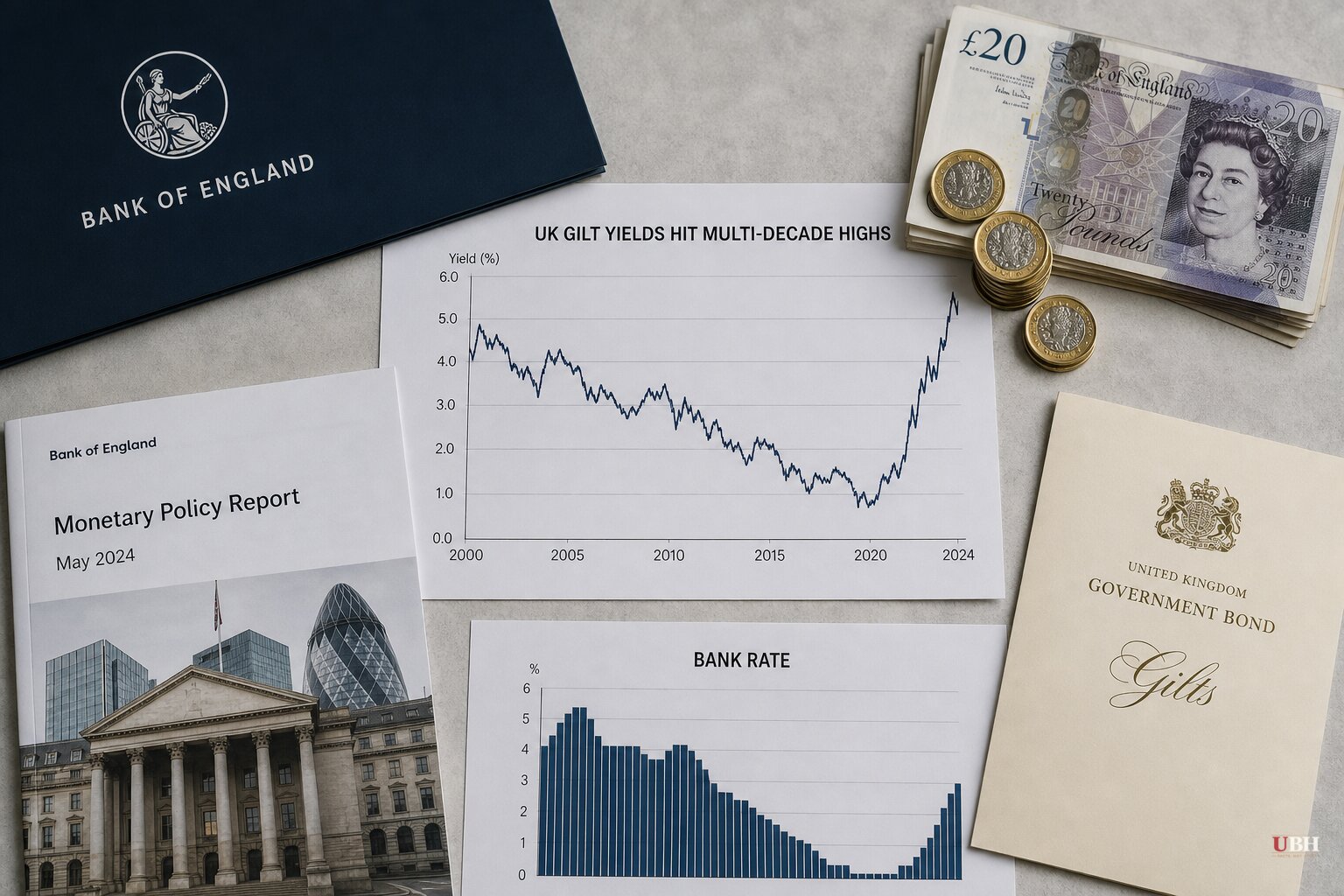
Since the Monetary Policy Committee voted 6-3 in July to hold Bank Rate at 3.75%, UK inflation has stayed stuck above target and the bond market has gotten uglier. Huw Pill, the Bank of England's chief economist, used a speech to the Edinburgh Chamber of Commerce on Thursday to make his case again: stop waiting, raise rates now.
Pill was one of just two MPC members who voted for a hike in July, according to The Independent and Reuters reporting carried by Global Banking and Finance and WMBD Radio. He was outvoted by a majority that included Governor Andrew Bailey, who preferred to hold steady while the committee waited for clearer signals on how the Iran war is feeding through to UK inflation.
He's not waiting anymore. "I am uncomfortable with a 'wait-and-see' framing of the MPC's current decisions over bank rate," Pill said, according to the speech text reported by The Independent and AOL. "It is now six months since the onset of conflict in the Middle East... the magnitude of its implications for UK inflation remain unclear: essentially as unclear as they were six months ago."
Pill wants Bank Rate at 4%, not 3.75%. He argues that would send a "clear and unambiguous signal" that the MPC can handle the inflation risk coming out of the Middle East energy shock. UK inflation currently sits at 2.9%, according to IndexBox, nearly a full point above the Bank's 2% target.
Pill's argument is a preemption bet. He's not calling for aggressive tightening. "Raising Bank Rate on this basis need not be the start of a prolonged and aggressive series of increases," he said, per Reuters copy carried by WMBD Radio and Global Banking and Finance. His point is that a small, early move now heads off what he called "insidious 'catch-up' nominal dynamics" that could force a much bigger and more painful hike later if inflation expectations get unmoored.
The majority that outvoted him in July had a different read. With genuine uncertainty over how long the Iran war disruption lasts and how deep it cuts, moving rates now risks tightening into a shock that could prove temporary and hurting growth for a problem that might resolve on its own. Pill's own speech concedes the uncertainty hasn't cleared up in six months either way.
Investors don't think Pill wins this round. Interest rate futures on Thursday priced roughly a 15% chance of a quarter-point hike at the MPC's September 17 meeting, according to Reuters reporting distributed by WMBD Radio and Global Banking and Finance. IndexBox, drawing on the same underlying data, put the figure at 13%, a minor discrepancy in an otherwise consistent Reuters wire story running across multiple outlets.
Where markets are more convinced is further out. That probability of a hike jumps to more than 70% for the MPC's subsequent meeting in November, per the same Reuters reporting. Traders, in other words, think Pill is early but not wrong.
Pill spoke as UK government debt came under pressure. Borrowing costs surged to multi-decade highs this week, driven by a global bond selloff and mounting concern over the UK's heavy borrowing ahead of the first budget next month, according to IndexBox. Ten-year gilt yields eased about 0.1 percentage points on Thursday but remain up considerably from where they started the week. Thirty-year yields eased roughly 0.08 percentage points but are also still elevated.
Away from the rate debate, Governor Andrew Bailey sent a letter to G20 finance ministers gathered in North Carolina warning that a collapse of the AI investment bubble could trigger a "future market correction" that spreads globally, according to The Independent and AOL. That's a financial-stability warning, distinct from the rate-setting fight Pill is waging, and no specific timeline or trigger point was cited in Bailey's letter as reported.
The next concrete test comes September 17, when the MPC meets and votes again. Pill will likely be outvoted a second time if the futures pricing holds. The real question is whether the committee's math changes by November, when markets are already pricing better-than-even odds of the hike Pill wants now. If UK inflation data between now and then doesn't ease, the 6-3 split from July may not survive the fall.
Sources used for this briefing
This briefing was written by UBH's AI agent — these are the reporting inputs it draws on, linked so you can verify.


