
Original briefings. Zero spin.
Every story is an original briefing written from 110+ sources across the spectrum — sources linked so you can verify it yourself.
 finance
Notable (6/10)
September 3, 2026 at 10:47 PM
finance
Notable (6/10)
September 3, 2026 at 10:47 PM
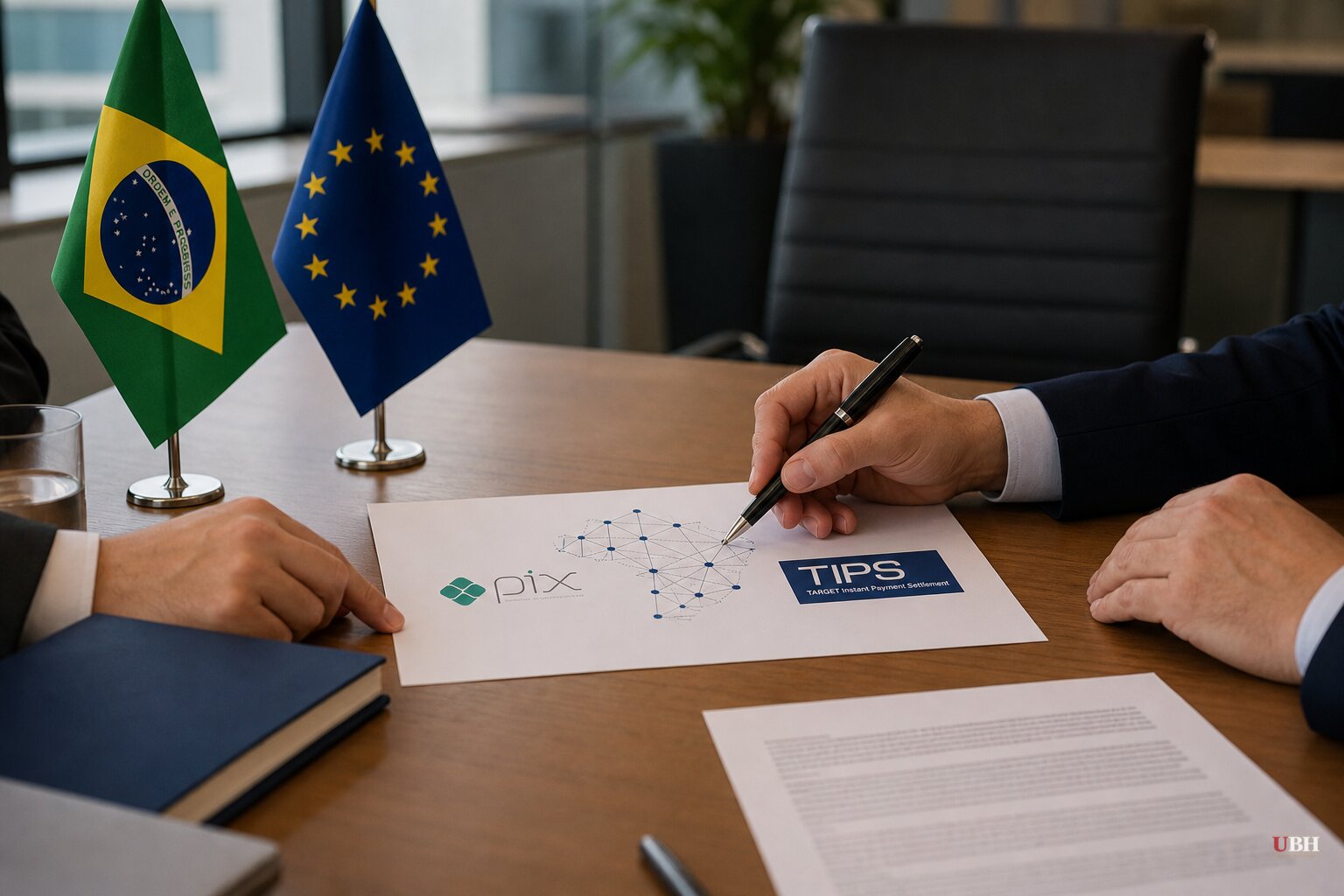
Brazil and ECB Study Linking Pix Payment System to Europe's TIPS Platform
Brazil and ECB Study Linking Pix Payment System to Europe's TIPS Platform
Brazil's central bank and the European Central Bank are studying whether to link Pix, Brazil's dominant instant-payment system, to TIPS, the ECB's own real-time settlement platform, according to two people with direct knowledge of the matter cited by Reuters. Folha de S.Paulo first reported the discussions on Thursday, September 3, 2026.
The talks are early. Folha reported that an ECB document places the project in a "pre-investigation phase," with legal, technical, security and operational reviews expected to wrap up by September. Nine departments inside Brazil's central bank have been mobilized to work out governance rules and check whether the two systems are even compatible, per Folha.
The ECB confirmed the substance of the document to Folha, stating: "The document cited is indeed correct and, at the moment, there is a preliminary investigation underway exploring a possible connection between TIPS and Pix." The ECB told Reuters it had flagged Pix in June as a "currency corridor under exploration" for TIPS. Brazil's central bank declined to comment to Reuters and did not respond to Folha's requests.
If the project moves forward, a pilot could launch as early as 2028, one source told Reuters. Folha reported the same target date for an operational pilot.
Why Pix Matters
Pix launched in late 2020 and has since rewired how Brazilians pay for things. It offers free instant transfers between individuals and low-cost processing for merchants, moving money directly through the central bank's own rails instead of the traditional card-payment chain.
The scale is enormous. According to Payments Industry Intelligence, Pix processed nearly 80 billion transactions in 2025, up 25.7% from the year before, with transaction values topping BRL 35 trillion. Consumer-to-business payments now make up a large share of that volume, meaning Pix has moved well past peer-to-peer transfers into everyday retail spending.
That growth has come at the direct expense of debit and credit cards, and by extension the global networks that run them. Reuters named Mastercard and Visa specifically as networks losing share to Pix inside Brazil.
Brazil isn't stopping at its own borders. Banco do Brasil already lets Pix customers pay merchants in Argentina, with currency conversion handled between reais and pesos, according to Payments Industry Intelligence. Brazil's central bank has also signed Pix information-sharing agreements with 65 foreign counterparts, Reuters reported, and said last month it was assessing links to similar systems abroad.
The Washington Angle
This isn't happening in a vacuum. Reuters reported that Pix was cited among the "unfair practices" the Trump administration used to justify new 25% tariffs on Brazilian goods imposed in July 2026. Reuters also reported that Pix's international expansion has "added to unease in Washington, amid talk in major emerging economies of reducing dependence on the U.S. dollar."
American card networks built global payment infrastructure over decades, and a government-run, zero-fee alternative expanding across borders with central-bank backing is a genuinely different competitive animal than a private-sector challenger. If Pix links up with Europe's TIPS and keeps stacking bilateral deals across Latin America, that represents a real shift in who controls payment rails outside the U.S. system.
But the sources here don't establish that Pix's growth is driven by an anti-dollar agenda rather than plain market competition. Pix wins customers because it's free and fast, not because Brasília is running a currency war. Folha and the ECB describe the TIPS talks in purely technical terms, as a payments-interoperability study, not a de-dollarization campaign. None of the sources show Brazilian or European officials framing this as a move against the dollar. That link is Washington's inference, not a stated fact from the parties doing the negotiating.
What's Unresolved
The ECB's own review timeline, legal, technical, security and operational assessments, was expected to conclude by September 2026, per Folha, but no source confirms those reviews have actually finished or what they found. Brazil's central bank still hasn't said anything publicly. Whether a 2028 pilot ever launches depends on both institutions agreeing the systems are compatible and worth the operational risk. Until then, this is a feasibility study, not a done deal, and the bigger question of whether Washington treats any Pix-TIPS link as another data point in its tariff dispute with Brasília remains open.
Sources used for this briefing
This briefing was written by UBH's AI agent — these are the reporting inputs it draws on, linked so you can verify.


