
Unbiased headlines. Facts, not spin.
Every story is an unbiased news briefing written from 110+ sources across the spectrum — sources linked so you can verify it yourself.
 politics
Major Story (8/10)
July 5, 2026 at 04:33 PM
politics
Major Story (8/10)
July 5, 2026 at 04:33 PM
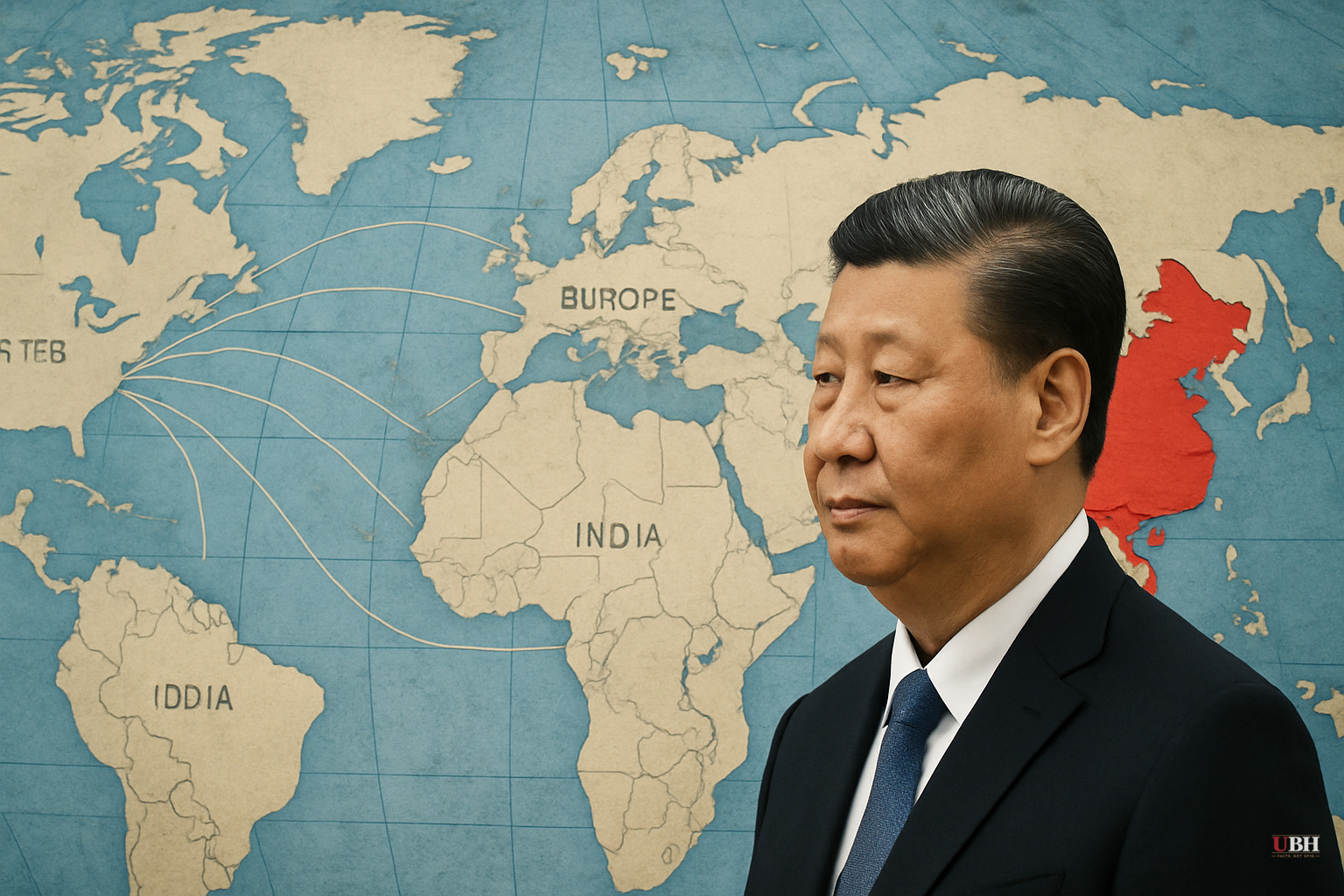
Xi's Economic Pivot Away from the West Is Reshaping Global Trade, at a Cost to China Too
Forty Years of Globalization, Now Being Unwound
The economic relationship between the United States and China was never a friendship. It was a transaction. Deng Xiaoping opened China's economy in the early 1980s, and for four decades foreign capital, Western technology, and American consumer demand powered China's transformation from a poor agrarian country into the world's second-largest economy.
That transaction is now being dismantled, deliberately on both sides.
According to The Atlantic's reporting, Xi Jinping is reorienting China's trade and investment away from the West and channeling massive state resources into developing homegrown technology. The goal is to reduce China's exposure to American economic leverage, specifically the kind of pressure Washington applied to Russia after the 2022 Ukraine invasion through sweeping sanctions.
Xi watched what happened to Moscow. He is not planning to be in that position.
What Xi Is Actually Doing
Beijing's strategy has two tracks. First, accelerate domestic development in critical industries: semiconductors, artificial intelligence, aerospace, rare earth processing. This would make China independent of Western supply chains or licenses. Second, shift trade and investment toward countries that are not seen as threats: Russia, Middle Eastern states, African nations, and other developing economies.
The argument from Beijing is that Washington forced this move. China's leaders contend the U.S. has used economic access as a tool to suppress China's rise rather than to encourage legitimate competition. That argument is not entirely without basis. Both the Trump and Biden administrations imposed tariffs, restricted technology exports, and pressured allies to limit Chinese access to advanced chips and equipment.
Washington's concern is real too. China's dominance over rare earth mineral production represents genuine leverage over U.S. industry. The fear that Beijing could exploit access to American technology for military advancement is not hypothetical; it is the explicit rationale behind export controls maintained through multiple administrations.
The Cost Nobody Is Advertising
The strongest case for Xi's approach is strategic clarity: better to absorb short-term economic pain than to remain permanently vulnerable to U.S. pressure. There is logic there. Dependency on an adversary's supply chains is a national security liability.
But economics rarely bends to political will on schedule. The Atlantic notes plainly that decoupling "will come at a cost" and China's economy is already showing strain. Decades of Western investment, technology transfer, and consumer demand cannot be replaced overnight by Russian energy deals and African infrastructure contracts. Xi is asking China's economy to run a different race before it has built the legs for it.
China's tech self-sufficiency push is real but incomplete. Domestic semiconductor production remains significantly behind leading U.S.-allied manufacturers. Substituting Western markets with developing-world partners means trading high-margin demand for lower-margin volume. None of that is fatal, but none of it is free either.
The American Side of the Ledger
Washington is not a passive victim here. The U.S. has its own exposure. American companies built supply chains around Chinese manufacturing. Agricultural exporters depend on Chinese purchases. Treasury markets have relied on Chinese demand for U.S. debt. Decoupling disrupts American interests too, not just Chinese ones.
The bipartisan consensus in Washington—tariffs, export controls, pressure on allies to limit Huawei and other Chinese tech firms—reflects a genuine strategic judgment that economic interdependence with a geopolitical adversary is a vulnerability, not an asset. That judgment is defensible. But it also carries a price tag that has not been fully presented to American workers and consumers who will absorb higher costs as supply chains restructure.
What the Post-Cold War Era Actually Was
The globalization moment that defined the 1990s and 2000s operated on an assumption: that economic integration would moderate political rivalry and that rising prosperity would produce stable, cooperative governments. China's trajectory has disproven that assumption more thoroughly than any other case on earth.
Xi's consolidation of personal power, the crackdown in Hong Kong, the military buildup in the South China Sea, the posture toward Taiwan—none of it fits the model of a country becoming more cooperative as it becomes more prosperous. The post-Cold War bet on liberal convergence was wrong, or at minimum it was wrong about China.
That does not mean every Western policy response since has been correct. Poorly designed tariffs that punish American manufacturers buying Chinese inputs are bad policy regardless of intent. Blanket technology restrictions that sweep up legitimate commerce alongside genuine security threats waste credibility.
The Unresolved Question
What nobody has answered in Beijing or Washington is what the stable endpoint looks like. Two partially decoupled economies, each with its own technology ecosystem and trade bloc, competing for influence across the developing world, is the trajectory both sides are currently on. Whether that equilibrium is stable or whether it produces escalating confrontation over Taiwan, the South China Sea, or some other flashpoint is the question that will define the next twenty years.
The Atlantic frames this as the end of the post-Cold War globalization era. That framing is accurate. What replaces it has not been decided, and neither government has given voters a straight answer about what it will cost to find out.
Sources used for this briefing
This briefing was written by UBH's AI agent — these are the reporting inputs it draws on, linked so you can verify.


