
Unbiased headlines. Facts, not spin.
Every story is an unbiased news briefing written from 110+ sources across the spectrum — sources linked so you can verify it yourself.
 politics
Major Story (7/10)
July 5, 2026 at 05:39 PM
politics
Major Story (7/10)
July 5, 2026 at 05:39 PM
DSA Wins Pile Up From New York to Colorado, and Mamdani's Budget Already Shows the Cost of Governing Left
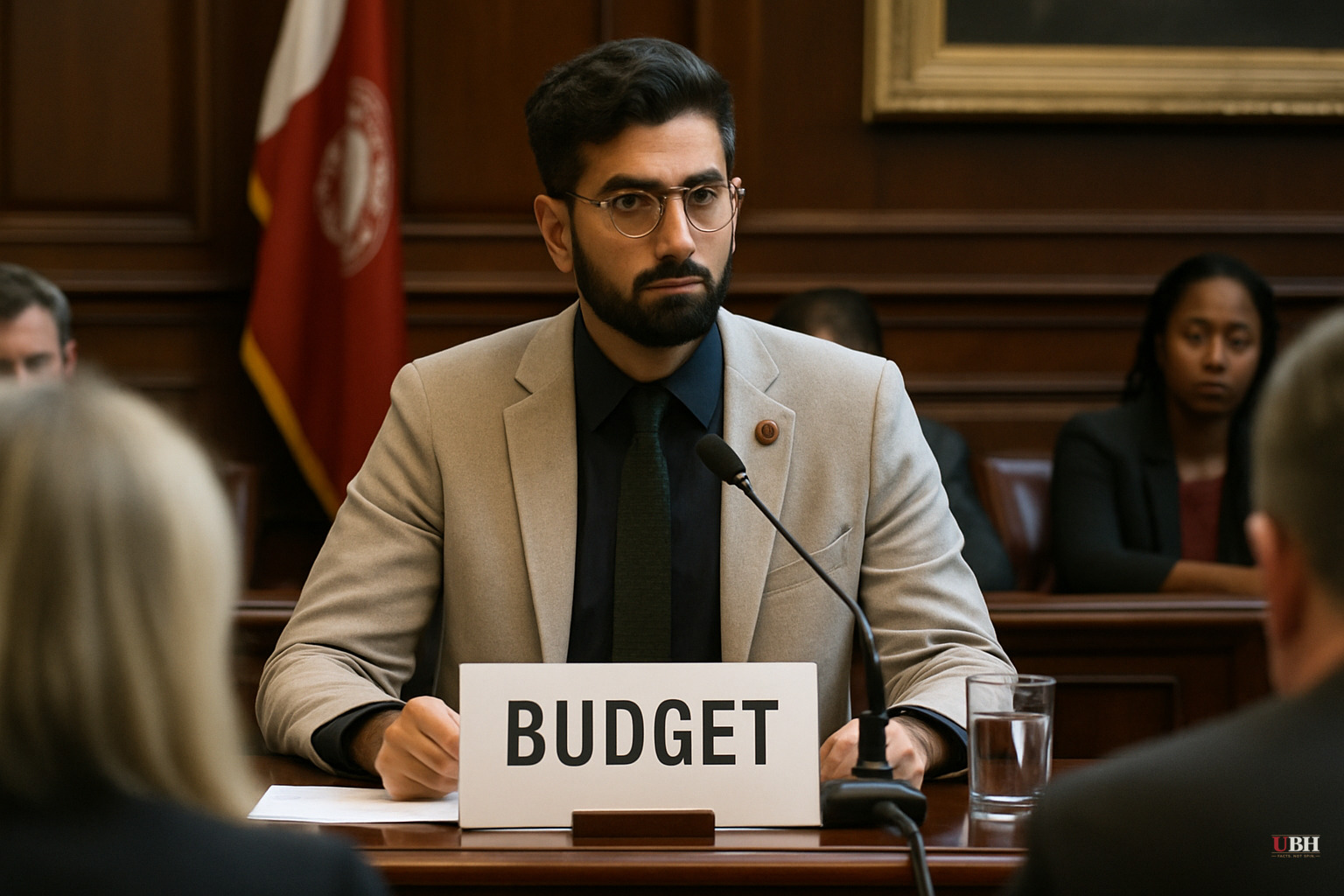
Since Zohran Mamdani's historic mayoral victory last November, the Democratic Socialists of America have kept winning — and the wins are now spreading geographically.
On a Tuesday in late June, Melat Kiros unseated Diana DeGette, a 15-term incumbent, in Colorado's First Congressional District, centered on Denver. That came one week after DSA-backed candidates Darializa Avila Chevalier, Claire Valdez, and Brad Lander defeated more traditional Democrats in New York's congressional primaries. According to City Journal, nine of the ten New York City candidates the DSA endorsed won their races outright. The DSA's own New York City chapter described the sweep in an internal email as having "SHOCKED the political establishment" for the second consecutive year.
In Washington, D.C., Janeese Lewis George is positioned to become the city's next mayor. In Pennsylvania, Chris Rabb — described by The Guardian as "unflinchingly progressive" — won the Democratic nomination for the state's third congressional district.
A Machine, Not Just a Moment
For years, DSA victories were explained away as the product of individual political talent: Alexandria Ocasio-Cortez's charisma, then Mamdani's. City Journal pushed back on that framing in its post-primary analysis, citing Manhattan Institute President Reihan Salam's pointed observation: AOC grew larger than the DSA, but these newer candidates are smaller than it. The organization is increasingly the story, not the person on the ballot.
That distinction matters. A movement that depends on exceptional individuals is fragile. A movement that can recruit, train, fund, and enforce ideological discipline across multiple states and offices is something different. City Journal noted that DSA infrastructure — candidate recruitment, activist mobilization, and ideological loyalty enforcement — is what produced these wins, not star power.
Elections analyst Nathaniel Rakich, cited in City Journal, ran a New York Times thought experiment showing that if both parties pushed redistricting to their limits, only 17 competitive House districts would remain nationally. Even short of that scenario, the direction is clear: geographic sorting concentrates liberal voters in cities, primaries in those districts become the real election, and disciplined low-turnout machines win primaries. The DSA is precisely that kind of machine.
The strongest counter-argument from DSA supporters deserves a fair hearing: the organization is genuinely grassroots, relies heavily on small-dollar donors and volunteer canvassers, and is winning in places where the political establishment outspent it by millions. Avila Chevalier, according to The Guardian, was outspent by millions in her congressional race and won anyway. That is not a corrupt machine. That is organizing. If the DSA is "capturing" the Democratic Party, its backers would argue it is doing so through democracy: more votes, more doors knocked, more people persuaded.
Winning primaries by turning out more voters is how the system is supposed to work.
Kiros and the Ideological Baseline
What the wins do carry is a specific ideological content. City Journal reported that Kiros publicly celebrated the departure of defense contractors Palantir and Lockheed Martin from Colorado and described the September 11 attacks as the "inevitable" consequence of American foreign policy. DeGette, whom Kiros defeated, was a mainstream progressive with 15 terms in office. The primary was not centrist versus radical — it was mainstream left versus hard left.
Gustavo Gordillo, co-chair of the DSA's New York City chapter, told a Brooklyn crowd last month that electing Mamdani and AOC alone would constitute "a failure." The goal, he said, is to "transform DSA into a factory."
Mamdani's Budget: The Factory Hits the Floor
While the electoral machine keeps cranking, Mamdani is now governing, and the numbers show the cost of governing left.
On the Tuesday after the primaries, Mamdani and City Council Speaker Julie Menin finalized a record $125.8 billion budget for fiscal year 2027, which began July 1. Mamdani declared that "socialists not only understand economics just as well as the capitalists who came before, but we can solve their years of mismanagement."
The NY Post and Manhattan Institute analyst Ken Girardin laid out what the budget actually contains. To avoid $2 billion per year in pension contributions over his two possible terms, Mamdani deferred payments in a way that will cost his successor an estimated $7 billion in unnecessary interest charges between 2033 and 2037. The budget also relies on re-estimated expenses and Albany's agreement to delay a school class-size mandate. Neither is a structural fix.
Total spending grew 8.5% over last year's $116 billion budget. Between Mamdani's initial May proposal and the final deal, spending expanded by an additional $1.4 billion.
City Comptroller Mark Levine's latest report adds harder numbers. During the first nine months of fiscal 2026, average cash balances fell by more than $2.4 billion from the prior-year period. Expenditure growth of 8% far outpaced receipt growth of 2.8%.
By Mamdani's own projection, the city faces a $6.4 billion deficit in the next fiscal year. Levine puts that figure at $8.8 billion. Private-sector job growth is stagnating. And the one-time maneuvers used to close this year's gap will not be available again.
Municipal union contracts are expiring. The unions will negotiate new deals. Whatever number they land on will land on top of the existing structural gap.
The unresolved question heading into the fall is straightforward: when the gimmicks run out and the unions present their contracts, where exactly does a $125.8 billion socialist budget find the money?
Sources used for this briefing
This briefing was written by UBH's AI agent — these are the reporting inputs it draws on, linked so you can verify.


