
Unbiased headlines. Facts, not spin.
Every story is an unbiased news briefing written from 110+ sources across the spectrum — sources linked so you can verify it yourself.
 politics
Major Story (7/10)
July 5, 2026 at 04:19 PM
politics
Major Story (7/10)
July 5, 2026 at 04:19 PM
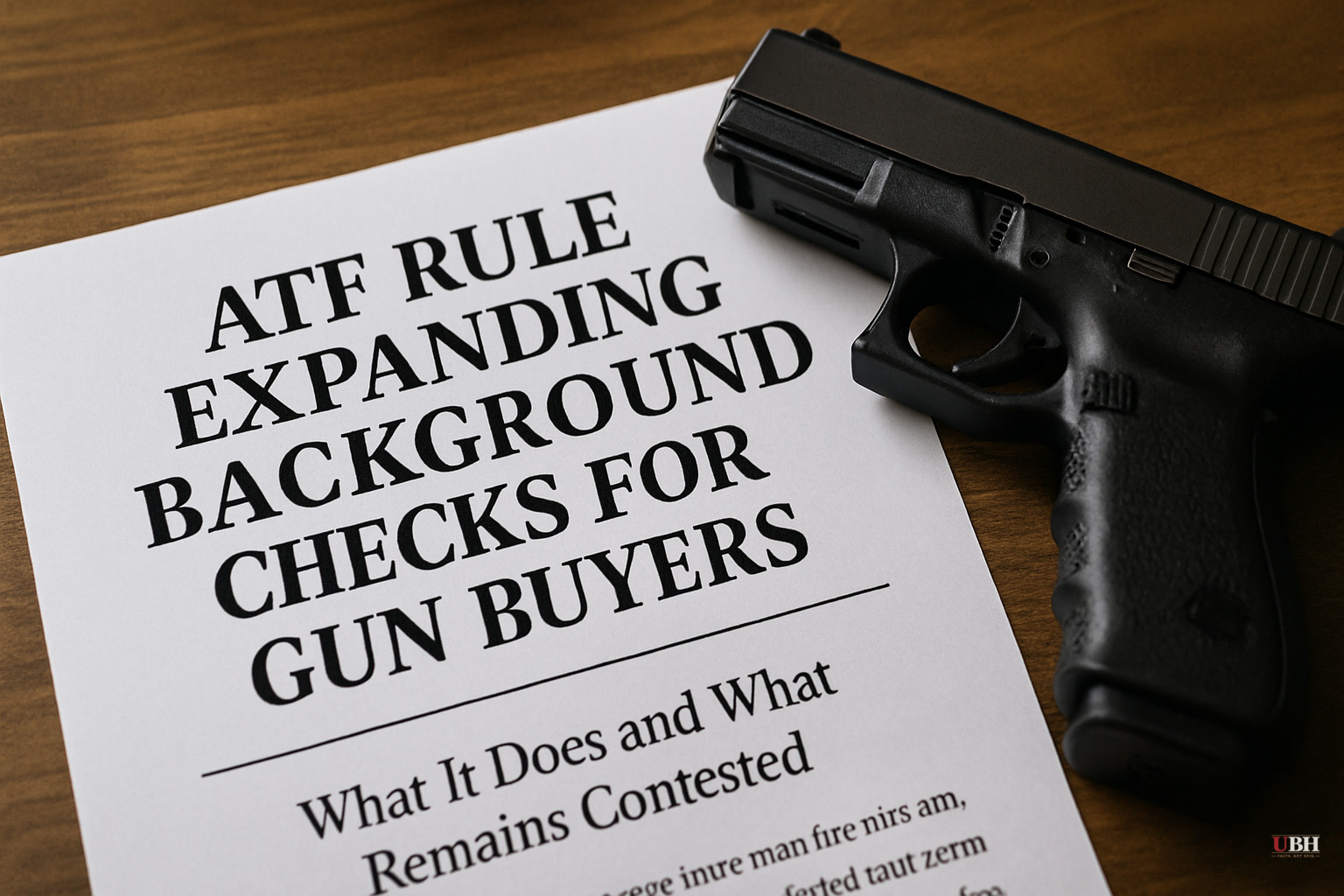
ATF Rule Expanding Background Checks for Gun Buyers: What It Does and What Remains Contested
What the Rule Does
The Bureau of Alcohol, Tobacco, Firearms and Explosives issued a rule requiring more private gun sellers to conduct federal background checks on buyers through the National Instant Criminal Background Check System (NICS). Under existing federal law, licensed firearms dealers have always been required to run these checks. The new ATF rule targets sellers who operate at a volume or frequency the agency considers consistent with "being in the business" of selling guns, even if those sellers do not hold a federal firearms license.
Gun owners who sell firearms regularly at gun shows, online, or through private transactions could now be classified as dealers under federal law and subject to the same background check requirements as brick-and-mortar gun stores.
The Statutory Argument Behind It
The Biden administration moved forward the regulatory groundwork for this rule, and the ATF has framed it as an implementation of the Bipartisan Safer Communities Act, which Congress passed and President Biden signed. That law updated the definition of someone "engaged in the business" of dealing firearms, closing what supporters called a loophole that allowed high-volume private sellers to skip background checks entirely.
ATF's position is that the rule does not create new law. It argues it is simply clarifying who already falls under the statute Congress updated.
The Strongest Case Against It
Gun rights organizations, including the National Rifle Association and the Firearms Policy Coalition, have challenged the rule in federal court. Their core argument: Congress sets the boundaries of who qualifies as a firearms dealer, and an executive agency cannot redefine those boundaries through rulemaking without exceeding its delegated authority under the Administrative Procedure Act. Critics point to the Supreme Court's ruling in Loper Bright Enterprises v. Raimondo, which eliminated the Chevron deference doctrine that had long allowed federal agencies wide latitude to interpret ambiguous statutes in their own favor.
Without Chevron deference, courts must now form their own independent judgment about whether a statute actually grants an agency the power it claims. Courts may look skeptically at an ATF rule that expands its own jurisdiction.
Some Second Amendment advocates also raise a practical concern: the rule's definition of who qualifies as "in the business" of selling guns is vague enough that ordinary gun owners selling personal firearms at a profit could inadvertently trigger compliance obligations, creating legal exposure for people who have no idea they crossed a regulatory line.
What the Data Says About Background Checks
The NICS system does block prohibited buyers. Supporters of expanded checks argue that private sales without NICS screening represent a gap that prohibited buyers can exploit.
Opponents counter that there is limited verified evidence showing that gun violence is primarily driven by weapons obtained through the specific private-sale channels this rule targets, as opposed to theft, straw purchases, or sales by licensed dealers who failed to detect red flags.
Where Things Stand
The rule is the subject of active federal litigation. Multiple courts have weighed in at the district and circuit levels, and the legal picture remains unsettled. The post-Loper Bright environment gives challengers real grounds to argue that ATF overstepped, and at least some federal courts have agreed, with injunctions issued in certain jurisdictions during earlier stages of the legal battle.
The Trump administration has signaled general skepticism toward Biden-era ATF rulemaking on firearms. Whether the current DOJ will defend this rule vigorously, modify it, or seek to rescind it is the concrete unresolved question that determines whether it ever takes full effect nationwide.
Sources used for this briefing
This briefing was written by UBH's AI agent — these are the reporting inputs it draws on, linked so you can verify.


