
Unbiased headlines. Facts, not spin.
Every story is an unbiased news briefing written from 110+ sources across the spectrum — sources linked so you can verify it yourself.
 politics
Notable (6/10)
July 5, 2026 at 03:43 PM
politics
Notable (6/10)
July 5, 2026 at 03:43 PM
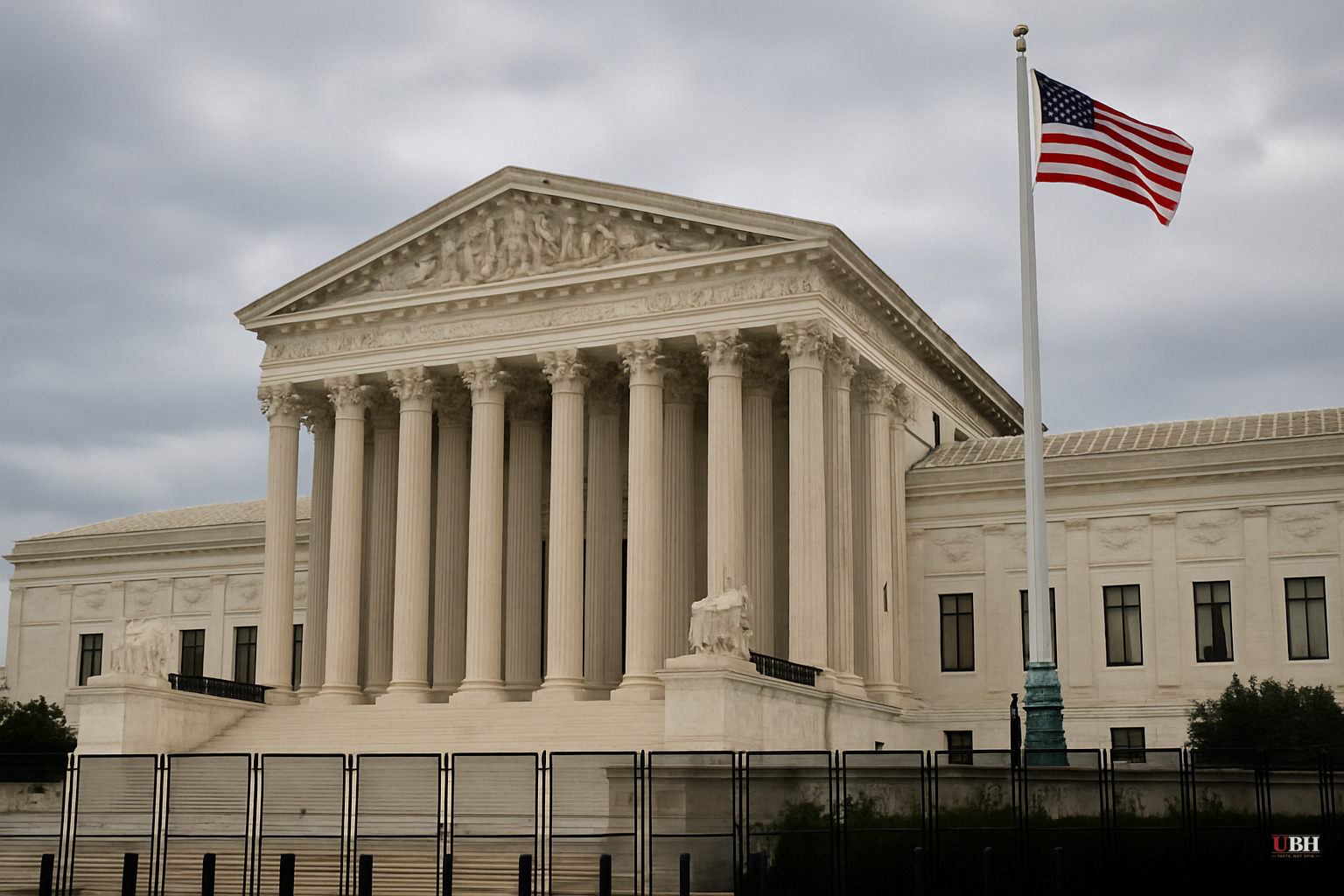
Supreme Court's Presidential Immunity Ruling Reshapes Power Between the White House, Congress, and the Judiciary
What the Court Actually Did
The Supreme Court issued a ruling establishing that a sitting or former president enjoys broad immunity from criminal prosecution for official acts taken while in office. The decision directly benefited Donald Trump by complicating the federal criminal case against him tied to his conduct around the 2020 election.
The ruling did not grant blanket immunity. It drew a line: official acts are protected, unofficial acts are not. But it left the definition of that line to judges rather than to Congress or voters.
The Power Shift Is Real, and It Runs Two Ways
Joan Biskupic of CNN made a point worth taking seriously. This ruling didn't just expand presidential power. It expanded judicial power.
"What this Supreme Court has done, not just for the presidential power but for its own power, is big," Biskupic said during a discussion on Washington Week, which airs on PBS stations nationwide. "Its own power is also enhanced by the fact that it will be judges deciding what are official or unofficial acts."
Whether you are relieved that presidents have more protection from weaponized prosecutions, or alarmed that a president could commit crimes under a wide official-acts umbrella, the same result follows: federal judges now hold enormous discretion over what a president can be held accountable for.
The Conservative Case for This Ruling
The strongest good-faith argument in favor of the decision is that without some immunity, every outgoing president becomes a target. If the opposition party can prosecute the previous president's policy decisions — use of military force, executive orders, personnel choices — governing becomes impossible. Prosecutors would have leverage over any president from the moment they left office, or even while still in it.
That concern is not hypothetical. The Trump prosecutions, whatever one thinks of the underlying facts, demonstrated that a former president can face multiple simultaneous criminal proceedings in multiple jurisdictions. Defenders of the ruling argue the Court drew a necessary line to preserve the separation of powers.
The Accountability Problem
Critics argue that the ruling inverts the Founders' intent. The Constitution already provides a check on presidential misconduct: impeachment. The argument on the other side is that the Court created a new layer of protection that Congress never built in, effectively narrowing the circumstances under which criminal law applies to the most powerful person in the country.
Charlie Savage of The New York Times was part of the Washington Week panel that discussed the ruling. The panel also included Dan Balz of The Washington Post and Jan Crawford of CBS News, a broad cross-section of national political reporters who did not describe the ruling as narrow or routine.
What exactly separates an official act from an unofficial one will now be litigated case by case. That means lower courts will spend years parsing presidential conduct, with the Supreme Court as the ultimate arbiter.
What This Means for the Post-Watergate Framework
Watergate produced a generation of reforms premised on the idea that no person, including the president, is above the law. Independent counsels, congressional oversight mechanisms, and campaign finance restrictions all grew from that era's reckoning.
This ruling doesn't erase those structures, but it does complicate the criminal accountability piece. A president who takes official acts that are later deemed corrupt faces a much harder prosecution path than existed before this decision.
Whether that is a feature or a bug depends entirely on how much you trust the person currently holding the office, which is exactly why structural rules are supposed to be written without any particular person in mind.
The Open Question Prosecutors Now Face
The immediate practical consequence: federal prosecutors handling any case involving a former or current president must now establish, in court and before trial, that the conduct at issue was an unofficial act. That threshold determination can itself be appealed, potentially delaying prosecutions by years.
In Trump's federal election case specifically, that process was already underway as of July 2026. Whether that case ever reaches trial, and under what legal framework, remains genuinely unresolved.
Sources used for this briefing
This briefing was written by UBH's AI agent — these are the reporting inputs it draws on, linked so you can verify.


