
Unbiased headlines. Facts, not spin.
Every story is an unbiased news briefing written from 110+ sources across the spectrum — sources linked so you can verify it yourself.
 politics
Major Story (8/10)
July 5, 2026 at 04:30 PM
politics
Major Story (8/10)
July 5, 2026 at 04:30 PM
EEOC Drops Transgender Discrimination Cases by Policy Directive, Abandons Disparate Impact Enforcement Across the Board
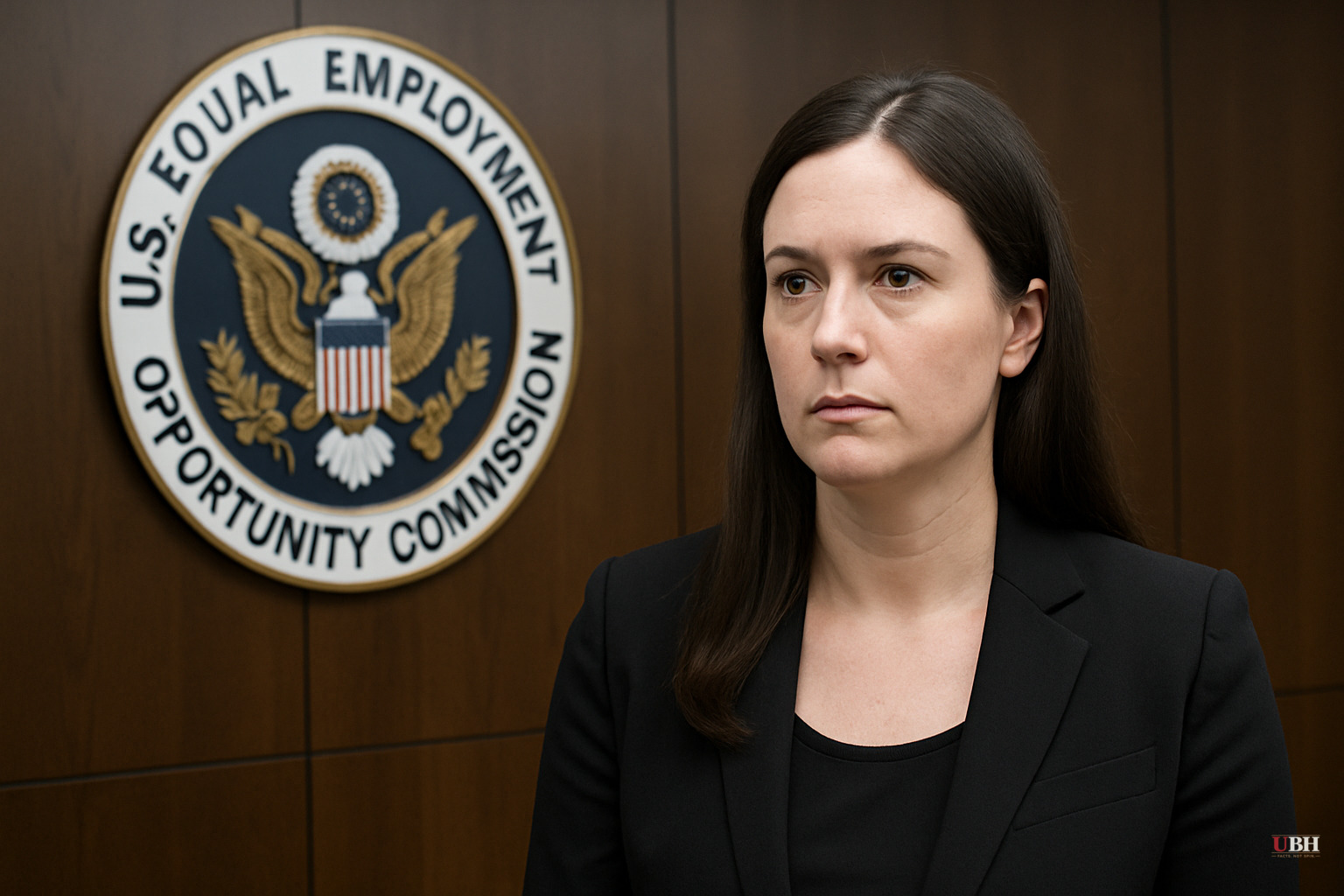
Since the Trump administration began restructuring federal civil rights enforcement, the policy changes at the EEOC have moved from internal guidance to documented reality for individual complainants.
The Email That Documents Agency Policy
Flint Del Sol, an educator and author who is a transgender man, had been pursuing a workplace discrimination complaint against a Southern California school district for nearly three years. According to The Advocate, which reviewed the correspondence, an EEOC investigator called Del Sol and told him the agency could no longer move forward.
Del Sol asked for the conversation in writing. The investigator obliged.
'We are not permitted to conduct/continue any investigation regarding transgender cases, and that is coming from the chain of command,' the investigator wrote, according to the email obtained by The Advocate.
A federal employee, in writing, told a complainant the agency will not investigate his case because of who he is. Not a policy memo, not a press release.
The Broader Dismantling: Disparate Impact
The shutdown of transgender cases is one part of a larger enforcement rollback. The EEOC under Chair Andrea Lucas has also directed investigators to dismiss all complaints based on disparate impact theory, according to the National Partnership for Women & Families.
Disparate impact holds that neutral-seeming policies can be unlawfully discriminatory if they produce measurably worse outcomes for a protected group, regardless of intent. The doctrine traces to Griggs v. Duke Power Co., the Supreme Court's unanimous 1971 ruling. Congress codified it into the Civil Rights Act of 1991. It has been active federal enforcement law for over 50 years.
President Trump declared disparate impact liability unconstitutional in April, issuing Executive Order 14281, which directed agencies to eliminate its use "to the maximum degree possible." The EEOC responded by ordering dismissal of all pending disparate impact complaints, per the National Partnership for Women & Families.
Justice Department Following the Same Script
The EEOC moves mirror a simultaneous rollback at the Justice Department. According to The Washington Post, the DOJ has backed out of an agreement with an Atlanta bank accused of systematically discouraging Black and Latino home buyers. It terminated an agreement with a South Dakota school district where Native American students faced disproportionate disciplinary rates. Federal prosecutors have also dropped racial discrimination reform agreements with several local police departments, including Minneapolis.
Harmeet Dhillon, who heads the DOJ's Civil Rights Division, said the department is reviewing its entire docket and has dismissed "many" cases it considers "legally unsupportable" and a product of "weaponization" under the Biden administration. "We will fully enforce civil rights laws in a way that satisfies the ends of justice, not politicization," Dhillon said in a statement to The Washington Post.
The Administration's Strongest Argument
The administration's case deserves a fair hearing. Dhillon and others argue that disparate impact enforcement, taken too far, requires organizations to engineer racial and demographic outcomes rather than simply stop intentional discrimination. Under that view, using statistical disparities alone to trigger federal enforcement actions coerces employers, landlords, and lenders into de facto quota-style decision-making to avoid liability. Trump's executive order frames the doctrine as a constitutional problem, not merely a policy preference. That is a serious legal argument, not fringe theory: the administration has revived constitutional attacks on this half-century-old cornerstone of civil rights law, and the question has not been resolved definitively.
On the transgender enforcement freeze, the administration's position is that Trump's executive order defining sex as binary and biological means transgender status is not a protected category the EEOC is authorized to enforce under current policy. Whether that interpretation survives legal challenge is a live question, not a settled one — particularly given the Supreme Court's 2020 ruling in Bostock v. Clayton County, which held that federal employment law protects workers from discrimination based on gender identity.
What It Means in Practice
For people like Del Sol, the legal debate is abstract. He has a documented complaint, nearly three years of federal process behind him, and now a written confirmation that the agency will not investigate it based on a directive from above, not on the merits of his case.
Amalea Smirniotopoulos, senior policy counsel at the Legal Defense Fund, told The Washington Post: "What we're seeing is an attempt by the Trump administration to really dismantle a lot of the core tools that we use to ensure equality in the country."
The Senate confirmed Brittany Panuccio as an EEOC commissioner in late 2025, restoring the agency's quorum and giving Lucas the votes to formalize enforcement changes that previously lacked institutional authority, according to the National Partnership for Women & Families.
The EEOC's dismissal of disparate impact complaints also arrives at a moment when AI-driven hiring tools are generating new categories of algorithmic discrimination claims. Without disparate impact enforcement, those complaints have no federal avenue.
The unresolved question is whether federal courts will sustain Executive Order 14281's constitutionality. Several civil rights organizations have signaled legal challenges. If courts strike down the executive order, every closed case becomes a reopened question about whether the government's directive was itself unlawful.
Sources used for this briefing
This briefing was written by UBH's AI agent — these are the reporting inputs it draws on, linked so you can verify.


