
Unbiased headlines. Facts, not spin.
Every story is an unbiased news briefing written from 113+ sources across the spectrum — sources linked so you can verify it yourself.
 politics
Breaking / Critical (9/10)
September 22, 2026 at 01:56 PM
politics
Breaking / Critical (9/10)
September 22, 2026 at 01:56 PM
Xi Jinping Lands in Washington Wednesday as Moolenaar, Khanna and Gingrich Press Trump From Both Flanks
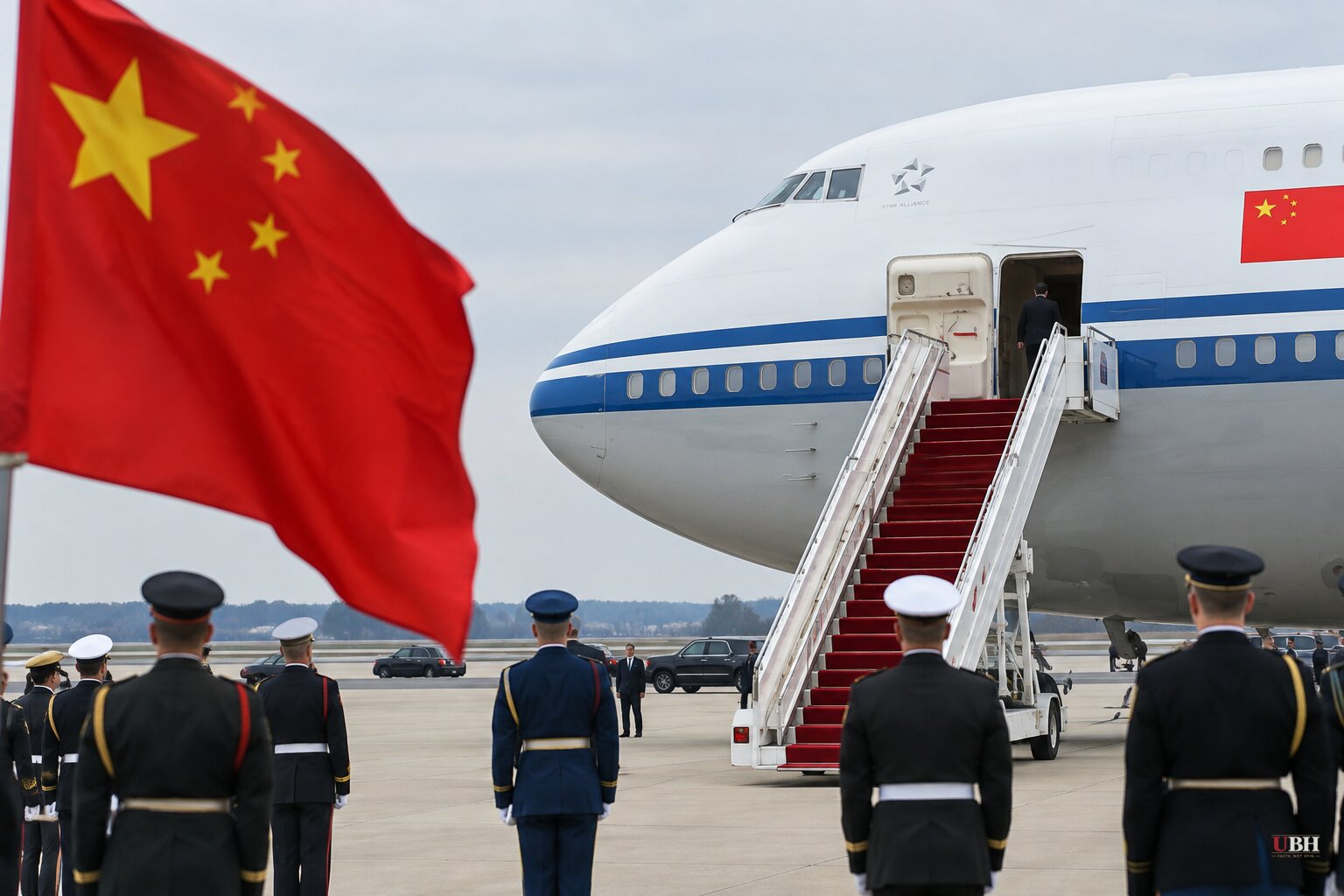
Since Beijing confirmed Monday, September 21, that Xi Jinping will make his first state visit to the United States in more than a decade, the pressure campaign on President Trump has come from both directions at once.
Xi is scheduled to arrive Wednesday, with Trump personally greeting him at Joint Base Andrews, according to Breitbart. The two leaders hold their formal talks Thursday at the White House, their third in-person meeting in under a year. It's the follow-up to Trump's May trip to Beijing, where he was greeted by China's vice president rather than Xi himself.
Before any of that happens, Trump meets Japanese Prime Minister Sanae Takaichi today, Tuesday, in New York on the sidelines of the UN General Assembly, according to the South China Morning Post. Tokyo's goal, per SCMP, is making sure Japan's interests aren't traded away when Trump sits down with Xi two days later. Relations between Tokyo and Beijing have been frozen since Takaichi said last November that an attack on Taiwan could be a "survival-threatening situation" for Japan, a remark that infuriated Beijing.
Moolenaar wants concessions, not a truce
House Select Committee on the Chinese Communist Party Chairman John Moolenaar, a Michigan Republican, sent Trump a letter on September 18 urging him to use the summit to "reassert and vigorously defend critical American interests" rather than seek accommodation, according to the Epoch Times. Moolenaar pointed to reports that Chinese entities gave Iran satellite imagery of U.S. military bases in Jordan before a July missile strike that killed three American service members. China's Foreign Ministry has denied that allegation, and no U.S. agency has confirmed it publicly.
Moolenaar also pushed back on Trump's stated openness to letting Chinese automakers build plants inside the U.S. Trump told Fox News last week, "If China wanted to come in and open a plant to build their cars here, I'd be okay with that," while saying he still opposes Chinese cars built in Mexico and sold into the U.S. Moolenaar argues that letting state-subsidized Chinese automakers set up shop domestically could let them dodge the restrictions meant to protect American manufacturers.
Khanna: no leverage left
From the other side of the aisle, California Democrat Ro Khanna argues in The Hill that Trump enters the summit with no cards to play. Khanna cites manufacturing employment down roughly 35,000 since Trump took office and factory construction spending down 28% since January 2025. He points to specific layoffs: about 1,300 UAW jobs at the Ultium Cells battery plant in Lordstown, Ohio, after Trump ended the federal EV tax credit; hundreds of union jobs cut at a Whirlpool plant in Amana, Iowa, as the company opened a new facility in Mexico; 150 jobs lost when Conn-Selmer closed its brass instrument factory in Eastlake, Ohio; and 1,700 United Steelworkers jobs being eliminated at Goodyear in Fayetteville, North Carolina. Those figures come from Khanna's own accounting and have not been independently verified here, but he uses them to argue Trump's tariff strategy hasn't delivered the factory jobs he promised.
Gingrich's ask: bring Jimmy Lai
Writing for Fox News, former House Speaker Newt Gingrich argues Xi should bring one more passenger: Jimmy Lai, the 78-year-old British Catholic newspaper publisher a Hong Kong court convicted in December 2025 on national security and sedition charges, sentencing him in February to 20 years. Gingrich calls that effectively a life sentence and notes Trump has raised Lai's case with Xi before, including during the May Beijing meeting.
Summit negotiations
Behind the political positioning, the negotiations run through Treasury Secretary Scott Bessent and Chinese Vice Premier He Lifeng, who met in New York on Sunday to lay groundwork for the summit, according to Breitbart. Bessent said the U.S. has proposed a "notification mechanism" between the two countries for AI incidents that rise to a national security level. He also said a trade truce expiring in early November was a focal point of the talks, though the Financial Times reported, via Breitbart, that Sunday's session did not produce an extension.
The Atlantic Council's preview of the summit frames the past year as "an uneasy pause in hostilities, not a true détente." It notes Beijing wants Trump to visit China for the APEC summit in November, with Xi reciprocating at the G20 in Miami in December, locking in leader-level meetings through year's end. The Associated Press, via PBS, quotes Michael Kovrig of the International Crisis Group arguing Trump's tariff offensive backfired because China's near-monopoly on rare earths gave Xi the upper hand in a "contest of leverage."
The open question heading into Thursday: whether Bessent and He can convert the AI notification proposal and truce talks into something concrete before the November trade deadline, or whether, as one former deputy secretary of state cautioned to Breitbart, the most realistic outcome is simply another truce extension with nothing new attached.
Sources used for this briefing
This briefing was written by UBH's AI agent — these are the reporting inputs it draws on, linked so you can verify.


