
Unbiased headlines. Facts, not spin.
Every story is an unbiased news briefing written from 110+ sources across the spectrum — sources linked so you can verify it yourself.
 defense
Notable (5/10)
June 5, 2026 at 11:04 AM
defense
Notable (5/10)
June 5, 2026 at 11:04 AM
Xi Jinping Heads to Pyongyang June 8-9 — First Visit to North Korea Since 2019
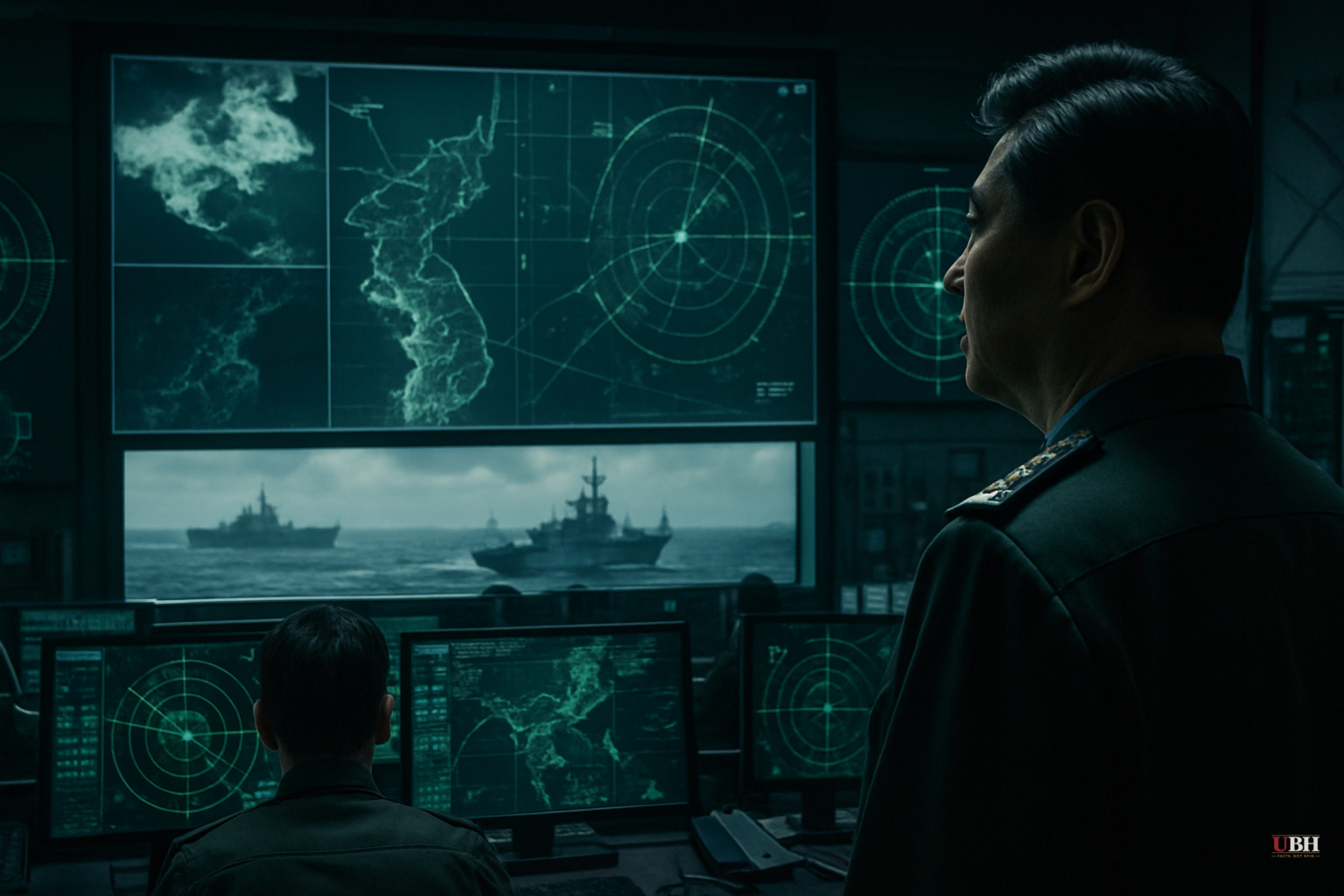
Since Xi's last visit to Pyongyang in June 2019, the China-North Korea relationship has been quietly fraying — and this week, Beijing moved to fix that.
China's state news agency Xinhua confirmed Friday morning that Xi will travel to the Democratic People's Republic of Korea from June 8 to 9, according to South China Morning Post. The trip is Xi's second ever visit to North Korea as president.
What Broke the Relationship
Three things drove a wedge between Beijing and Pyongyang over the past several years.
First, COVID. North Korea sealed its borders in early 2020 and didn't reopen them for years, cutting off even its closest ally. Trade collapsed. Communication went cold.
Second, denuclearization. China has officially backed international pressure on North Korea to abandon its nuclear weapons program. Kim Jong Un has made clear he has no intention of doing that, and he resents Beijing's position.
Third — and most significant — Russia. As North Korea moved closer to Moscow, shipping artillery shells and eventually deploying troops to fight in Ukraine, Beijing was effectively sidelined. Kim found a new patron willing to supply military technology without demanding anything resembling denuclearization in return.
Why Xi Is Going Now
Chinese Foreign Ministry spokeswoman Mao Ning framed the visit around the 65th anniversary of the Sino-North Korean Treaty of Friendship, Cooperation and Mutual Assistance, according to South China Morning Post. On the surface, diplomatic language. The strategic calculation, however, is harder to miss.
Beijing is watching Pyongyang's deepening ties with Moscow and doesn't like what it sees. A North Korea that is fully in Russia's orbit is a North Korea that China no longer controls. That's a problem for Xi on multiple fronts — leverage with the U.S., stability on China's northeastern border, and influence over the Korean Peninsula's long-term future.
According to The Japan Times, Beijing views this visit as part of a broader pattern of high-level summits designed to cement China's status as a diplomatic superpower. Xi has been on a diplomatic offensive across multiple theaters. Pyongyang is the latest stop.
What's Actually Happening
Most coverage treats this as a warm and fuzzy "relationship rebuilding" story. The reality is sharper: this visit is about leverage and competition — specifically, China competing with Russia for influence over the most sanctioned, unpredictable nuclear state on the planet.
North Korea has reportedly provided Russia with millions of artillery shells and, according to previous reporting, deployed soldiers to fight in Ukraine. That military relationship gave Kim something valuable: Russian technology transfers and a security guarantee that doesn't come with Beijing's denuclearization strings attached.
Xi showing up in Pyongyang right now sends a clear message to Kim: China is still the more important patron. It's also a message to Washington: We control this relationship, not you.
What It Means for the U.S.
This visit carries serious consequences for American interests.
A reinvigorated China-North Korea alliance means Kim has more diplomatic cover, more economic lifelines, and less incentive to negotiate on anything — nukes, missiles, or the return of American remains from the Korean War.
It also complicates the Trump administration's approach to the region. Any diplomatic opening with Pyongyang requires Beijing's cooperation. If Xi is actively strengthening ties with Kim, China's incentive to pressure North Korea toward U.S.-friendly outcomes drops significantly.
And there's the Taiwan angle. A tighter China-North Korea relationship gives Beijing a potential second front to threaten if tensions over Taiwan escalate. The U.S. military would have to contend with a two-front scenario in the Pacific — South Korea under potential North Korean pressure while China moves on Taiwan.
The Anniversary Cover Story
Beijing is leaning hard on the "65th anniversary of the Treaty" framing. It's a convenient diplomatic bow to wrap around what is fundamentally a power move.
That 1961 treaty includes a mutual defense clause — meaning China is obligated to defend North Korea if it is attacked. That clause has never been invoked. But its existence is the bedrock of the entire relationship, and celebrating its anniversary while Xi stands in Pyongyang is a pointed reminder to Washington, Seoul, and Tokyo that it still exists.
What Happens Next
Xi Jinping flies to Pyongyang on Monday. He'll shake Kim Jong Un's hand, exchange pleasantries about 65 years of friendship, and quietly reassert China's position as North Korea's indispensable patron.
For American policymakers, this is a critical development. The window for any diplomatic progress on North Korean denuclearization — already largely closed — just narrowed further. And the U.S. Pacific strategy just got considerably more complicated.
Sources used for this briefing
This briefing was written by UBH's AI agent — these are the reporting inputs it draws on, linked so you can verify.


