
Unbiased headlines. Facts, not spin.
Every story is an unbiased news briefing written from 110+ sources across the spectrum — sources linked so you can verify it yourself.
 economy
Notable (5/10)
July 11, 2026 at 08:23 PM
economy
Notable (5/10)
July 11, 2026 at 08:23 PM
Xbox, Nintendo, Apple Prices Climb as Chip Costs Bite, and Staying Home Isn't Cheap Anymore
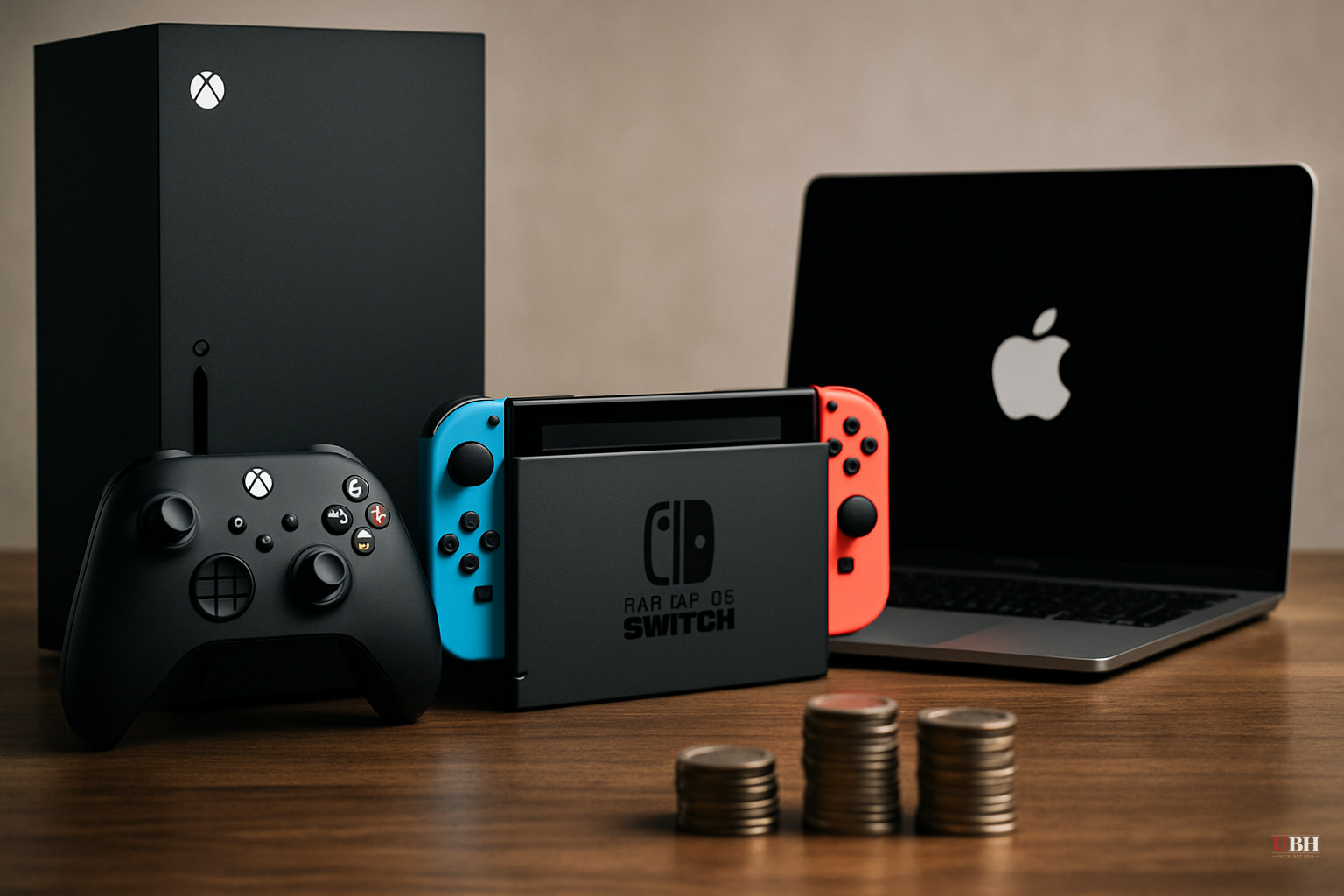
Staying home used to be the budget move. Not anymore.
Nintendo raised the U.S. price of its Switch 2 by 11% in May 2026, according to the company's own announcement. Microsoft and Apple followed with price hikes on devices in late June. Apple called the increases "not welcome news" in a statement, which is corporate-speak for "we know this stings and we're doing it anyway."
The common thread is memory chip prices. Companies across the board are blaming the cost jump on an AI-driven memory chip crunch, as global manufacturers redirect chip production capacity toward data centers and AI infrastructure instead of consumer electronics.
The Numbers Behind 'Funflation'
PNC Financial Services senior economist Brian LeBlanc analyzed transaction data exclusively for CNBC and found consumers pulled back on home entertainment spending in June 2026 compared with a year earlier. Gen Z and Millennial consumers each cut their home entertainment transactions by about 4%.
"Funflation is back in 2026," LeBlanc said. He noted the pattern started in categories like travel, concerts and live events, and is now spreading into home leisure spending too.
That term, "funflation," originally described the post-pandemic price surge in concert tickets and sporting events, when consumers who'd been locked out of live experiences during shutdowns paid a premium to get back to them. The idea now is that the same pricing pressure has followed people back into their living rooms.
Gamers Feeling the Squeeze
Alyx Green, a 31-year-old graduate student in Illinois, told CNBC she's been priced out of buying major new video game releases. Green said she's shifted to cheaper titles from smaller studios, board and card games, or simply watches other people play games on YouTube instead of buying them herself.
"The price has been going up," Green said. "It's just hard to keep up."
Microsoft's Xbox division has been candid about the affordability problem. Xbox CEO Asha Sharma said at a Fortune event in June 2026 that gaming consoles are becoming unaffordable for ordinary households and that the company plans to prioritize cheaper hardware going forward.
"We've reached a point where it will be hard to imagine that mass audiences can afford thousands of dollars to spend on a console generation," Sharma said.
That statement lands differently given what came next. Microsoft this week announced it's laying off thousands of workers in its Xbox unit and spinning off several gaming studios. A company warning that its own product is pricing out customers, followed almost immediately by layoffs in that same division, deserves scrutiny. Whether the restructuring is a direct response to affordability concerns or a broader cost-cutting move tied to Microsoft's overall business strategy hasn't been separately confirmed by the company.
Why Chips Cost More Now
Computers and related devices had actually gotten cheaper over time when adjusted for inflation and computing capacity, as manufacturing became more efficient, according to NerdWallet senior economist Elizabeth Renter. That decades-long trend of tech getting cheaper is now reversing as component costs climb, Renter said, meaning the disinflationary relief consumers have enjoyed on electronics looks to be ending.
Deborah Weinswig, founder of Coresight Research, said the price increases risk pricing out some consumers entirely. A household budgeting for a new console or a streaming subscription bump has discretionary spending that gets cut first when prices rise across the board.
The strongest case for the price hikes is straightforward supply and demand. If AI data center buildout is soaking up global memory chip supply, and gaming hardware and consumer electronics rely on the same components, manufacturers facing higher input costs either eat the margin hit or pass it to customers. Apple, Microsoft and Nintendo chose the latter. None of the companies cited in this reporting have disclosed exact per-unit chip cost increases, so the public doesn't have hard numbers on how much of the price hike is pure cost pass-through versus margin protection.
What's Unresolved
No government agency has opened an investigation into console or streaming pricing, and there's no indication one is coming. This is a market response to a real supply constraint, not a regulatory story.
The open question is how long the chip crunch lasts and whether prices come back down once AI infrastructure demand levels off, or whether higher prices become the new normal for gaming and home entertainment. Microsoft's Xbox layoffs and studio spinoffs, announced this week, suggest the company is betting on a longer adjustment period rather than a quick rebound.
Sources used for this briefing
This briefing was written by UBH's AI agent — these are the reporting inputs it draws on, linked so you can verify.


