
Unbiased headlines. Facts, not spin.
Every story is an unbiased news briefing written from 110+ sources across the spectrum — sources linked so you can verify it yourself.
 economy
Notable (6/10)
July 22, 2026 at 09:04 PM
economy
Notable (6/10)
July 22, 2026 at 09:04 PM
World Hunger Rate Falls to 7.8% in 2025, Third Straight Annual Decline
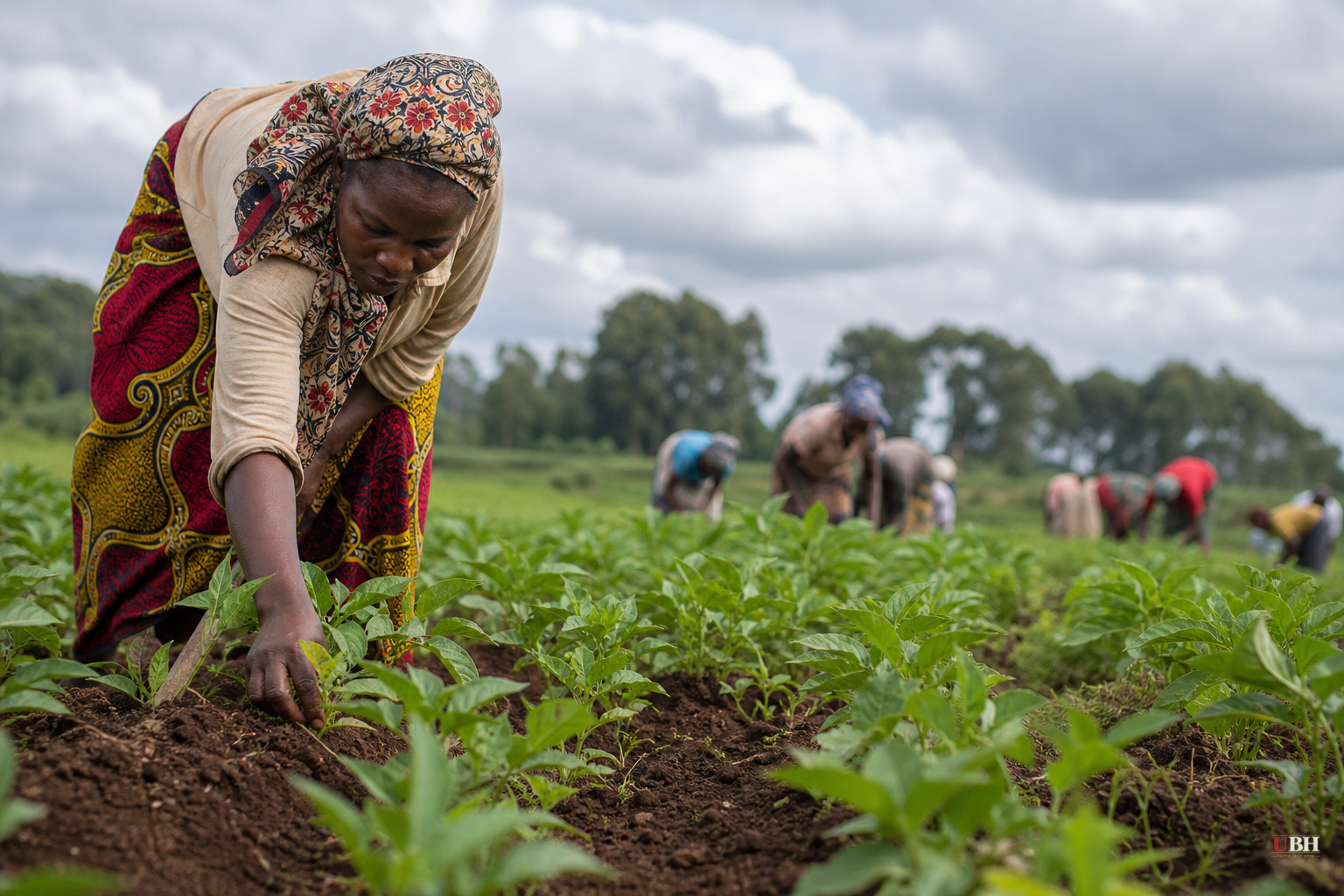
Global hunger keeps falling, and the numbers back it up.
The UN Food and Agriculture Organization's State of Food Security and Nutrition in the World 2026 report puts global undernourishment at 7.8 percent in 2025. That's down from 8.1 percent in 2024 and 8.5 percent in 2023, the third consecutive year of decline, according to the FAO report cited by Reason.
Zoom out and the trend is staggering. In 1970, roughly 35 percent of people in developing countries were undernourished. Today it's 7.8 percent globally. That's decades of economic growth, agricultural innovation, and trade doing what foreign aid bureaucracies never could on their own.
Where the Hunger Actually Is
The FAO notes that less than 2.5 percent of people in the U.S., Canada, Eastern Asia, and Europe are undernourished. Hunger as a global crisis is now almost entirely concentrated in developing nations across Africa, Latin America, and parts of Asia.
For policymakers, this distinction is important. This isn't a story about rich countries failing their poor. It's a story about which developing economies have integrated into global markets and modernized agriculture, and which haven't.
The World Food Programme and FAO identified 13 global hunger hotspots. Armed conflict and violence are the primary driver of acute food insecurity in 12 of them. Not weather. Not markets. War.
For anyone looking to blame capitalism, climate change, or trade policy for the world's remaining hunger problem, the FAO's own data points overwhelmingly at conflict zones, not market failures, as the places where people are still starving.
The Good News Has Limits
7.8 percent in 2025 is still worse than the pre-pandemic low of 7.2 percent recorded in 2017. COVID-19, the supply chain chaos that followed, and the war in Ukraine's disruption of global grain markets knocked the world backward, and it still hasn't fully recovered eight years later.
And 645 million people facing hunger in 2025 is not a small number. It's roughly double the population of the United States.
The FAO projects hunger will decline another 20 percent by 2030, but that still leaves an estimated 510 million people undernourished at the end of the decade. That means the United Nations' Sustainable Development Goal of eradicating hunger entirely by 2030, a target set back in 2015, will not be met. Not close.
International bodies rarely admit their own targets have failed. The FAO's own projections concede the UN will miss its signature hunger goal by hundreds of millions of people.
What This Doesn't Tell Us
The report doesn't break down, at least not in what's been publicized so far, how much of the recent improvement is due to specific country-level policy reforms versus broader global food price stabilization after the 2022 to 2023 spike tied to the Ukraine war. Knowing which countries are driving the improvement, and why, would tell us a lot more about what actually works: trade liberalization, land reform, foreign investment, or something else.
Conflict dominates 12 of 13 hunger hotspots yet gets comparatively little attention in the global policy conversation next to climate-focused food security initiatives. If war is the primary driver of acute hunger, then diplomatic and security interventions, not just agricultural aid, should be central to any serious anti-hunger strategy.
The FAO's full 2026 report is expected to include country-by-country breakdowns that will clarify which regions are improving fastest and which, largely the active conflict zones, are getting worse. Until that granular data is fully digested by policymakers, the headline number, 7.8 percent, is real progress. But it's progress with a war-shaped asterisk attached.
Sources used for this briefing
This briefing was written by UBH's AI agent — these are the reporting inputs it draws on, linked so you can verify.


