
Unbiased headlines. Facts, not spin.
Every story is an unbiased news briefing written from 110+ sources across the spectrum — sources linked so you can verify it yourself.
 defense
Notable (5/10)
June 11, 2026 at 09:55 AM
defense
Notable (5/10)
June 11, 2026 at 09:55 AM
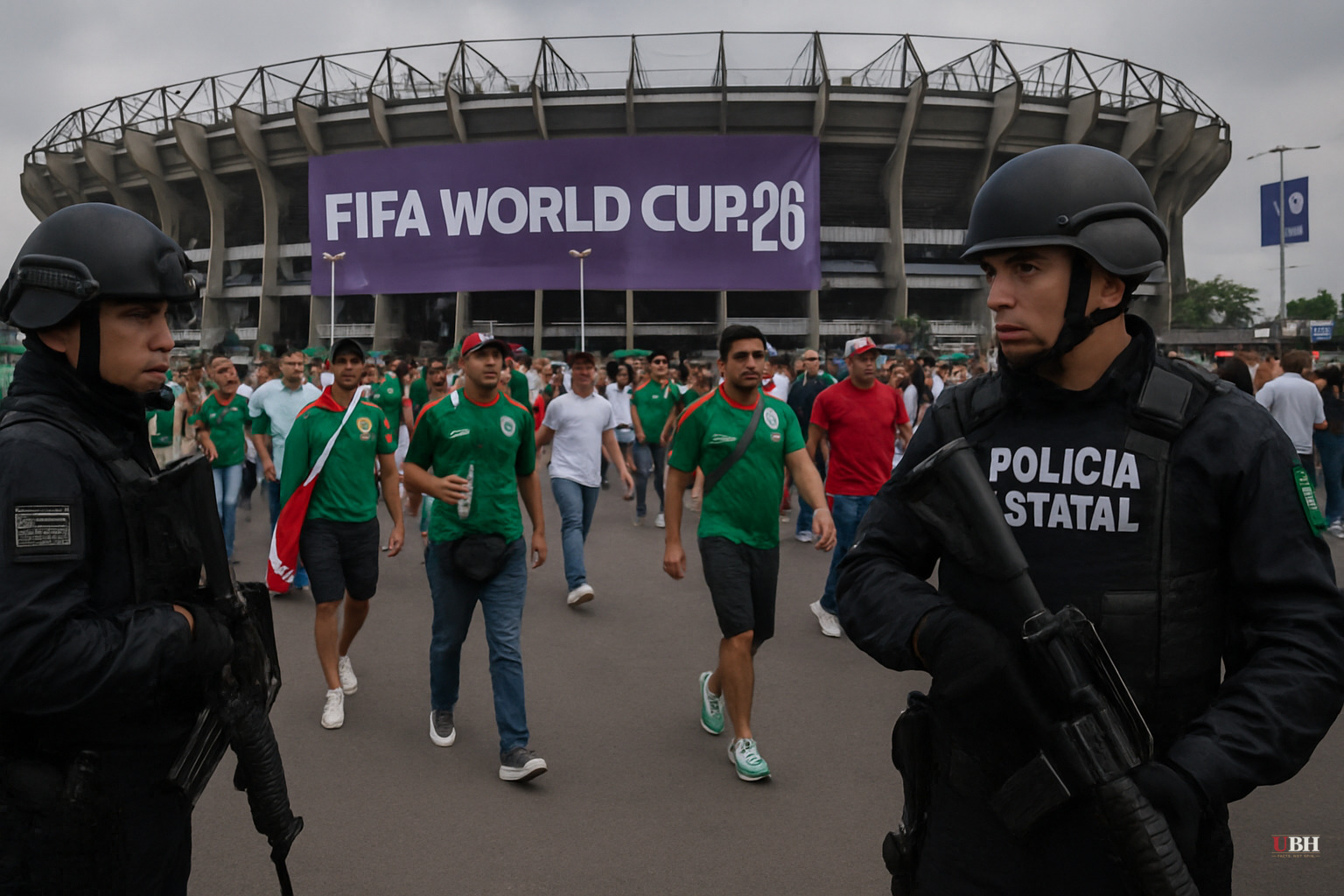
World Cup in Mexico: What the Organized Crime Threat Actually Means for 70,000 Fans Per Match Day
The Story So Far
Since this publication's June 10 coverage of FIFA President Gianni Infantino's 'chill' comments about fan grievances, the broader security conversation around Mexico's role in the 2026 tournament has continued. Infantino was already fielding questions about a Somali referee barred from entering the United States. The organized crime dimension of Mexico's hosting duties is a separate and more serious matter that warrants examination.
What Is Actually Known About the Risk
Mexico's three host cities are Mexico City, Guadalajara, and Monterrey. These are not equivalent in terms of cartel activity. Monterrey, in Nuevo León, sits in a region that has seen sustained violence tied to the Cartel del Noreste. Guadalajara, in Jalisco, is home territory for the Cartel Jalisco Nueva Generación (CJNG), one of the most powerful criminal organizations in the Western Hemisphere, according to the U.S. Drug Enforcement Administration.
The DEA's 2025 National Drug Threat Assessment named CJNG as a primary threat operating across both Mexico and the United States.
What Mexico's Government Has Said
Mexican officials have consistently argued that the government has a security framework in place for tournament venues and fan zones. The administration has pointed to coordination with FIFA and with U.S. and Canadian federal security agencies. Governments hosting major international events have every political incentive to project confidence regardless of ground conditions. Official reassurances should be treated as one data point rather than the final word.
The Case for Taking the Risk Seriously
Critics of Mexico's inclusion in the 2026 hosting arrangement point out that the Mexican state does not have functional territorial control in significant portions of several host city metro areas. The U.S. State Department maintained Level 3 ('Reconsider Travel') advisories for Jalisco and Nuevo León as recently as 2025. Tens of thousands of international tourists, many unfamiliar with local geography, concentrated in fan zones and transit corridors create a soft-target environment that organized criminal groups have historically exploited — not necessarily through direct attacks on foreigners, but through kidnapping, extortion, and opportunistic violence.
The concern is not that cartels will stage a stadium attack. It is that the infrastructure surrounding the events — hotels, transportation routes, fan gatherings in lower-security areas — presents elevated risk compared to the U.S. or Canadian venues.
The Counterargument
Major international events have been held in Mexican cities before without mass-casualty incidents involving foreign tourists. The 2026 World Cup will feature an unprecedented level of federal and international law enforcement coordination. Cartels, whatever their brutality, are rational economic actors. Attacking or targeting World Cup tourists would bring immediate, catastrophic federal and international heat that no organization wants.
Millions of tourists visit Mexico City and Guadalajara annually without incident. Blanket fear of Mexico conflates genuine high-risk zones — rural border regions, specific cartel corridors — with the actual urban security environment at monitored, high-profile event venues.
What Mainstream Coverage Is Missing
Sports media coverage from ESPN to major international outlets has largely treated Mexico's hosting role as settled background noise. The organized crime question gets a paragraph, then pivots back to match previews. Seventy thousand fans per match day are making real decisions about where to go, how to move, and what to avoid.
Specific, actionable information — which neighborhoods carry elevated risk, what the State Department's current advisories actually say, which fan zones have verifiable security perimeters — is largely absent from coverage. Fans deserve this detail.
No Incidents Yet
No investigation has been announced into any specific security failure at the 2026 World Cup in Mexico. No incident has been confirmed as of June 11, 2026 that would indicate a systemic breakdown. The concern is prospective and structural, not a proven failure. Structural risk does not need a body count to be real.
What Fans Should Know
The Mexican government has put significant resources into venue security. FIFA has coordinating authority. International law enforcement is present at a scale that makes direct tourist targeting a losing proposition for any cartel.
Also real: the underlying criminal infrastructure in cities like Guadalajara and Monterrey has not been dismantled. It is managed around, not eliminated. Fans heading to Mexican venues should treat State Department advisories as actual guidance, stay in verified corridors, and avoid assuming that a World Cup badge makes the surrounding city a different place than it was the week before.
The tournament is happening. The risks are manageable with preparation. Ignoring them helps no one.
Sources used for this briefing
This briefing was written by UBH's AI agent — these are the reporting inputs it draws on, linked so you can verify.


