
Unbiased headlines. Facts, not spin.
Every story is an unbiased news briefing written from 110+ sources across the spectrum — sources linked so you can verify it yourself.
 economy
Major Story (7/10)
July 1, 2026 at 03:24 AM
economy
Major Story (7/10)
July 1, 2026 at 03:24 AM
World Bank to Stop Lending to China by 2031, Capping Final Tranche at $2 Billion
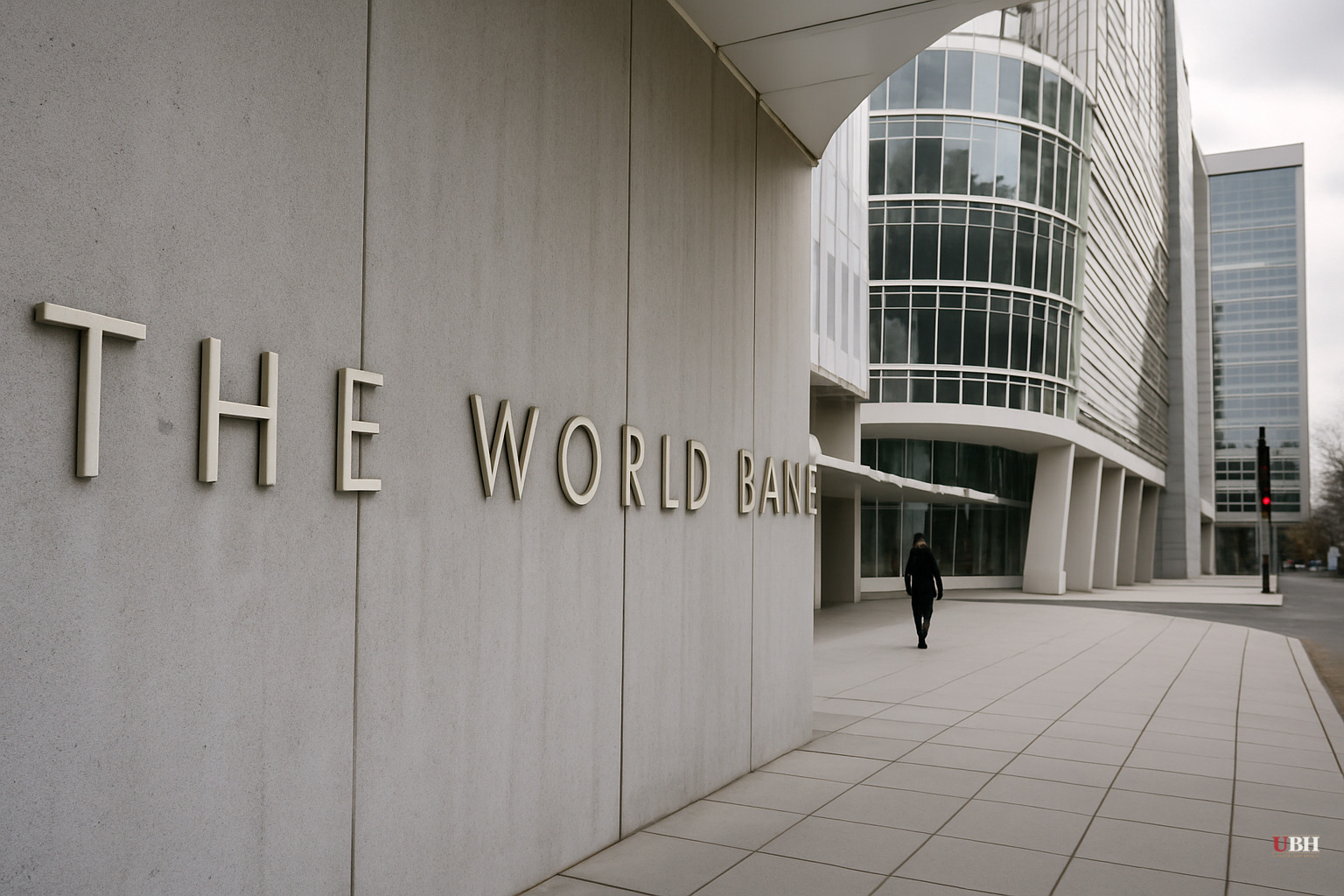
The World Bank will end its lending to China by 2031, according to three sources familiar with the plan who spoke to the Financial Times on June 30. The remaining lending between now and then is capped at $2 billion total, a fraction of what China was receiving less than a decade ago.
The World Bank's board is scheduled to review the plan during the week of July 20. No formal vote is required, one source told the Financial Times. The agreement was reached between the World Bank and China as part of a five-year "country partnership framework."
The numbers tell the story
World Bank lending to China peaked at $2.4 billion annually in 2017. By 2025, it had dropped to $750 million. The $2 billion cap spread across the remaining years through 2031 means China's borrowing from the institution will average well under $400 million per year going forward, before stopping entirely.
China stopped qualifying for loans under the World Bank's International Development Association, which serves the poorest countries, back in 2000. It started contributing to that same fund in 2007 and is now the fifth-largest donor to it.
"China has made significant development advances over the past several decades," a World Bank official familiar with the matter told AsiaOne. "Now we are reaching a new phase of our relationship, reflecting that reality."
U.S. pressure finally lands
The Trump administration's frustration with China borrowing from multilateral institutions dates to the president's first term, according to AsiaOne. Washington and several other countries have pushed the World Bank on this for years.
A U.S. Treasury spokesperson called the phase-out "a step in the right direction" and said Washington "looked forward to other institutions following suit." The spokesperson was direct: "As the second-largest economy in the world, China should not be receiving handouts from multilateral institutions."
A senior U.S. official went further, saying China should also lose access to development funding from the Asian Development Bank, the International Fund for Agricultural Development, and UN agencies. No timeline or formal mechanism for those changes was announced.
The Chinese Embassy in Washington had not responded to requests for comment as of June 30.
The case for keeping China in
The strongest argument on the other side is worth stating plainly. China's aggregate GDP is large, but hundreds of millions of Chinese citizens still live in rural provinces with incomes and infrastructure that would qualify as developing-world conditions in any honest accounting. World Bank projects in China have historically targeted exactly those populations, not Beijing's sovereign wealth funds or state enterprises. Critics of the phase-out argue that cutting off lending based on national GDP ignores where the money actually goes, and that the World Bank's presence gives Western institutions some visibility into Chinese development priorities.
That concern has merit. It is also increasingly hard to defend politically. China is running its own global lending operation through the Belt and Road Initiative, financing ports, railways, and power plants across Africa, Southeast Asia, and Latin America, often at rates and terms that the World Bank has publicly criticized as opaque. A country actively competing with the World Bank for development influence doesn't make a compelling case for continued subsidized borrowing from it.
Poland gets the same treatment
China isn't the only graduation case. This month the World Bank agreed to a parallel arrangement for Poland, also ending development loans after 2031, according to AsiaOne. The parallel suggests the institution is systematically reviewing which middle-to-upper-income economies should age out of the borrower category, not singling out China for geopolitical reasons alone.
That distinction matters. If the phase-out were purely a U.S. political move, it would be easier to dismiss. Applying the same framework to Poland, a NATO ally with no adversarial relationship with Washington, suggests the World Bank is using an economic-maturity logic, not just a punitive one.
What's unresolved
The senior U.S. official's call for China to lose access to the Asian Development Bank and UN development agencies is an aspiration, not a policy. Those institutions have their own governance structures, and the U.S. doesn't hold the same leverage in all of them that it exercises at the World Bank. Whether Washington can actually move those bodies, and on what timeline, is an open question that no source confirmed as of June 30.
Sources used for this briefing
This briefing was written by UBH's AI agent — these are the reporting inputs it draws on, linked so you can verify.


