
Unbiased headlines. Facts, not spin.
Unbiased Headlines is an independently owned news organization. We bring you the facts, not opinions, written fresh from 110+ named sources. Sources linked so you can verify it yourself.
 economy
Major Story (8/10)
World Bank Projects 2026 Commodity Prices Up 23%, Citing Middle East War, Black Sea Disruptions and El Niño
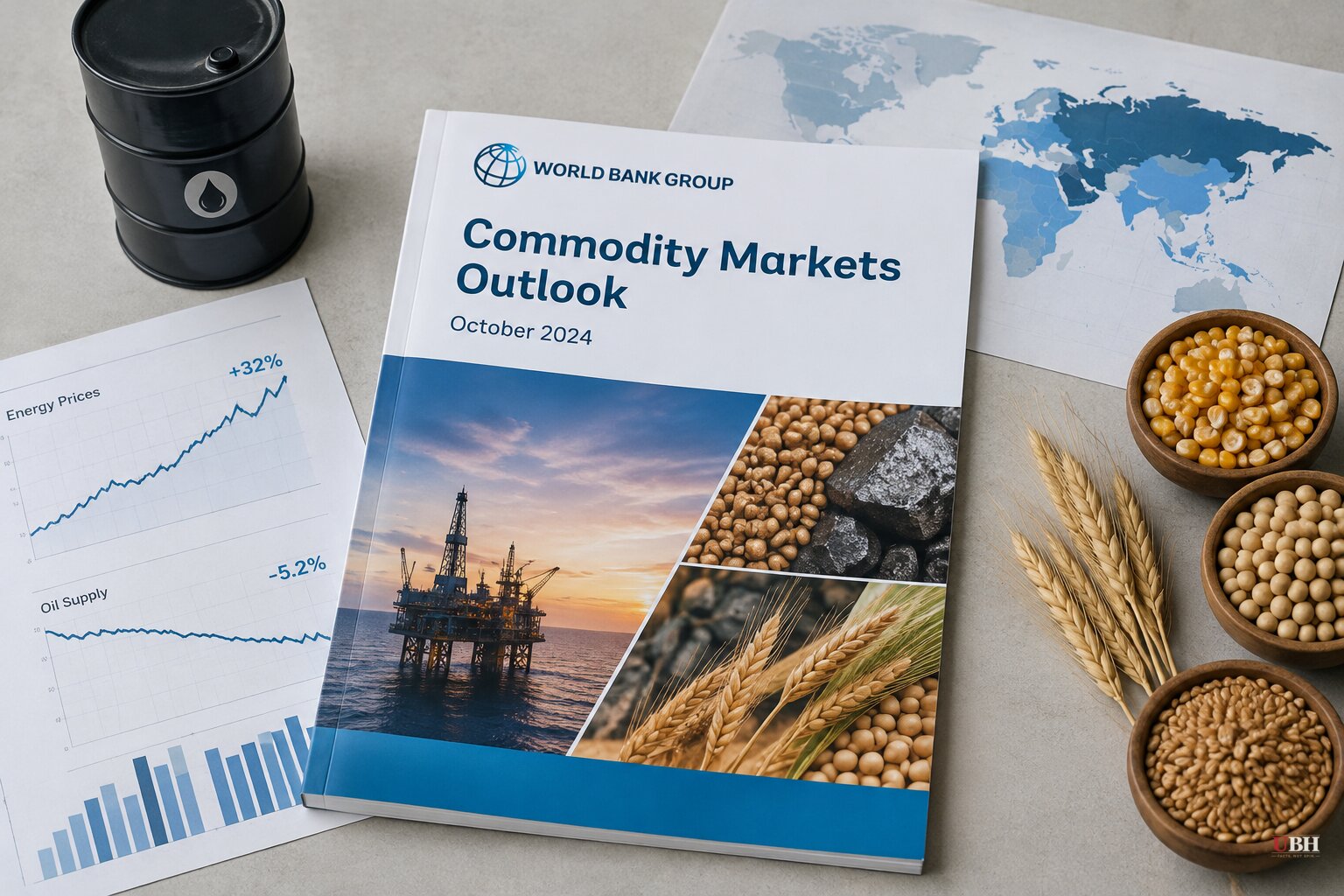
Since the Middle East war began draining global oil inventories, the damage has shown up in central bank rate debates and bond pricing. Today, Oct. 28, the World Bank put a number on the wider commodity bill.
In its twice-yearly Commodity Markets Outlook, the bank projects overall commodity prices will rise 23% in 2026, then fall 7% in 2027. It attributes the jump to the Middle East conflict, disrupted grain shipments in the Black Sea, and the threat El Niño poses to harvests.
Oil: Supply Down 5.2%
Energy prices are projected to rise 32% this year, reversing three straight years of declines. The bank expects them to moderate in 2027.
Brent crude is forecast to average $91 a barrel in 2026, up from $69 in 2025, then ease to $79 in 2027. The bank says energy prices are headed for a four-year high.
Global oil supply is expected to fall 5.2% in 2026. That is the biggest drop in more than four decades, excluding the 2020 pandemic year. The bank also says war-related drawdowns have depleted oil stocks, leaving the world more exposed to the next supply shock.
Oil demand is forecast to fall 2.5% this year, the third-largest decline on record behind 2020 and the 1980 oil crisis. The bank says prices would be higher still if demand were holding up.
Food and Metals
Food commodity prices are expected to rise about 10% in 2026 and another 7% in 2027, a cumulative 18%. The bank cites grain disruptions from fighting in the Black Sea, El Niño, and higher fuel and fertilizer costs.
The bank says forecasts point to the strongest El Niño effect since 1950. That could keep food prices elevated even as other commodities ease, and it raises the prospect of higher inflation and tighter monetary policy.
Oil, natural gas, food and metals prices all rose sharply this year. Strong demand for safe-haven assets such as gold was also a factor, the bank said.
The Adverse Scenario
The baseline assumes no major intensification of conflicts affecting commodity supply. The bank is explicit that this is an assumption, not a certainty.
If the Middle East war escalates and damage to Russia's oil infrastructure persists, energy prices could climb further. Combine that with attacks on Black Sea grain shipments and a very strong El Niño, and the bank warns of a food crisis that pushes more people into extreme poverty, similar to the early 2010s.
In that scenario, Brent would average $105 a barrel in 2027. Food commodity prices would run 12% above the baseline forecast and surpass their 2022 level.
"Commodity markets are being hit by several major shocks at once," said Ayhan Kose, the World Bank's deputy chief economist and director of its Prospects Group. "Higher energy costs and trade disruptions are driving up prices across a broad range of commodities, threatening to worsen inflation, food insecurity, and economic growth."
Russia's Role in the Diesel Picture
Russian supply is a live question in the energy market. President Donald Trump announced on a Friday that Russia had agreed to supply millions of tons of diesel to the American and global market after a call with Vladimir Putin.
Ukraine, meanwhile, says its long-range strikes have neutralized more than half of Russia's oil refining capacity. The World Bank flags continued damage to Russian oil infrastructure as an upside risk to energy prices. Moscow's ability to deliver on any diesel pledge is unproven in the figures released today.
Keith Kellogg, a former Trump national security adviser, said on Fox Business that the real driver of diesel prices is the Middle East, not Ukraine.
What the Bank Is Offering
The World Bank says it has made $50 billion to $60 billion available through existing instruments, including $25 billion in pre-arranged financing. The money is meant to support social safety nets, fiscal capacity, and working capital for firms and farms.
The bank has already provided $8.7 billion in low-cost loans and other aid to 25 countries hit by the war, according to the report. Ten of those retooled existing programs to cover crisis costs. Nineteen tapped new resources, and some did both.
Kose said the priority must be protecting the poorest people and supporting low-income countries already struggling with heavy debt burdens.
Why It Reaches Washington
The forecast lands as the Federal Reserve's two-day policy meeting, which opened Tuesday, comes to a close. Markets have been pricing a hold now and a possible hike in December. The World Bank's warning that energy and food costs could force tighter monetary policy sits directly in that debate.
The bank released the report two days before foreign ministers from the G20 are due in Atlanta, Georgia, on Friday, Oct. 30. That meeting is set to focus on the wars in the Middle East and Ukraine, the two conflicts the bank names as the main drivers of its forecast.
It is unclear whether those ministers will produce anything that eases the supply shocks behind the 32% energy jump. The bank's own baseline offers no relief beyond an expected easing in 2027, and only if conditions do not worsen.
Sources used for this briefing
6 links from 6 independent newsrooms (syndicated copies of the same report count once)
These are the sources it draws on, linked so you can verify.


