
Unbiased headlines. Facts, not spin.
Unbiased Headlines is an independently owned news organization. We bring you the facts, not opinions, written fresh from 110+ named sources. Sources linked so you can verify it yourself.
 economy
Notable (6/10)
China's Elderly Dependency Ratio Passes Child Ratio for First Time, Government Data Show
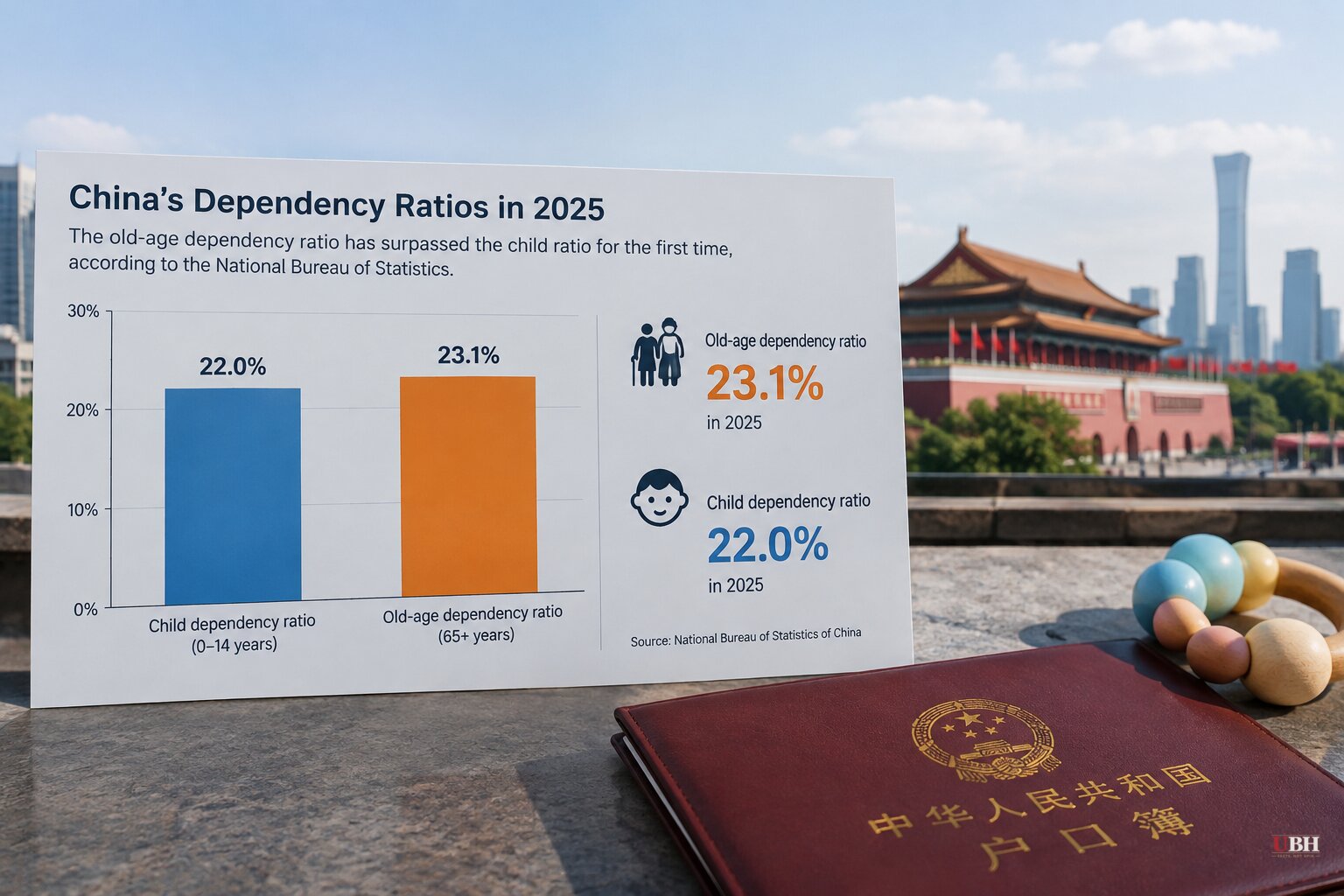
China now has more elderly people to support per working-age adult than children. That is what official figures from the National Bureau of Statistics, released in the past week, show.
The old-age dependency ratio reached 23.1% in 2025. The child ratio was 22%.
The elderly figure has climbed steadily. It stood at 15% in 2016 and passed 20% in 2021.
The numbers
More than 223 million people in China are 65 or older. That is nearly 16% of the population.
About 213 million are children aged 14 and under.
China's population fell for a fourth straight year in 2025, and the birth rate dropped to a record low.
The bureau published no commentary alongside the data.
How China got here
The one-child policy ran from 1980 to the end of 2015. Rapid urbanisation pushed in the same direction.
The Chinese government estimates the policy prevented about 400 million births. That figure has been contested.
Mu Zheng, a sociology lecturer at the National University of Singapore, said the policy played a key role in shrinking the population. It also means fewer young people are left to support a growing number of older relatives.
Beijing has since reversed course. Authorities have rolled out family subsidies, childcare support and reduced childbirth-related medical costs. They have also pledged to make urban life more supportive for young people, children and families.
Birth rates have still hit historic lows. Easing the restrictions has not brought couples back.
What it means for spending and growth
Professor Stuart Gietel-Basten of the Hong Kong University of Science and Technology called the shift "symbolic." He said it could move public spending away from families and schools and toward pensions and healthcare.
Mu said the trend may also challenge China's ambitions, because it could limit both economic growth and people's spending power.
China's state-controlled Global Times framed it differently. The paper said the country's "entry into a moderately ageing society" came from a mix of factors, including the "size of past birth cohorts" and longer life expectancy.
It acknowledged the added strain on pension, healthcare and long-term care systems. It also pointed to opportunities in the so-called silver economy, which caters to older consumers.
One researcher told the paper the shift "reflects a historical trend in demographic development rather than a short-term phenomenon."
That reading, that this is a long-run demographic pattern and not a sudden break, fits the steady rise in the elderly ratio since at least 2016.
The arithmetic ahead
A ratio is a snapshot of one year. The shrinking workforce is the number analysts watch, because it affects both China's economy and global growth.
The working-age population supports both groups. A rising elderly share on top of a still-large child share means a heavier load per worker.
The bureau has not said what, if anything, Beijing plans to change in response. It is unclear whether subsidies and childcare support can lift births before the pension and healthcare bills grow further.
Sources used for this briefing
7 links from 5 independent newsrooms (syndicated copies of the same report count once)
These are the sources it draws on, linked so you can verify.


