
Unbiased headlines. Facts, not spin.
Unbiased Headlines is an independently owned news organization. We bring you the facts, not opinions, written fresh from 110+ named sources. Sources linked so you can verify it yourself.
 economy
Major Story (8/10)
Fed Opens Two-Day Meeting With Hold Priced Above 90%, December Hike Odds at 73% and Dissents Possible
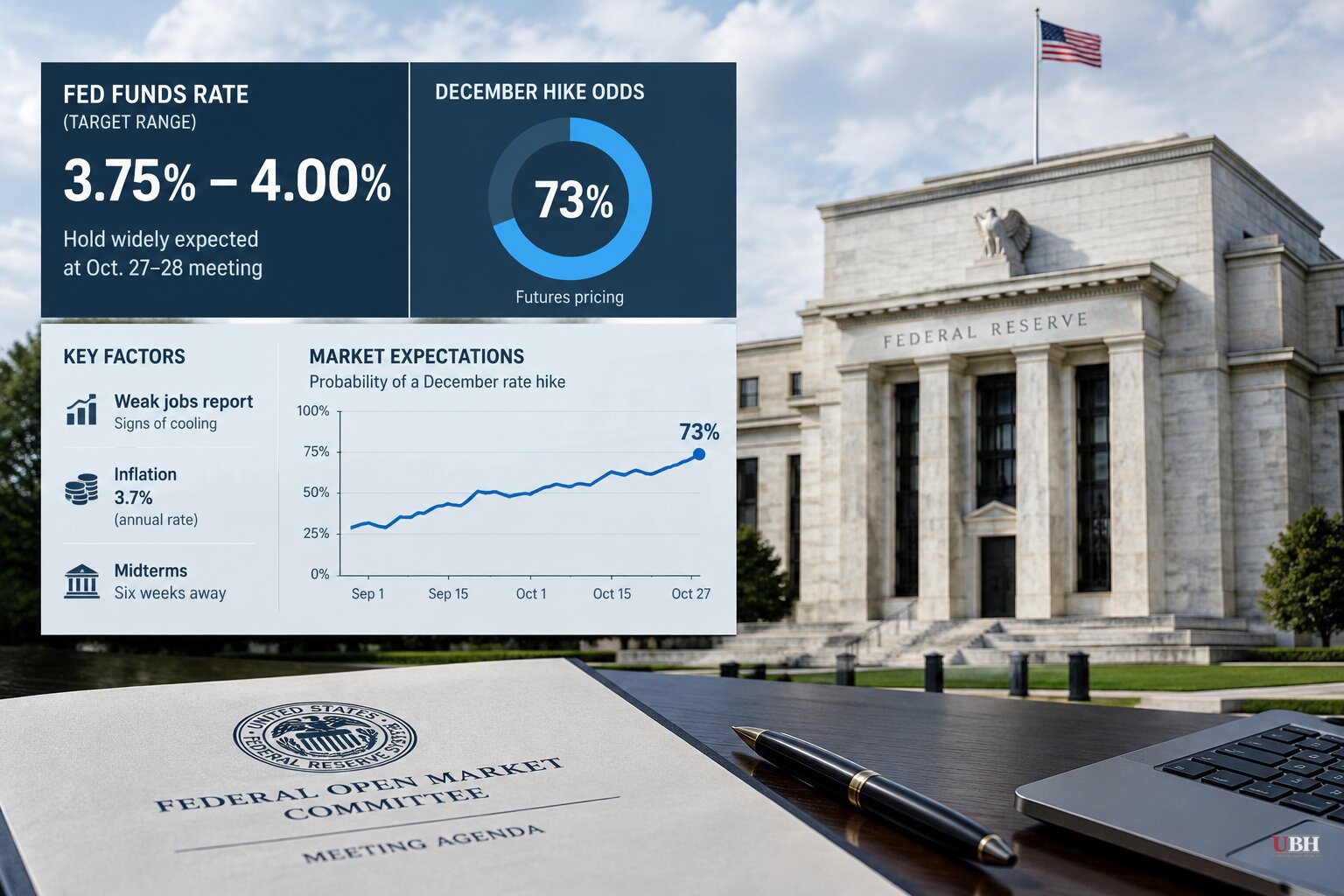
Since the Fed's September rate hike, inflation has accelerated and the jobs picture has softened. Both are now landing on the committee's table as the Oct. 27-28 meeting gets under way, six days before the midterms.
The decision is due Wednesday, Oct. 28, at 19:00 CET, or 1:00 p.m. ET. Chair Kevin Warsh holds his press conference at 2:30 p.m. ET.
Markets put the chance of a hold above 90%, according to CME Group's FedWatch tool. The same tool shows about a 73% chance of a quarter-point hike at the Dec. 8-9 meeting, and futures also price another increase in March.
The data on the table
Consumer prices rose 3.7% in September from a year earlier, up from 3.4% in August. Core inflation, which strips out food and energy, ran at 2.6%. Wholesale prices jumped 6.3%.
The monthly gain was 0.6%, the largest in five months. Gasoline rose 9.1% for the month and is up 34.2% over the year. It accounted for more than half of September's increase, according to the Labor Department.
The jobs side is murkier. The economy added just 29,000 jobs in September against a consensus forecast of 90,000, down from 133,000 in August. Unemployment edged up to 4.2%, which the Epoch Times reported came as more people joined the workforce.
Real average hourly earnings fell 0.7% from a year earlier, the sixth straight month of annual declines, according to the New York Times' analysis of government data.
Why the Fed is expected to wait
Vice Chair Philip Jefferson pointed to the jump in longer-term borrowing costs and said, "my colleagues and I will need to come to our own judgment, which may take more time." New York Fed President John Williams said "there is no need for urgency." Williams has penciled in one more hike this year and none next year.
Governor Christopher Waller said in an Oct. 8 speech that more hikes are coming but that there is "some flexibility about when those hikes will occur." They "do not need to come at consecutive meetings," he said.
The 30-year mortgage rate hit a three-year high of 7.4% earlier this month and stood at 7.32% last week, against just under 6.2% a year ago. Oxford Economics estimates this year's increases have put homebuying out of reach for another 5 million households.
Politics in the room
Joseph LaVorgna, chief economist at SMBC's U.S. arm and a former Trump administration official, said: "The Fed doesn't want to poke the White House in the eye six days before an election."
The Fed has a mixed record here. CNN's review found that outside the pandemic, the Fed adjusted rates within two months of Election Day in four of the five most recent election years. In 2016, Philadelphia Fed President Patrick Harker backed a September hike but opposed one in the meeting six days before the vote, citing uncertainty over the election outcome. Then-Chair Janet Yellen said the election played no role in the committee's decisions.
The case for moving now comes from the right-leaning commentary of the Breitbart Business Digest. It argues the odds of an October hike, which it puts at 10% to 15%, are "clearly too low." It points to unemployment at 4.2%, low jobless claims, stock prices near records and S&P Global surveys suggesting growth as fast as 5%.
It also asks why officials who expect a December hike would wait. By its count, only one more CPI report arrives before then, and the November CPI is not due until Dec. 10, the day after the December decision. The column argues a hike would show Warsh's independence from President Trump. That is the column's argument, not a finding.
The counterweight is the 29,000-job September gain. Epoch Times quoted Jay Woods, chief market strategist at Freedom Capital Markets, who said the debate is "about the pace of tightening, not necessarily its direction." Policymakers, he said, "can allow that move time to work."
Dissents and forward guidance
Euronews reports Cleveland Fed President Beth Hammack and Dallas Fed President Lorie Logan could vote for a hike. Both have said rates are not yet high enough to cool inflation. The outlet says as many as three officials could dissent.
Chicago Fed President Austan Goolsbee called the September reading "discouraging" and said underlying inflation at today's level is "not acceptable."
The officials' speeches also complicate one of Warsh's signature positions. He has said he dislikes forward guidance because it commits the Fed to a path. Some economists told the Associated Press the recent speeches look very much like forward guidance, just not from the chairman.
Treasury Secretary Scott Bessent has said inflation should move back toward the Fed's 2% target once the Iran conflict ends, and that mortgage rates and the 10-year yield would then fall. No resolution to the war has been announced.
The Fed has missed its 2% target for 66 consecutive months, according to the Epoch Times. Warsh has called inflation "a tax on the American people." Wednesday's press conference is his first chance since the September hike to say whether he sees December as settled.
The next decision comes Dec. 9. The November CPI follows on Dec. 10.
Sources used for this briefing
7 links from 7 independent newsrooms (syndicated copies of the same report count once)
These are the sources it draws on, linked so you can verify.


