
Unbiased headlines. Facts, not spin.
Unbiased Headlines is an independently owned news organization. We bring you the facts, not opinions, written fresh from 110+ named sources. Sources linked so you can verify it yourself.
 economy
Major Story (7/10)
Boeing Shares Fall Nearly 10% After Company Says It Will Miss 737 Delivery Target
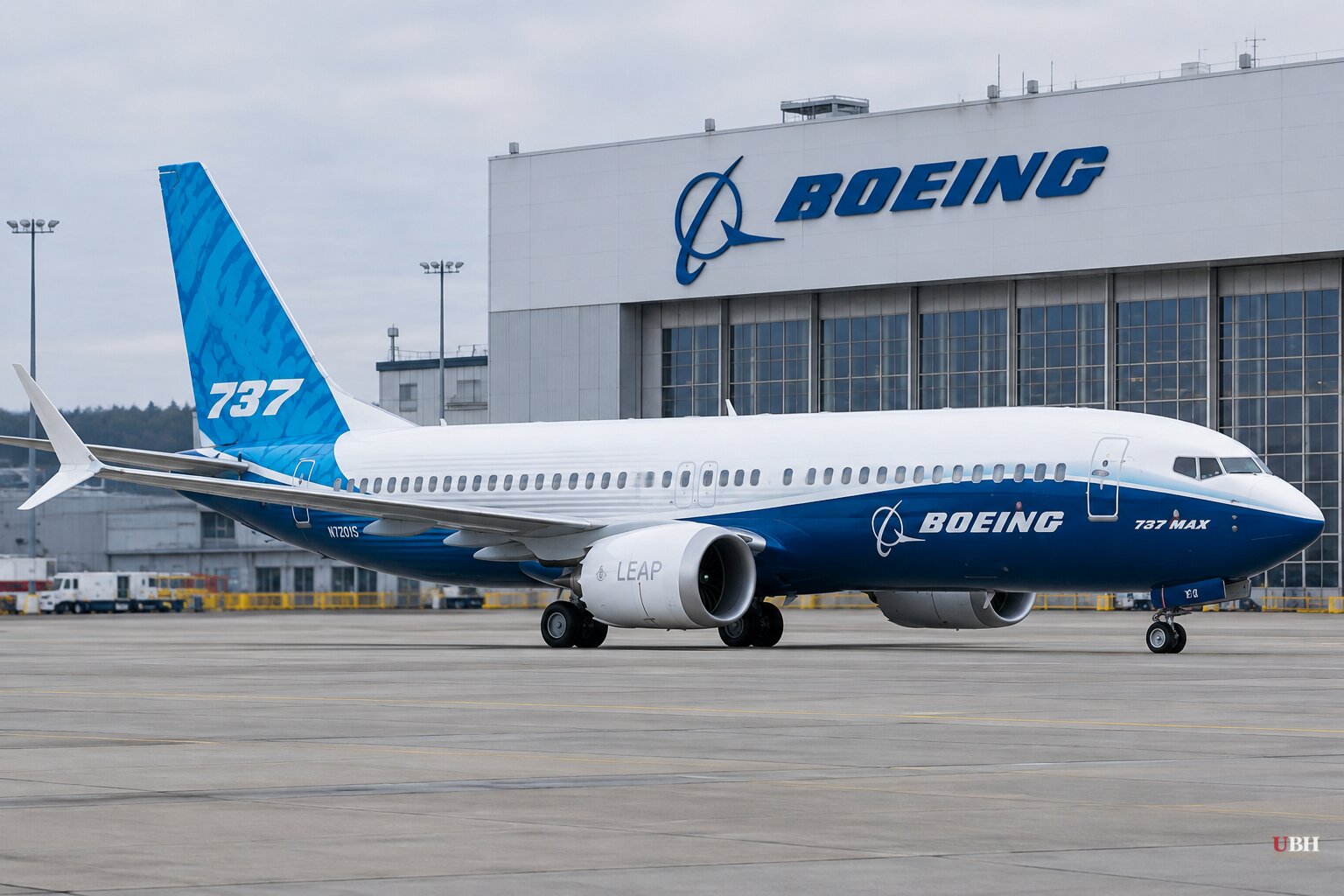
Boeing's third quarter was better than feared on cash. The outlook is what hit the stock.
CEO Kelly Ortberg and CFO Jay Malave told analysts today, Oct. 27, that the company will miss its 2026 goal of about 500 737 deliveries. Boeing also pushed back the date it expects to reach a 737 production rate of 47 jets a month. As recently as May, executives said they would be there this summer. The new target is early 2027.
Shares were down 9.6% to $170.23 in afternoon trading. If that holds into the close, it would be the stock's worst day since April 3, 2025.
The numbers
Revenue was $24.2 billion, up 4% from a year ago. Boeing posted a core loss of 34 cents a share, wider than the 21-cent loss LSEG analysts expected. The GAAP loss was 26 cents.
Free cash flow was positive for the second straight quarter at $464 million. Operating cash flow was $1.5 billion. For the first nine months of the year, Boeing has still burned $359 million, though the company says it expects to generate about $2 billion in free cash flow by the end of the year.
Backlog stands at a record $745 billion. Net debt is $25.2 billion, down slightly from $25.9 billion at the close of the previous quarter and $30.4 billion a year ago.
Where the money is made and lost
The Commercial Airplanes unit reported revenue of $10.7 billion, down 3.4%, and an operating loss of $697 million, an operating margin of negative 6.5%. That compares with a $5.35 billion operating loss a year earlier, when the margin was negative 48.3%. Boeing attributed the loss to less profitable deliveries and higher production costs, including from its supply chain.
Defense, Space & Security was the bright spot. Revenue rose 15% to $7.9 billion and operating earnings hit $492 million, up from $114 million, with an operating margin of 6.2%, up from 1.7% a year ago. Higher deliveries, improved operational performance and a $252 million sale of subsidiary HRL Laboratories contributed. The unit's backlog reached a record $101 billion. Global Services earned about $1 billion, an operating margin of 18.3%.
JPMorgan analyst Seth Seifman said commercial aircraft sales met expectations but margins missed by about 280 basis points because of rising costs. He pointed out that unit-accounting losses have stayed around $1.3 billion for five straight quarters.
The 737 math
Through nine months Boeing has delivered 475 airplanes, 367 of them 737s, against 440 total in the same stretch of 2025. The 367 is the fastest nine-month MAX pace the company has posted.
Hitting 500 would have required roughly 133 more 737s in the fourth quarter. That is not happening. Boeing also expects to land at the low end of its guidance range on the 787, around 90 deliveries for the year.
Wing production remains the main constraint, according to Ortberg. The next step, 52 jets a month, is still planned for the second half of 2027. To get there, Boeing needs to build five jets a month at its new 737 line in Everett, Washington, which opened in July. It also has to raise fuselage output at the former Spirit AeroSystems plant in Wichita, Kansas. Boeing bought Spirit last year, in part because of significant ongoing manufacturing defects there.
Right now Boeing is making fuselages at a lower rate while it uses up existing inventory. Ortberg said output at Wichita has to climb to match 737 production.
The 787 program is also struggling. A supplier dispute has stalled wing production for 777 freighters and 767s, though wing shipments have resumed. Malave said the disruption will show up "over the next few quarters." Boeing expects the 777-9 to be on track for regulatory certification by mid-2027, with 10 to 15 deliveries next year.
Cash flow pushed out
Boeing now expects about $3 billion in free cash flow next year. The analyst consensus was $5.5 billion, according to LSEG. Jefferies analyst Sheila Kahyaoglu said in a research note that the gap comes from lower deliveries and higher capital investment.
The company's $10 billion free cash flow target is now expected in 2029, a year later than investors had figured.
Tony Bancroft, an investment analyst at Gabelli Funds, said the long-term outlook remains good because demand for jetliners is high and Airbus is the only other major competitor. He also said the market will punish any delay in raising cash flow.
Ortberg framed the miss as a matter of discipline. "I've said before, our progress is not always going to be perfectly linear, but we continue to improve, and I'm confident we are on the right track," he told investors. He added that despite pressure to go faster, "we're going to be smart about this, stay disciplined, and the outlook is there."
That approach has a history behind it. Before Ortberg arrived in 2024, Boeing struggled for years with production problems tied to rushing rate increases at the expense of quality.
What comes next
The first test is the Everett line. Boeing says it must reach five jets a month there to support the 52-a-month plan in the second half of 2027. Whether Wichita fuselage output can ramp in step with it is the other open question.
Sources used for this briefing
7 links from 7 independent newsrooms (syndicated copies of the same report count once)
These are the sources it draws on, linked so you can verify.


