
Unbiased headlines. Facts, not spin.
Unbiased Headlines is an independently owned news organization. We bring you the facts, not opinions, written fresh from 110+ named sources. Sources linked so you can verify it yourself.
 economy
Notable (6/10)
Event date: October 26, 2026 ·
Beef Imports Under Trump's Reduced-Tariff Plan Hit 20% of the 300,000-Ton Target as Ground Beef Holds at $6.79
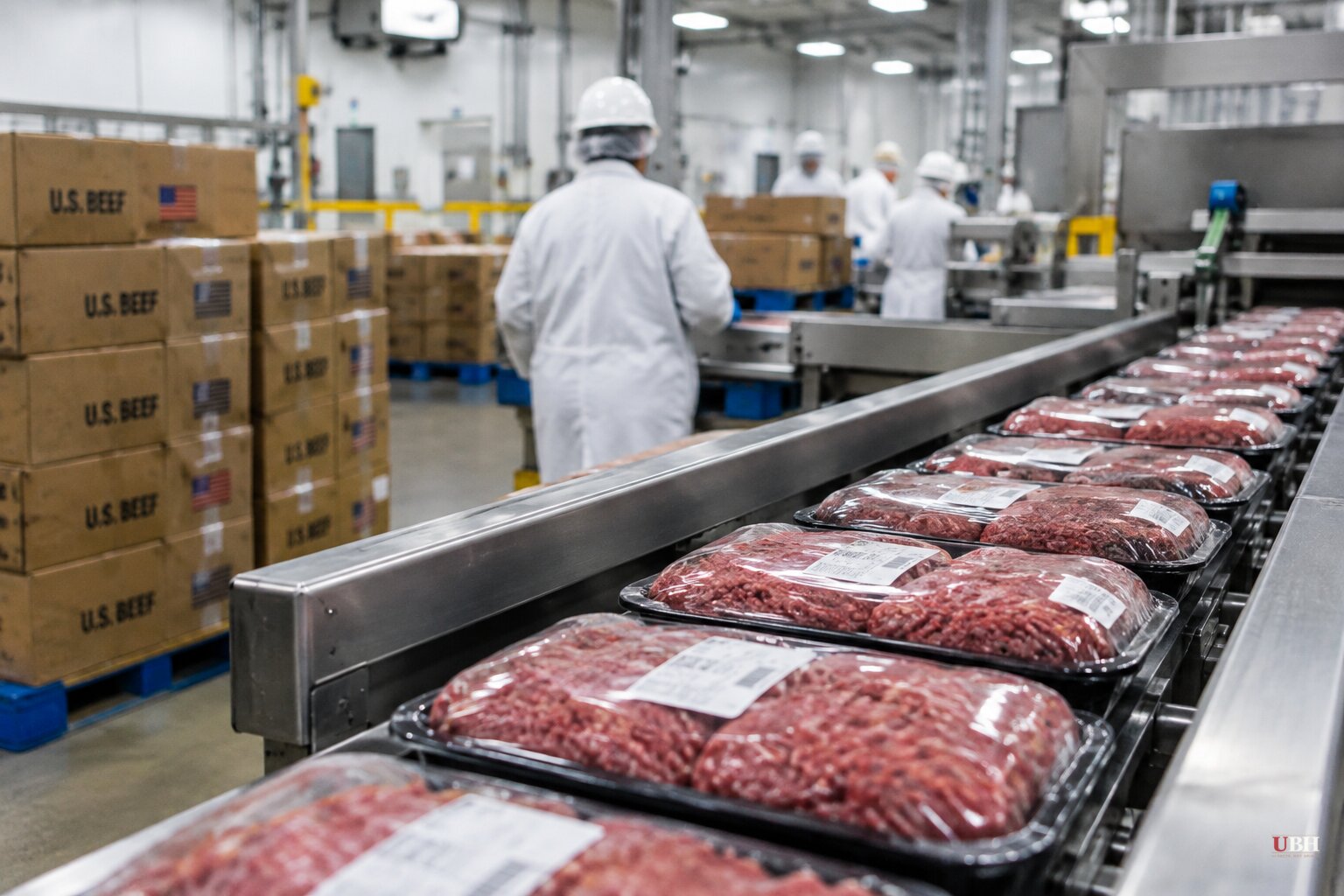
Since President Donald Trump's late-August proclamation cutting tariffs on lean beef, the promised flood of imports has been a trickle, and the grocery-store price has barely moved.
U.S. Customs and Border Protection data show 59,423 metric tons of the beef had entered the country as of Oct. 19. That is about 20% of the 300,000-ton target.
The plan allowed up to 100,000 metric tons a month across September, October and November. September came in at 37,486 tons, barely more than a third of the monthly allowance. October had reached 21,937 tons by the 19th.
What the prices did
Bureau of Labor Statistics data put ground beef at $6.79 a pound in September. That is down from $6.92 in August, a drop of about 1.9%, but up from $6.32 a year earlier, a rise of roughly 7%.
Overall grocery prices are up 2.5% to 2.9% over the same stretch. Beef is running well ahead of the pack.
Trump announced the policy Aug. 26. He wrote on Truth Social: "This deal will reduce prices for Americans while giving space for our Great American Beef Herd to grow again." Yahoo Finance noted that the imported beef was also billed as selling 25% below market price.
The White House did not immediately respond to Fortune's request for comment on the import numbers.
Why the beef may not reach the meat case
Derrell Peel, a professor of agribusiness specializing in livestock at Oklahoma State University, told Fortune the thinking behind the plan was too simple. "The simple assumption there was that if we can just increase supply of beef in the U.S., that should lower prices," he said. "Unfortunately, the beef industry is much more complex than that."
Peel's point is about the product. Lean trimmings are often combined with fatty trimmings produced from cattle in American feed lots. That blend is usually used by fast food restaurants, not grocery stores.
He also said the industry is able to import lean trimmings to meet demand, even while absorbing tariffs to do so. Cheaper imports of a product the market was already getting do little for the retail price, in his view. "We were getting as much as we wanted," Peel said.
Nevil Speer, a beef industry consultant, said grocery prices move slowly. "Trying to change the beef supply chain and move it is like turning the Titanic," he said. Speer also raised the question of whether beef that might have come to the U.S. was directed to other markets instead. He did not claim to know.
Speer's read on volume cuts the other way for ranchers who feared the worst. "Clearly, we haven't flooded the market, which was the concern with beef imports," he said.
Ranchers say they are paying for it
Farm Action, an advocacy group, analyzed the first 30 days and found that prices for the cattle used to produce ground beef fell by as much as 13.9% after the policy took effect.
"Ranchers are seeing steep declines in the prices they receive, and consumers still haven't seen clear, meaningful relief at the grocery store," said Sarah Carden, the group's senior director of research and policy.
The United States Cattlemen's Association, the National Cattlemen's Beef Association and the Farm Bureau have all opposed the plan. John Newton, the American Farm Bureau Federation's vice president of public policy and economic analysis, said it "can't come at a worse time for ranchers as the herd is at a 50-year low." He argued it "takes away any economic incentives to invest and rebuild the herd when we're trying to lower cattle and beef prices."
Farm Bureau President Zippy Duvall asked Trump to roll back the policy, arguing the imports would lower cattle prices and could cost ranchers $300 to $400 per head. "To put it simply, the plan undercut a fragile recovery in the cattle industry while failing to benefit consumers," Duvall said.
The USDA counts 86.2 million cattle and calves in 2026, the lowest total in 75 years. Its 2022 Census of Agriculture found 732,123 cattle ranches, down 17% from 2017.
That is the structural problem. Drought, expensive grain, inflation and high borrowing costs have squeezed the industry, according to the Yahoo Finance analysis. A tariff tweak on one product does not rebuild a herd.
The politics
Trump has been blunt about why he is doing this. "It really became unacceptable to the voter," he said last month. "And we do have to get elected, because if we're not going to get elected, your ranchers and your farmers are in big trouble."
Rancher Chad Basinger of Pretty Prairie, Kansas, said the import decision could sway some voters but was unlikely to reshape the political map. He pointed to the $8 billion in farm relief announced in Kansas on Oct. 19 as another factor in how ranchers judge the administration.
So the administration is cutting tariffs to lower beef prices while also announcing relief money for farmers.
What to watch
The import window runs through November. No month so far has come close to the 100,000-ton monthly cap.
For context, the U.S. imported 1.9 million metric tons of beef of all kinds last year, mostly from Australia, Canada, Brazil, Mexico and New Zealand. The 300,000-ton plan was never small, but the volume that has actually arrived is.
The next BLS ground beef reading for October will show whether the roughly 1.9% September dip was the start of a trend or a one-month blip. The White House has not said whether it will extend the program past November.
Sources used for this briefing
7 links from 6 independent newsrooms (syndicated copies of the same report count once)
These are the sources it draws on, linked so you can verify.


