
Unbiased headlines. Facts, not spin.
Unbiased Headlines is an independently owned news organization. We bring you the facts, not opinions, written fresh from 110+ named sources. Sources linked so you can verify it yourself.
 economy
Major Story (7/10)
UN Trade Official Warns Iran War Fertiliser Spike Could Hit Next Year's African Harvests
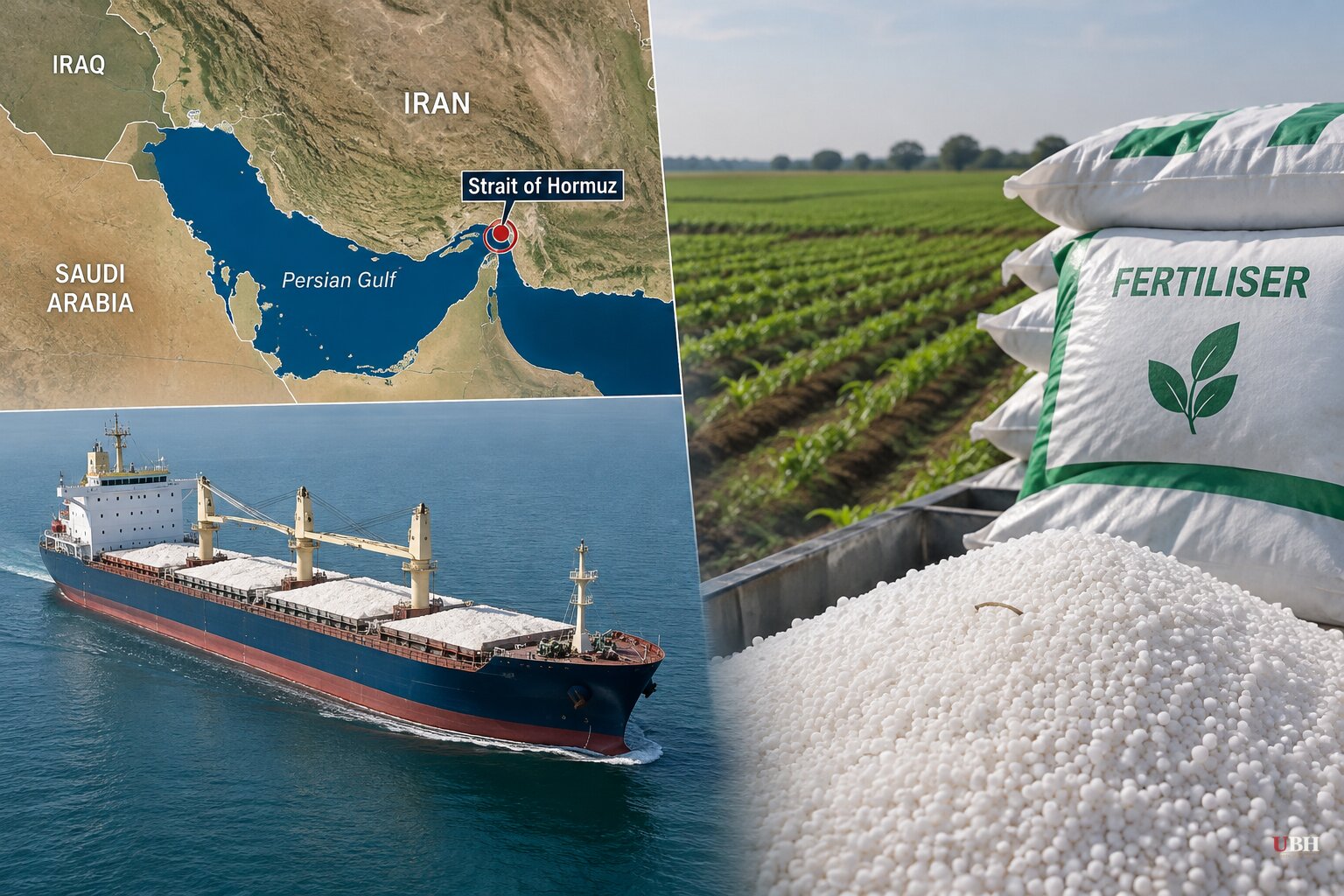
Since the U.S.-Iran ceasefire collapsed in July, the cost of the war has spread well beyond the Gulf. On Monday, Oct. 26, officials in Doha put numbers and a calendar on one piece of it: African farms.
Luz Maria de la Mora, director of the Division on International Trade and Commodities at UN Trade and Development (UNCTAD), said the Strait of Hormuz crisis must be resolved "sooner rather than later." She spoke at UNCTAD's World Investment Forum, held in Doha on Oct. 25 and 26.
Her concern is fertiliser. "Prices of fertilisers have risen dramatically … so many countries have decided to reduce the use of fertilisers, which will have an effect next year in terms of crops," she said. "It may have an effect on availability of food and prices of food."
That is a warning about next year's harvests, not a report of empty shelves today. The mechanism is simple: farmers who can't afford inputs apply less, and harvests shrink.
Fuel prices in Uganda and Zimbabwe
The strait previously carried one-fifth of global oil and liquefied natural gas trade, and its disruption has rippled through African economies.
Sanjay Tanna, Uganda's minister of trade, industry and cooperatives, said fuel prices in his country have more than doubled. Uganda is heavily agrarian.
Monica Mutsvangwa, Zimbabwe's minister of women affairs, community, small and medium enterprise development, said rising fuel and fertiliser prices are a critical concern. More than 70 percent of Zimbabweans depend on agriculture, she said.
De la Mora said rising oil prices have disrupted supply chains, with effects lasting longer than anticipated. "The effects are lasting longer than we would have expected or would have wanted," she said.
Uneven exposure
Not every economy is hit the same way. Tanna said Uganda's reliance on subsistence farming offers some protection, because domestic food production is less tied to international market swings.
That cushion has limits. Tanna said the Ugandan shilling has lost 10 percent of its value against the U.S. dollar. The shilling has declined steadily since mid-2026.
Zimbabwe's pitch to investors is built on neutrality. With a trade war simmering between the United States and China, Mutsvangwa said Harare sees itself as a potential partner for investors from either side. "We are a friend to all and an enemy to none," she said.
Washington's position
The forum's call for a quick resolution sits against a harder line from the White House. At a rally in Mississippi on Monday, President Donald Trump dismissed the April ceasefire. "We did a little cease-fire, which I never liked very much," he said. "I considered it sort of a waste of time."
"We want to be nice, but it was just a waste of time as far as I'm concerned," Trump said. "But, we're doing a job. We're doing a job for you."
The ceasefire took effect in April, was later formalized and extended under the 60-day Islamabad Memorandum signed in June, and collapsed in July.
Diplomacy on the same day
The same day, officials from Saudi Arabia, Turkey and Pakistan met Iranian President Masoud Pezeshkian in Tehran. The delegation included Saudi Defense Minister Prince Khalid bin Salman, Pakistani Army Chief Gen. Asim Munir and Turkish intelligence chief İbrahim Kalın.
Saudi Arabia said the visit was meant to open negotiating channels to "prevent the return of military escalation," according to Reuters. Iran's government said the talks centered on "Islamic unity, regional security & standing against US-backed Israeli aggression."
Neither side has announced a mechanism or timeline for restoring normal shipping through Hormuz.
That leaves African governments and farmers facing a deadline set by the growing calendar. De la Mora's warning is that input decisions already being made will show up in next year's harvests. Whether prices ease before then depends on a settlement that has not been reached.
Sources used for this briefing
5 links from 4 independent newsrooms (syndicated copies of the same report count once)
These are the sources it draws on, linked so you can verify.


