
Unbiased headlines. Facts, not spin.
Unbiased Headlines is an independently owned news organization. We bring you the facts, not opinions, written fresh from 110+ named sources. Sources linked so you can verify it yourself.
 economy
Major Story (7/10)
China's September Industrial Profits Rise 14.4% on AI Demand While Retail Sales Grow 1.1%
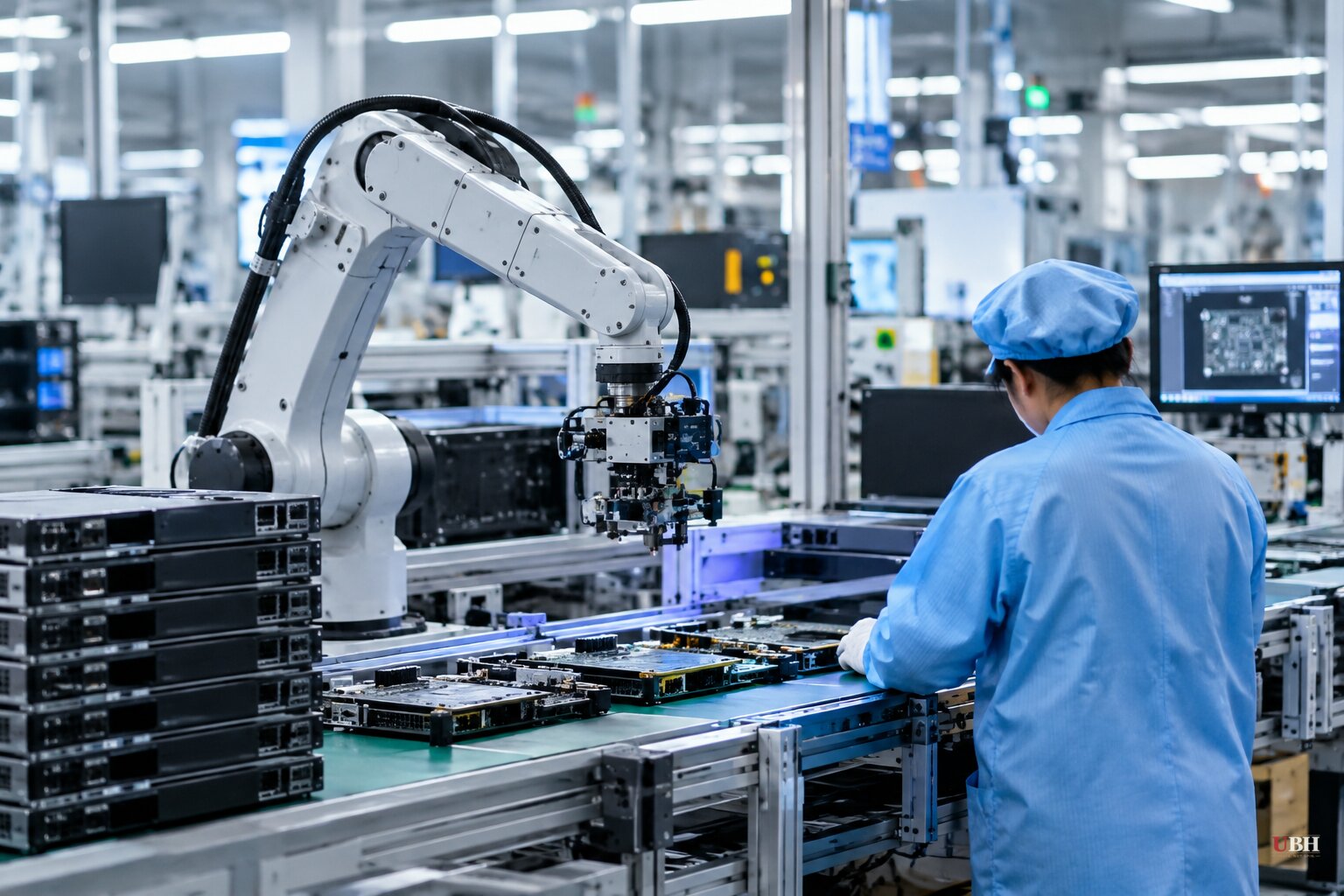
China's industrial profit engine is running hot. Its consumers are not.
Profits at large industrial firms rose 14.4% in September from a year earlier, according to data from the National Bureau of Statistics released Tuesday, Oct. 27, Beijing time (Monday evening in the U.S.). That is the fastest pace since June, and up from 4.2% in August, per NBS figures. For the first nine months of 2026, profits are up 15.5%.
The rebound follows a modest gain in 2025 after three straight years of declines.
AI hardware does the heavy lifting
NBS Chief Statistician Yu Weining pointed mostly to electronics and advanced-technology manufacturing. Profits at makers of electronic special materials more than tripled over the nine months. Semiconductor device equipment makers saw a 51.7% jump.
The data center buildout shows up plainly. Yu said profits at optical fiber manufacturers rose more than sixfold, and cable makers' profits more than doubled, over January through September.
Copper and aluminum producers gained nearly 45% on demand from AI-related and renewable industries. Mining profits climbed 35.1% and manufacturing profits rose 17.4%, according to the NBS breakdown.
Commodity prices are part of the picture too. The war in Iran has pushed up energy and raw-material costs, which lifted earnings at miners, chipmakers and raw-material suppliers. Factory-gate prices rose at their fastest pace since mid-2022.
The same price rise squeezes downstream manufacturers. Profit growth in clothing, autos and furniture has trailed high-tech sectors.
The domestic side is weak
Retail sales grew 1.1% in September. That beat forecasts, but only marginally exceeded August's weak reading.
Property investment fell 20.6% in January through September, worse than the 19.9% decline through August. The housing downturn continues to weigh on home purchases and related durable goods.
Shena Yue, senior economist at Oxford Economics, said high-tech manufacturing investment and electronics capacity utilization remain resilient, supported by the global AI cycle and domestic policy priorities. Overall investment and industrial utilization, she said, are still subdued.
"China's export strength isn't able to fully offset its domestic weakness," Yue said.
Overall growth is holding up on paper. GDP expanded 4.5% in the third quarter from a year earlier, slightly faster than the second quarter. Growth for the first nine months is 4.6%, inside the government's full-year target range of 4.5% to 5%.
The export side of the ledger
Chinese customs data show a trade surplus of $938.1 billion in the first nine months of 2026. That puts the country on track to pass last year's record of $1.189 trillion. September exports rose 36.3% from a year earlier, and the monthly surplus hit $133.5 billion.
Wang He, writing in a commentary for The Epoch Times, argues the surplus is a symptom rather than a strength. In his view, exports are surging because domestic consumption has nearly stalled, and he says fixed-asset investment contracted by more than 7%. He describes the current wave as "China Shock 2.0," with state-subsidized Chinese firms moving into electric vehicles, robotics and precision machinery.
Trading partners have said something similar on the record. European Commission President Ursula von der Leyen has called the EU's trade imbalance with China structural and unsustainable, and has urged substantial and rapid rebalancing. Wang also cites a recent IMF downgrade of China's growth outlook.
Beijing's own framing points the other way. The profit rebound is attributed in part to its campaign against price wars across sectors, and Yue credits domestic policy priorities for supporting high-tech investment.
What to watch
The profit gains sit on a narrow base. The NBS data show electronics and upstream materials producers carrying the growth, while households, property and consumer-facing industries lag.
Concerns over local government debt are mounting and the benefits of consumer trade-in subsidies are fading. Beijing has so far held back from major new stimulus for domestic demand.
Whether it changes course, or leans further on exports to hit the 4.5% to 5% target, is the open question heading into the fourth quarter.
Sources used for this briefing
7 links from 4 independent newsrooms (syndicated copies of the same report count once)
These are the sources it draws on, linked so you can verify.


