
Unbiased headlines. Facts, not spin.
Unbiased Headlines is an independently owned news organization. We bring you the facts, not opinions, written fresh from 110+ named sources. Sources linked so you can verify it yourself.
 economy
Notable (6/10)
Event date: October 19, 2026 ·
Consumer Confidence Fell to 81.9 in September While Retail Sales Ran 6.3% Above Last Year
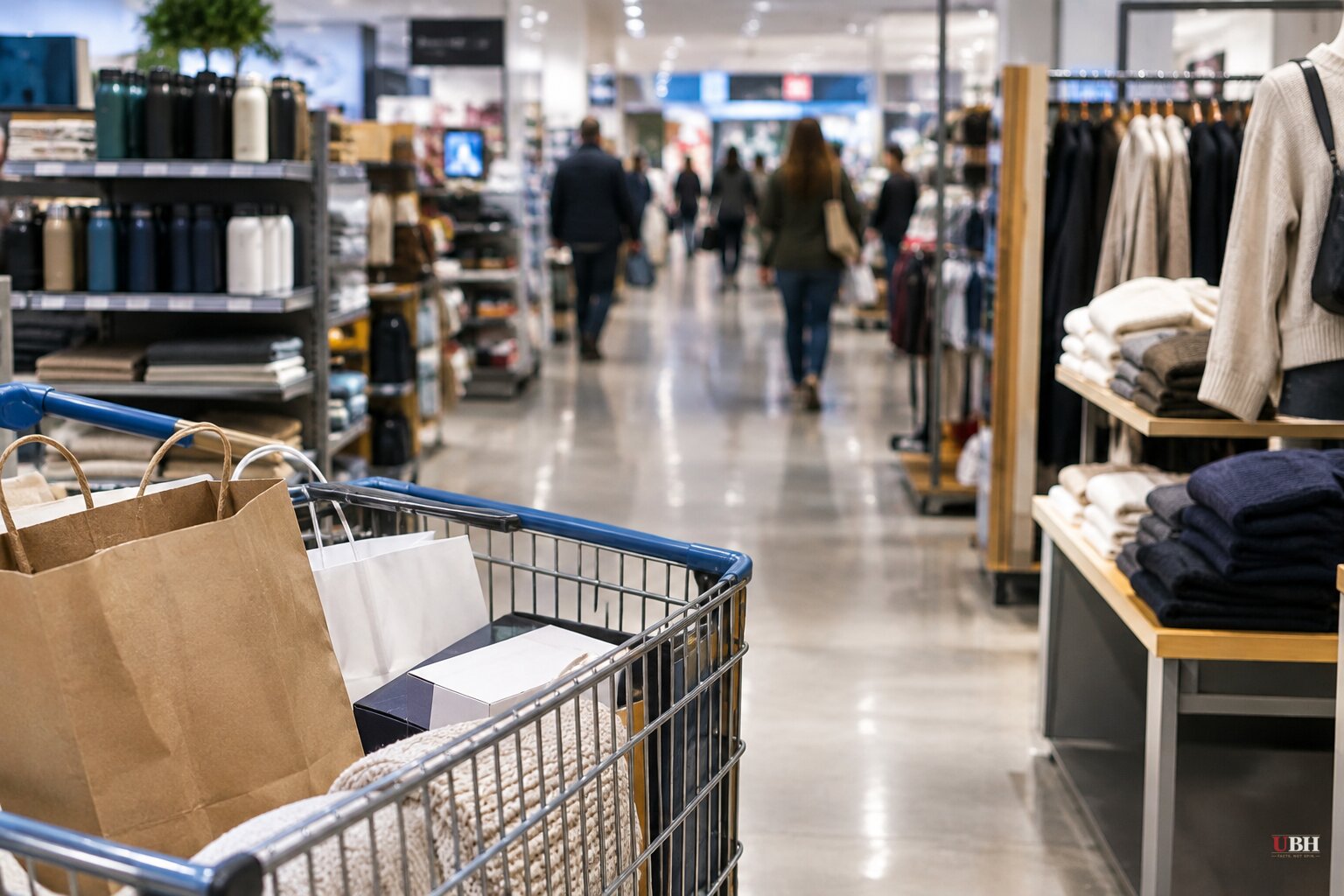
Americans keep telling pollsters they're squeezed. They keep swiping the card anyway.
The Conference Board's Consumer Confidence Index fell to 81.9 in September. Over the same stretch, the Census Bureau reported that retail and food services sales rose 0.8% to $745 billion, after an upwardly revised 1.3% gain in August. Sales were 6.3% higher than a year earlier.
Those figures are not adjusted for inflation. Economists polled by Reuters had expected a 0.3% September gain, and much of the beat came from higher gasoline prices rather than a surge in shopping.
Spending is running ahead of paychecks
The Bureau of Economic Analysis put August personal consumption expenditures up 0.9%, or 0.6% after inflation. That means the rise was not purely higher prices.
Income did not keep up. Disposable personal income rose just 0.3% in August. After inflation, it was unchanged. The personal saving rate was 4.1%.
Inflation is the backdrop. The PCE price index rose 3.4% from a year earlier in August, and 3.0% excluding food and energy.
The data does not show how households covered the gap between spending and income. Whether they leaned on credit is a question the figures raise but do not answer. Consumer debt now tops $18 trillion, according to The Wealth Advisor.
Jobs look steadier than moods
The picture is not uniformly gloomy. The New York Fed's September Survey of Consumer Expectations, which polled about 1,300 household heads from Sept. 1 through Sept. 30, found the perceived chance of losing a job over the next year fell to 13.5%. That is the lowest since December 2024.
The average perceived chance of missing a minimum debt payment in the next three months dropped to 12.2% from 13.2%. Median expected household income growth rose to 3.1%, the highest since February 2025. Expected spending growth hit 5.5%, the highest since May 2023.
Inflation expectations moved the wrong way. Respondents expect prices to rise 3.9% over the next year, up from 3.6% in August and the highest reading since May 2023. Five-year expectations held at 3%.
The same survey found larger shares of households saying they are worse off than a year ago and expect to be worse off next year.
Why mood and spending have split
National Retail Federation chief economist Mark Mathews put it this way: Americans are "spending their financial condition, not their psyche." Economists increasingly say bad feelings about the economy have come "decoupled" from spending, a link that held before the pandemic.
Economist Ed Yardeni points to age. The affordability crisis, he says, is for younger people. Older Americans have "accumulated an enormous amount of net worth" that lets them keep buying.
A Fox News column by financial advisor Ted Jenkin blames psychology. He argues social media has people measuring themselves against everyone else's highlight reel, and that buy-now-pay-later plans make big purchases feel small. Four payments of $300 is easier to swallow than $1,200.
Holiday spending is projected to hit record levels this year, and shoppers have already started buying gifts, increasingly using buy-now-pay-later options.
The stress gauge says otherwise
LegalShield's Consumer Stress Legal Index rose to 75.7 in September, its highest level since March 2020. It is up 6.3% from a year earlier and has risen year over year for 27 straight months. That is the second-longest streak in the index's 24-year history. The longest ran 34 months, from November 2006 to August 2009.
Matt Layton, LegalShield's senior vice president of consumer analytics, argues that continued spending is giving economists and policymakers a misleading picture. More Americans, he says, are relying on credit to maintain their standard of living.
"This is long-term pain for the everyday consumer," Layton told Kitco News. He said consumers are running out of money earlier each month and deciding which bills to pay and which to put off. "Nothing in our data suggests that any improvement is on the near-term horizon," he said.
Layton also set limits on the comparison. LegalShield is not forecasting a recession. The index has climbed 22% over the current 27-month run, versus 40% over the first 27 months of the 2006-2009 period. It sits at roughly 60% of its December 2008 peak of 125.2.
What comes next
The two readings are not in direct conflict. Job-loss worries are easing while households feel poorer. Spending is up in dollar terms while real take-home pay is flat. Both can be true at once, and the 3.4% inflation rate sits under all of it.
The next tests are close. The midterms are ahead, with household finances a central issue, and holiday spending numbers follow. The open issue is whether income growth closes the gap with spending before borrowing costs close it first.
Sources used for this briefing
6 links from 6 independent newsrooms (syndicated copies of the same report count once)
These are the sources it draws on, linked so you can verify.


