
Unbiased headlines. Facts, not spin.
Unbiased Headlines is an independently owned news organization. We bring you the facts, not opinions, written fresh from 110+ named sources. Sources linked so you can verify it yourself.
 economy
Major Story (7/10)
South Korea's Economy Grew 1% in Third Quarter, More Than Triple the Central Bank's Forecast, With Chips Driving Half of It
South Korea's economy grew 1.0% in the July-September quarter from the previous three months, the Bank of Korea said Tuesday, Oct. 27. The unrounded figure was 0.97%.
The central bank had forecast 0.3% in August. Economists polled by Reuters had expected a median 0.7%, and a Bloomberg survey had 0.8%. Compared with a year earlier, output rose 3.4%, slightly below the second quarter's 3.7%.
The previous quarter's growth was 0.6%. The economy shrank 0.1% in the final quarter of 2025.
Chips carry the load
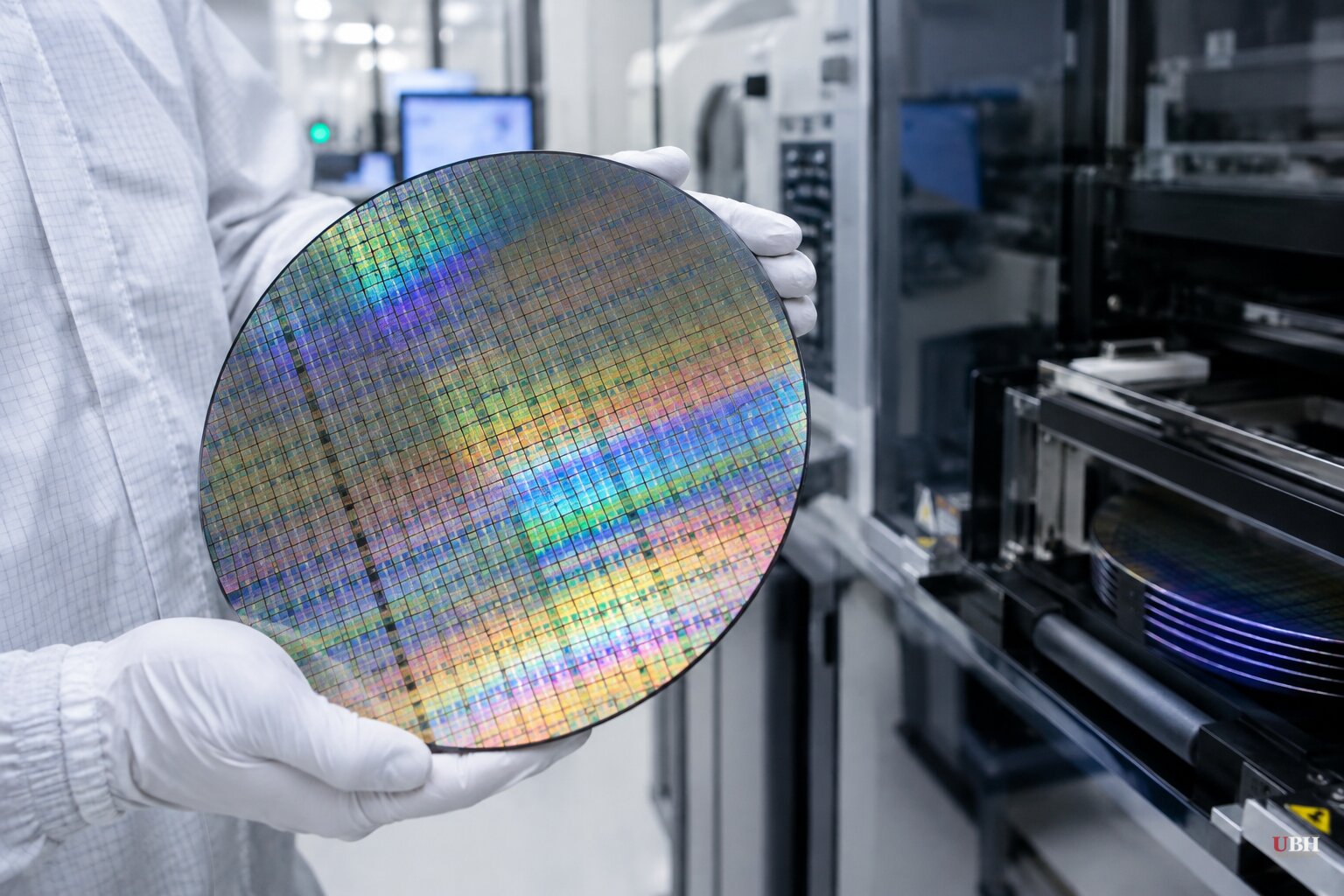
Lee Dong-won, head of the Bank of Korea's Economic Statistics Department, told a briefing that about half of economic growth is being driven by semiconductors. Computers, electronics and optical equipment account for roughly 60% of the contribution to year-on-year growth, the bank said, with chips responsible for about half of that.
The trade numbers are large. Semiconductor exports hit $148 billion in the third quarter, up 218.7% from a year earlier, according to government figures. The Korea Customs Service reported September exports of $120.9 billion, up 83.5%, with chips making up nearly half of shipments.
Exports for January through September topped $800 billion, already above last year's full-year record. They are on track to pass $1 trillion this year, which would make South Korea the fourth country to reach that mark after the United States, China and Germany.
South Korea is home to SK Hynix and Samsung Electronics, which together control roughly 80% of the global market for high-bandwidth memory and 60% of the market for DRAM.
Exports rose 2.3% on the quarter. Facility investment jumped 4.1%, largely on chipmaking machinery, and intellectual property investment rose 2.3%. Construction investment edged up 0.7%. Real gross domestic income, which captures how much more Korean exports can buy abroad, rose 18.8% from a year earlier, its fastest pace in nearly 49 years.
The household side is shrinking
Private consumption fell 0.2%, with less spent on goods and services. Reuters reported it was the first drop in nearly four years.
Government consumption rose 1.9% on purchases of goods and higher health insurance benefits. Facility investment added 0.4 percentage point to growth and government consumption added 0.3 point. Together they made up most of the quarter's expansion. Private consumption subtracted 0.2 point.
Lee attributed the weak household spending partly to a stock market downturn and disruptions in automobile production. He said spending should recover gradually as chip companies pay dividends in the fourth quarter and employees collect bonuses in the first quarter of 2027.
That is the central bank's outlook. It has yet to show up in the spending data.
Concentration risk
John Bromhead, a senior economist at Moody's Analytics, flagged the downside: "The risk is that growth stays heavily concentrated in the semiconductor sector, leaving South Korea exposed to a slowdown in global AI spending."
Kwon Hyo-sung of Bloomberg Economics read the data as confirmation of the Bank of Korea's upbeat view that chip demand is keeping exports and investment strong.
Both readings fit the numbers. Chips are lifting income and investment, and one industry is also supplying roughly half the growth.
Rates and markets
The Bank of Korea held interest rates last week after back-to-back hikes this summer. It kept a hawkish tone by raising its growth forecasts. Inflation was 2.9% in September, above the bank's 2% target.
Stronger growth gives the bank reason to keep tightening. Households are already pulling back, and borrowing costs weigh on them directly. How the bank balances those two facts at its next decision has not been announced.
Seoul's stock market took the data well. In early Tuesday trading, the KOSPI was up 4.39% at 5,709.85 as of 0153 GMT. Samsung Electronics rose 5.05% and SK Hynix gained 7.14%. Foreign investors were net buyers of 597.3 billion won ($450.57 million) in shares.
Reuters tied the move to both the GDP data and a rally in U.S. AI stocks after Anthropic's IPO filing. The Philadelphia Semiconductor Index rose more than 2% on Monday.
Full-year outlook
The Bank of Korea's August forecast for 2026 growth was 3.3%. Finance Minister Lee Hyoung-il said earlier this month he expects 3.4% to 3.6%. That would be the strongest year since 2011 outside the pandemic. South Korea grew 1% in 2025.
Lee Dong-won laid out the arithmetic. The economy grew 3.6% year-on-year over the first three quarters. Flat fourth-quarter output would hold full-year growth at 3.6%. Fourth-quarter growth of 1.4% or higher would lift it to 4%.
Lee said exports and investment are expected to stay robust in the fourth quarter. Chip production volume should expand further next year, he said, though price gains will slow. Whether households start spending again by then is unresolved.
Sources used for this briefing
8 links from 8 independent newsrooms (syndicated copies of the same report count once)
These are the sources it draws on, linked so you can verify.


