
Unbiased headlines. Facts, not spin.
Unbiased Headlines is an independently owned news organization. We bring you the facts, not opinions, written fresh from 110+ named sources. Sources linked so you can verify it yourself.
 economy
Notable (6/10)
Event date: October 27, 2026 ·
Third-Quarter Earnings Show Consumers Still Spending, While Whirlpool and Sherwin-Williams Flag Weakness
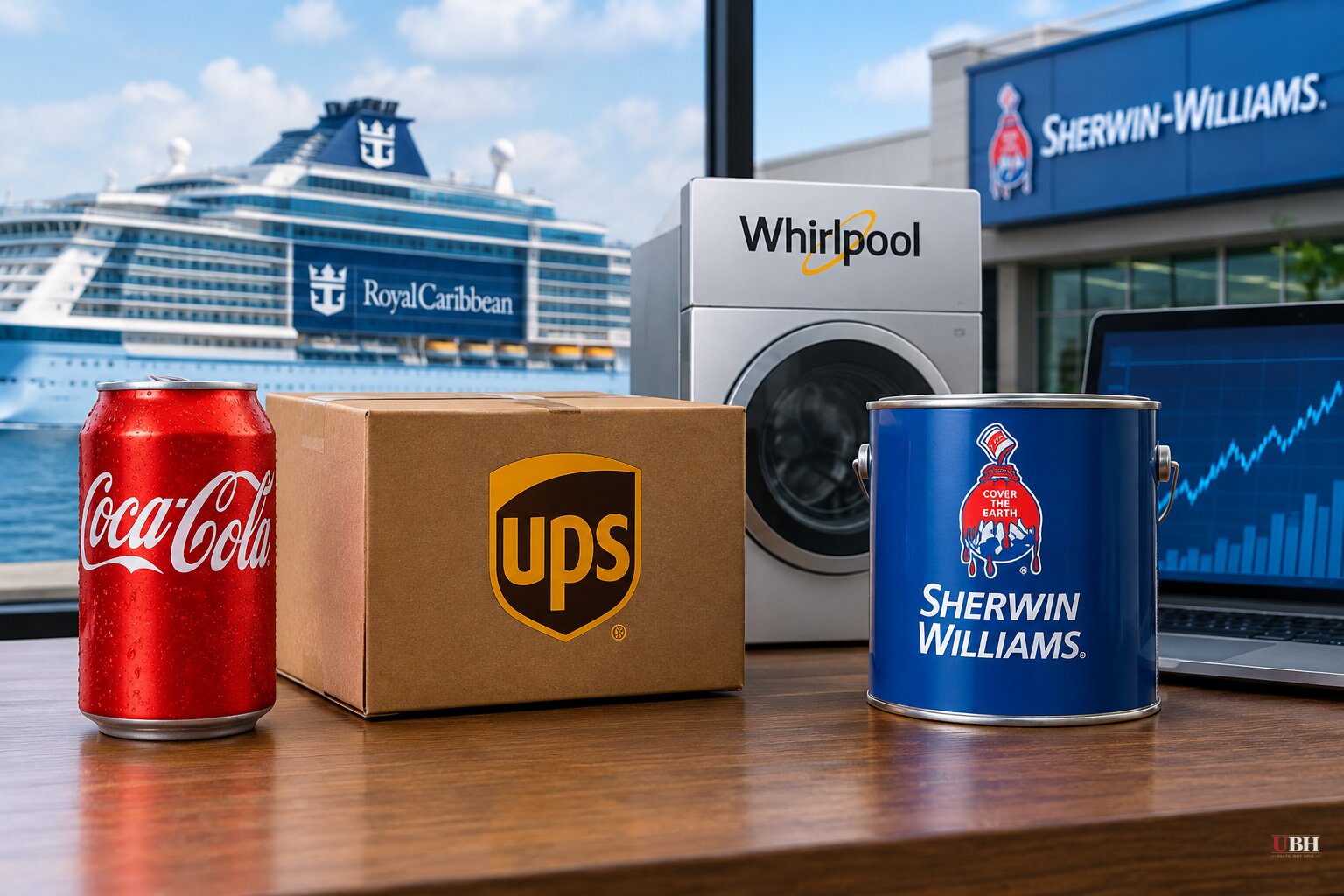
Corporate America's third-quarter reports are backing up the retail sales data. The U.S. consumer is still spending. But the results are uneven, and a few companies are already reporting the damage.
Retail sales rose 0.8% in September after a 1.3% gain in August, with higher spending at gas stations helping the September number. Diesel hit an all-time high of $6.52 a gallon in September. High borrowing costs and tension between the U.S. and Iran added to fears of a spending pullback.
The companies reporting strength
Coca-Cola beat analysts' expectations for revenue and earnings. North America unit case volume was flat, which the company read as steady demand despite higher prices. Overall volume got a lift from outside North America.
The company raised its full-year outlook. It now expects comparable earnings per share to grow at least 11%, up from a prior range of 9% to 10%. CFO John Murphy said that "wherever you are on the income scale, you're looking for value." CEO Henrique Braun described the environment as "uneven."
Royal Caribbean beat on earnings per share and narrowly missed on revenue. Guests served rose 9% from a year earlier to 2.7 million, and 2027 bookings are running "up in the high teens," the company said. CEO Jason Liberty pointed to "the resilience of the consumer" on the earnings call.
UPS beat on earnings and revenue. Its U.S. revenue rose 4.5% to $14.86 billion, and it lifted its full-year consolidated revenue forecast to about $92.6 billion from $91.2 billion.
Where it is not working
Whirlpool missed on both revenue and profit. Its North American net sales for the period ending September 30 fell more than 8% from a year earlier, and it lowered its annual revenue forecast.
Sherwin-Williams grew sales 7.9%, mostly on higher prices. The company said raw-material and supply costs ate into the profit benefit. It kept its annual forecast and expects subdued demand through the end of the year and through 2027.
Price-driven growth is not the same as volume growth. Sherwin-Williams' number is a reminder of that.
The banks' read
The big banks set the tone on Oct. 13. JPMorgan Chase earned $15.3 billion, or $5.57 a share, against Wall Street's expectation of about $5.93. The shortfall came from fixed-income trading. It was the bank's first earnings miss in nearly three years, according to the AP.
Goldman Sachs earned $17.01 a share, up from $12.25 a year earlier, on a surge in stock trading. Citigroup reported earnings per share of $2.85, above expectations.
Jamie Dimon, JPMorgan's CEO, said the U.S. economy was "fueled by strong business investment and ongoing consumer spending." He also warned that "large fiscal deficits, sticky inflation, elevated asset prices, rising interest rates and geopolitical conditions continue to shift under the surface."
Golub Capital's index of private middle-market companies, covering the first two months of the quarter, showed earnings up 6.9% and revenue up 3.5% from a year earlier. Co-CEO Lawrence Golub said the figures show the economy "continues to show resilient growth despite higher oil prices, rising interest rates and ongoing uncertainty related to the Iran conflict."
The strain argument
Strategists who see trouble are not disputing the spending numbers. They are questioning how long the spending can last.
"Consumers cannot indefinitely absorb rising prices," said Eric Clark, chief investment officer at Accuvest Global Advisors. He said wage growth often fails to keep pace with inflation, "forcing consumers to make trade-offs."
Tom Hainlin, national investment strategist at Bank of America, said his firm is "looking for signs of consumer fatigue." His question: "With food and gasoline prices continuing to rise, will consumers eventually be overwhelmed?"
The University of Michigan's preliminary consumer sentiment index fell to a five-month low ahead of the bank earnings, and inflation expectations rose further. Spending and borrowing have been climbing at a similar pace, which is part of what worries analysts. Investors currently expect negative earnings growth in the consumer discretionary and consumer staples sectors. That would be the first such decline since the end of 2024.
Edward Altman, the credit expert who co-produces the Golub index, reads the gap differently. He said weak sentiment and affordability pressure on some income groups "have not translated into a pullback in consumer spending in the broader economy." His point: sentiment and activity are different measures.
What comes next
The next data points are retailers' guidance as the holiday season approaches, and whether households cut back on big-ticket purchases typically put on credit cards. Strategists cited by Reuters-style market coverage describe a pullback there as an early warning of a wider slowdown. Companies including Whirlpool and Sherwin-Williams are already guiding cautiously into 2027.
Sources used for this briefing
7 links from 7 independent newsrooms (syndicated copies of the same report count once)
These are the sources it draws on, linked so you can verify.


