
Unbiased headlines. Facts, not spin.
Unbiased Headlines is an independently owned news organization. We bring you the facts, not opinions, written fresh from 110+ named sources. Sources linked so you can verify it yourself.
 economy
Major Story (7/10)
Honda Executive Warns Doubling of Canada Auto Tariffs to 50% on Jan. 1 Would Be 'Catastrophic'
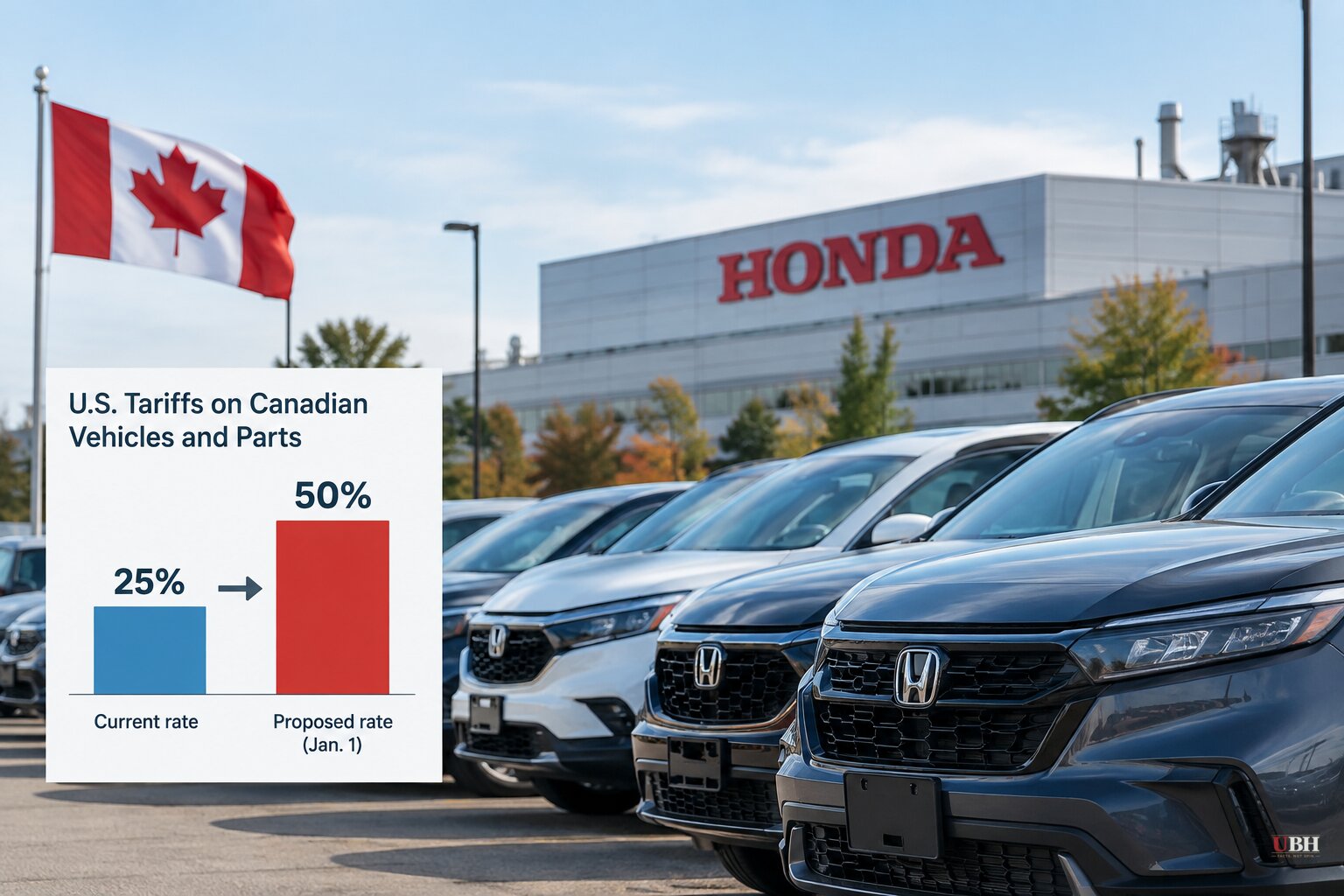
Since Trump threatened in August to double tariffs on Canadian-built vehicles and parts to 50% on Jan. 1, 2027, the auto industry has been waiting for a deal. On Tuesday, Oct. 27, one of its biggest players put the stakes in plain words.
"That really would be catastrophic for the entire industry," Jennifer Thomas, senior vice president of corporate affairs at American Honda Motor Co., said at the Reuters Automotive USA conference in Detroit.
What Honda wants
Thomas said she is "cautiously optimistic that cooler heads will prevail." She wants a trilateral agreement that includes Mexico, not a patchwork of bilateral deals.
"We need that trilateral agreement to stay in place in order for the U.S. industry to be competitive," she said. "It's integral to our success."
She said trade associations representing Honda and every major player in the U.S. auto industry have lobbied for the broader accord and against two-country arrangements.
Thomas also complained that North America is now at a disadvantage. "I never thought I would see the North American region be put at a disadvantage like this," she said. Some overseas countries, she noted, get better tariff rates.
The Trump administration's deals with Japan and South Korea set a 15% tariff on vehicles from those countries. Canadian vehicles currently face 25% on their non-U.S. content.
Honda's exposure
Honda is the second-largest vehicle producer in Canada, behind Toyota. It is also less exposed than some rivals: the company says more than 60% of the vehicles it sells in the U.S. are built at U.S. assembly plants.
Still, parts cross the U.S.-Canada border repeatedly during production. That is why a tariff doubling hits automakers on both sides.
In August, Honda said it might not build an eighth North American assembly plant unless the three-country trade deal is extended. Thomas said Tuesday that Honda is "at capacity" and "exploring all options," while it will "continue to invest in the U.S."
Honda is an interested party here. Its executives are lobbying for the outcome that protects Honda's supply chain.
Where the talks stand
The U.S. and Canada are working on a deal to ease Section 232 tariffs, Reuters reported Monday. Those include duties of up to 50% on Canadian steel and 25% on autos. Thomas said she was encouraged by reports that talks had restarted, including on easing levies on aluminum and other critical materials.
Those talks follow a collapse. According to a Time.news account, the two sides appeared close in August to cutting the auto rate from 25% to 15%. That account says the talks broke down when Canadian officials learned the lower rate would not cover heavy-duty vehicles such as Ford's F-350, built in Oakville, Ontario. Canada walked away, and Trump then made his 50% threat. Prime Minister Mark Carney also said at the time that Canada would match U.S. tariffs dollar for dollar.
An unnamed Canadian trade source told iPolitics that negotiators face a trap either way. Some say reject anything less than perfect, while others warn that without progress, "you're locking in the higher number that we're at now, and maybe an even higher number on Jan. 1."
The administration's position
The White House does not share the industry's view of the existing framework. Trump negotiated the USMCA in his first term, and it took effect in 2020. He later soured on it and accused Canada of "ripping off the United States of America for years."
U.S. Trade Representative Jamieson Greer announced months ago that Washington would not automatically extend the pact. That moved it from a 16-year trilateral extension to an annual review. Greer has also said vehicles assembled in Mexico and Canada would likely still face some level of tariffs.
In the separate talks with Mexico, the U.S. has demanded that North American-built vehicles contain 50% U.S.-specific content, sources familiar with the talks have said. That would push the required regional content to 82% to qualify for U.S. benefits. The USMCA has "rules of origin" requirements like these. Thomas and other auto executives pointed out that the deals with the EU, Japan and South Korea do not.
What comes next
No U.S.-Canada deal has been announced. Trade sources have cautioned that predicting an agreement is difficult despite a softer tone from Washington.
It is unclear whether negotiators can settle the Section 232 steel and auto duties before the Jan. 1 deadline, and whether the heavy-duty vehicle dispute that reportedly sank the August talks is resolved.
Sources used for this briefing
7 links from 7 independent newsrooms (syndicated copies of the same report count once)
These are the sources it draws on, linked so you can verify.


