
Unbiased headlines. Facts, not spin.
Unbiased Headlines is an independently owned news organization. We bring you the facts, not opinions, written fresh from 110+ named sources. Sources linked so you can verify it yourself.
 economy
Major Story (7/10)
Trump and Hassett Say Canada Trade Deal Is Near, but No Agreement Is Announced and Talks Remain Tangled in Politics
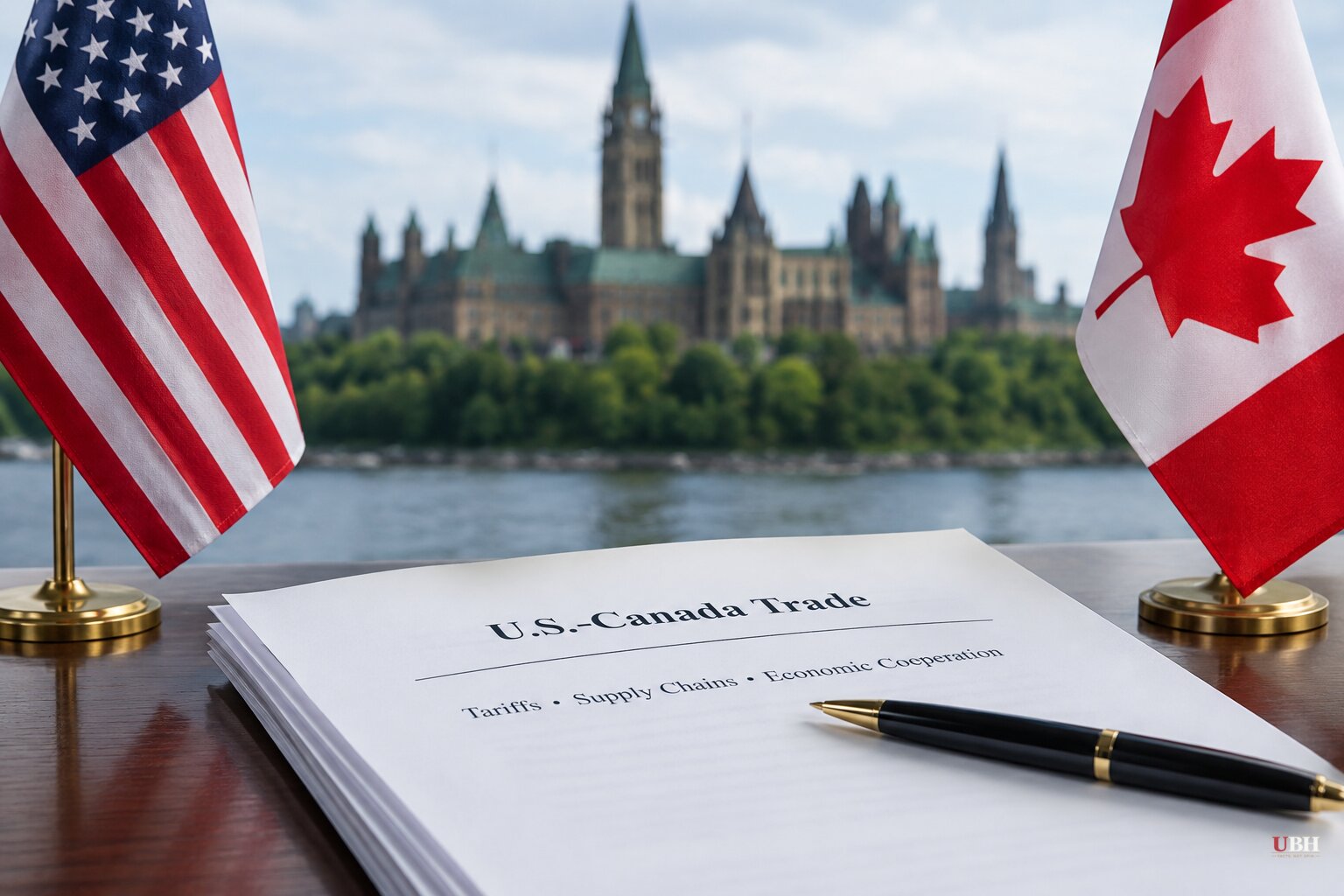
Since U.S.-Canada trade talks collapsed in August and both countries slapped tariffs on roughly $20 billion worth of each other's goods, the White House has spent the last few days insisting a deal is near. No agreement has been announced.
President Donald Trump told a rally in Port Huron, Michigan, on Sunday, Oct. 25, that a deal would be settled "pretty soon." "They're willing to give us anything at this moment," he said. Port Huron sits on the Canadian border and has been hit hard by the tariff fight.
He also repeated his argument that Canada ripped off the United States for years. On Monday in Mississippi he said Canada was "charging us massive tariffs" and had "treated us badly."
What the White House is saying
White House economic adviser Kevin Hassett went further on Fox News on Sunday. "I think it's very close to finally having a deal on that," he said, adding that talks were "gathering steam."
Hassett said Commerce Secretary Howard Lutnick had been speaking with Canadian counterparts throughout the week. He blamed Canadian elections, including an Alberta secession vote, for making earlier negotiations "impossible."
On Friday, Oct. 23, the White House exempted some Canadian goods, including plywood and agricultural machinery, from the steepest tariffs. The move followed a request from Sen. Susan Collins, a Maine Republican whose state has been disproportionately hurt by the trade war. Democrats are targeting her seat in the Nov. 3 midterms. Collins has said she will keep pushing for more tariff cuts and a broader agreement.
How the August talks fell apart
The tariffs imposed after the August breakdown cover goods ranging from hockey sticks to cement, with some rates as high as 50%. Canada responded with duties on an equivalent amount of American products. Trump then added another round of levies.
Before the collapse, the two sides appeared close to a deal that would cut U.S. auto tariffs from 25% to 15%, among other changes. iPolitics reported, citing two Canadian trade sources who were not authorized to speak publicly, that Canada later learned the Americans did not intend to apply the 15% rate to heavy-duty vehicles. One source told the outlet that was a major factor in derailing the talks. Canada exited, citing what it called unreasonable, last-minute American demands.
The same iPolitics reporting says some figures in the auto sector are now urging Canadian negotiators not to treat a higher rate on heavy-duty vehicles as a deal breaker. Ford's F-350 series, built in Oakville, Ont., is the example cited. Their argument is that a deal is needed to head off hefty new levies set to take effect Jan. 1.
Prime Minister Mark Carney has criticized the tariffs for raising costs and damaging cross-border industries. He has also signaled willingness to resume negotiations.
Trump weighs in on Canadian elections
On Tuesday, Oct. 27, Trump posted on Truth Social congratulating Paul St-Pierre Plamondon, whose Parti Québécois won Quebec's election about three weeks ago. The party holds 60 of 127 seats, four short of a majority. Trump linked an Irish Times article headlined "Separatists win Quebec provincial election in blow to Mark Carney."
He also congratulated B.C. Conservative premier-designate Lorne Doerkson on a "big victory," calling it a sign of conservatives "moving strong in Canada." Congratulating provincial leaders is unusual. Under longstanding practice, U.S. presidents and Canadian prime ministers publicly congratulate only their direct counterparts, CBC noted.
St-Pierre Plamondon wants a third independence referendum but has said it will not happen until Trump has left office.
Bloc Québécois Leader Yves-François Blanchet dismissed the president's message. "Actually Mr. Trump is unpredictable and not so meaningful of what he says," Blanchet said, adding that "there's no lost love between Quebecers and Mr. Trump." He said the comments would matter only if Trump wanted to talk about mutually cutting tariffs.
The Trump administration has also accused Canada of interfering in the U.S. midterms. That accusation is unproven in the public record, and the details of the claim are not laid out in the coverage so far.
The economic backdrop
The Bureau of Labor Statistics reported that consumer prices rose 3.7% annually in September, up from 3.4% in August. Gasoline jumped 9.1% in the month, and energy inflation reached 20.4% year over year as the Iran conflict disrupts global oil supplies.
Hassett called the economy "about the best economy we've ever seen," citing 3% to 4% growth. He said it would improve further if energy prices fall.
What comes next
The midterms are scheduled for Nov. 3. The new auto levies are set for Jan. 1. Whether Washington will apply the lower auto rate to heavy-duty vehicles, a major factor in derailing the August talks, is the open question that will decide whether Hassett's "very close" holds.
Sources used for this briefing
6 links from 6 independent newsrooms (syndicated copies of the same report count once)
These are the sources it draws on, linked so you can verify.


