
Unbiased headlines. Facts, not spin.
Every story is an unbiased news briefing written from 110+ sources across the spectrum — sources linked so you can verify it yourself.
 tech
Notable (6/10)
June 30, 2026 at 10:10 AM
tech
Notable (6/10)
June 30, 2026 at 10:10 AM
Wix-Owned Base44 Launches Its Own AI Model One Year After $80 Million Acquisition
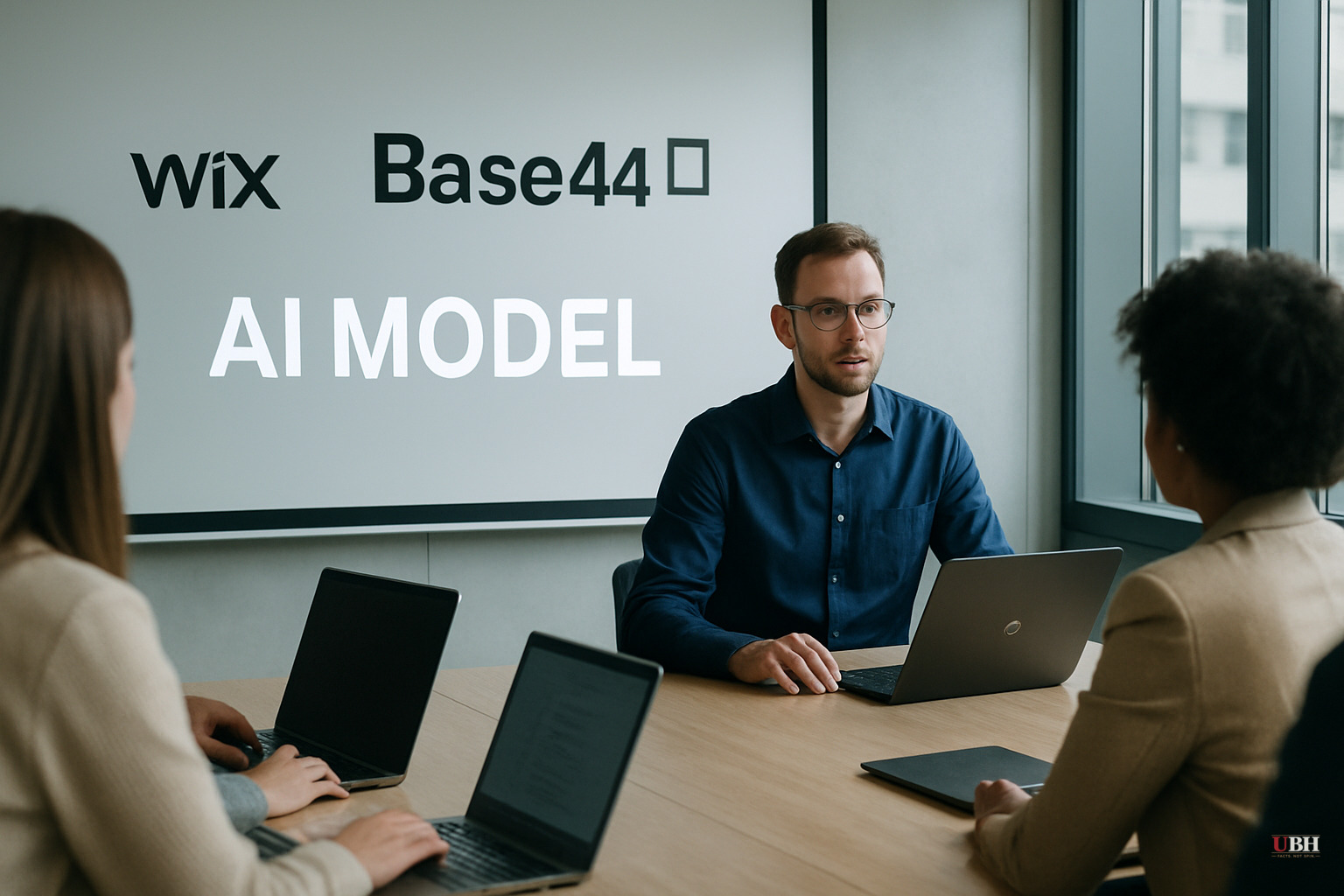
The $80 Million Startup That's Now Training Its Own AI
Wix paid $80 million for Base44 roughly a year ago. At the time, the Tel Aviv company was six months old, had eight employees, and had built a platform that lets users create apps through natural language prompts, a category now widely called "vibe coding."
One year later, Base44 is rolling out Base1, its own large language model trained on data generated from tens of millions of user interactions on the platform. According to founder Maor Shlomo, building and owning the model inside the full stack "allows us a lot more optimizations on latency, cost, and efficiency."
The Defensibility Problem
Every AI startup layered on top of OpenAI, Anthropic, or Google's models faces the same structural question: what stops the model provider from absorbing your use case and cutting you out?
Jonathan Userovici, a general partner at VC firm Headline, whose portfolio includes Mistral AI but not Base44, named the three pillars of defensibility for AI startups as data, distribution, and tech stack. Base44 is now actively building on all three, using its accumulated user interaction data to train a model that's purpose-built for app creation rather than general use.
Shlomo's bet is on specialization. "Models are progressing, but they'll stay very general in what they can do," he told TechCrunch. His argument is that a model trained specifically on app-building tasks will outperform a general frontier model on those tasks, even if the frontier model is technically more capable in the aggregate.
The Competition Is Bigger Than Other Vibe-Coding Startups
Swedish startup Lovable reached unicorn status in its Series A last summer and currently relies on external LLMs. Shlomo expects competitors with sufficient scale will eventually follow Base44's path and train their own models. Whether Lovable has the data volume to do that is an open question.
But Shlomo also flagged something more significant: the frontier labs themselves are moving into vibe coding. Claude Code, built by Anthropic, has become a direct competitor. Cursor, developed by Anysphere, and xAI, which owns Grok, are also well-resourced players building toward the same end product Base44 sells, with capital and integration possibilities that a startup acquisition can't easily match. These aren't just model providers anymore. They're building toward the same end product Base44 sells.
That creates a genuine tension. The data moat Base44 is building is real, but so is the development velocity of labs that have billions in capital and direct access to the underlying models.
The Counterargument Worth Taking Seriously
The most credible pushback against Base44's strategy comes from Userovici himself, the same VC who laid out the defensibility framework. He pointed to legal tech startup Harvey as a cautionary example. Harvey explored training its own model and ultimately abandoned the plan. The lesson Userovici draws is that applied AI companies shouldn't expect to become frontier labs, and some that have tried have found the cost and complexity not worth it.
Shlomo acknowledged that training your own model requires sufficient scale and data velocity. Not every startup is positioned to do it. Base44's claim is that its volume of real user interactions puts it past that threshold. That claim is plausible given the platform's growth, but Base1 is still in early rollout. Whether it actually outperforms frontier models on app-creation tasks is unproven as of June 30, 2026.
The Cost Pressure Driving the Whole Industry
Userovici offered a practical reason why the model-ownership question has become urgent beyond just defensibility: inference costs. Enterprise customers, he said, "don't necessarily see a return on investment when using the latest models for all use cases." Paying frontier-model pricing for every single user interaction adds up fast at scale, and customers are starting to push back.
That cost dynamic gives Base44 a concrete financial argument for owning its model, not just a strategic one. A purpose-built model optimized for app-generation tasks can be cheaper to run per query than a state-of-the-art general model, even if it's technically less powerful.
What Comes Next
Base1 is still rolling out and has not been independently benchmarked against frontier models on app-creation tasks. The genuine unresolved question is whether Base44's dataset, built from tens of millions of user interactions, is distinctive enough in quality and specificity to train a model that measurably outperforms Claude Code or similar tools on the tasks Base44's customers actually care about. Shlomo says yes. The market will have data on that within the next product cycle.
Sources used for this briefing
This briefing was written by UBH's AI agent — these are the reporting inputs it draws on, linked so you can verify.


