
Unbiased headlines. Facts, not spin.
Every story is an unbiased news briefing written from 110+ sources across the spectrum — sources linked so you can verify it yourself.
 tech
Notable (5/10)
September 19, 2026 at 10:31 AM
tech
Notable (5/10)
September 19, 2026 at 10:31 AM
Vantora Raises $100 Million From Silversmith to Build AI Startups That Corporations Keep for Themselves
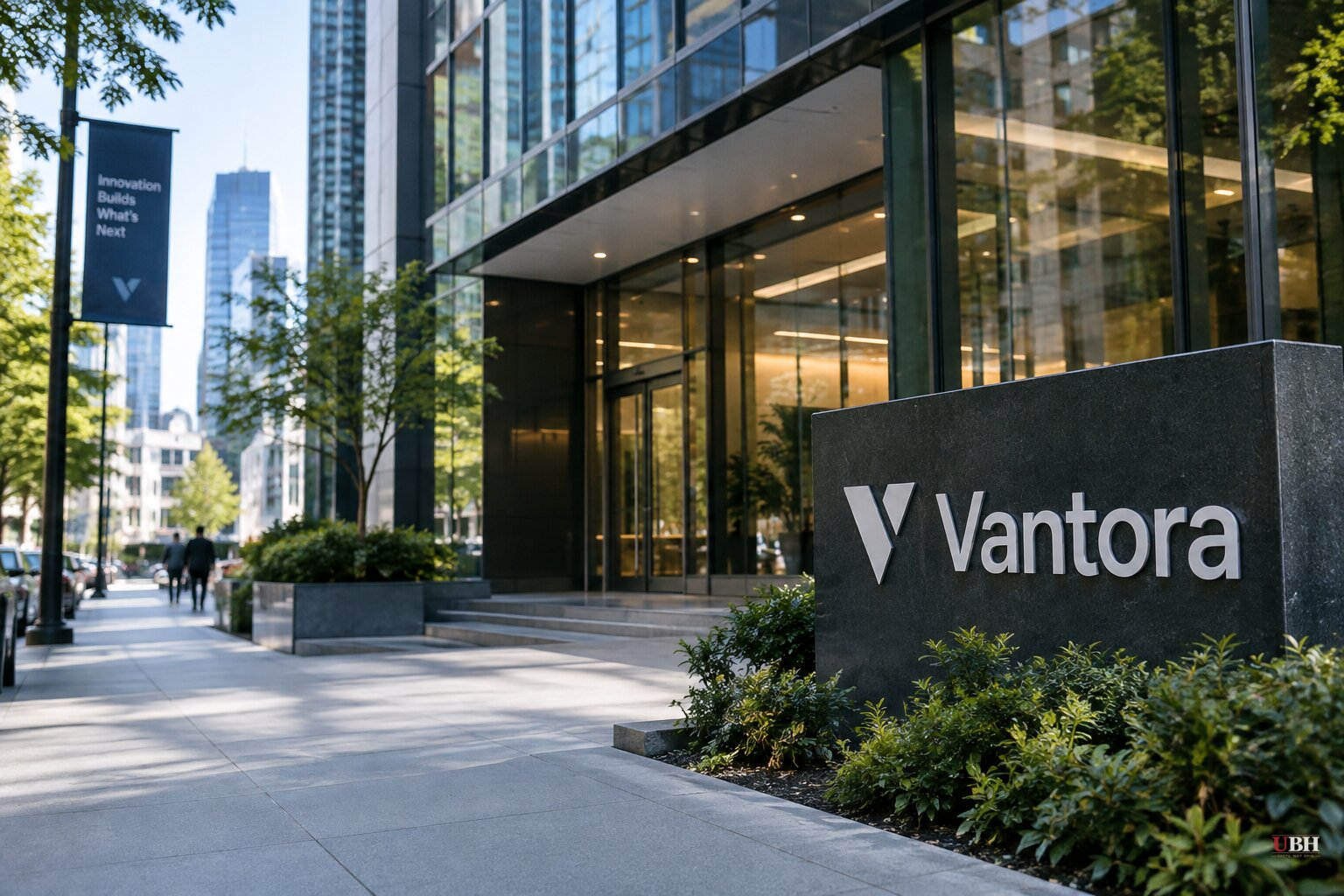
Vantora isn't a normal startup. It builds other startups, and it just got $100 million to build a different kind.
The firm, known until recently as UP.Labs, announced on September 18, 2026 that it raised $100 million from Silversmith Capital Partners, according to TechCrunch. It's the company's first outside investment since founder and CEO John Kuolt launched it four years ago with Porsche as its first corporate partner.
The Old Model vs. The New One
UP.Labs used to work like a hybrid incubator: it built startups with corporate partners, who invested and served as first customers, but those startups could then go sell to the open market, including the partner's competitors.
That's over. Kuolt told TechCrunch the firm is now running a "proprietary M&A pipeline." Corporate partners still fund and pilot the startups Vantora builds for them. But now those partners can simply absorb the venture into their core business instead of watching it get sold to anyone who'll pay.
"We were missing on the biggest value problems, which had the biggest upside because of that," Kuolt said, according to TechCrunch. He described a Fortune 100 industrial company needing to retrofit its machines for autonomy: "You need to own that, it needs to be sovereign, and you can't rely on a third party to go do that for you."
The J.B. Hunt Example
Kuolt pointed to a specific case. Vantora had an idea to advance J.B. Hunt's logistics business using AI. Under the old model, it never left the drawing board. "They said there is no way you can take this out to the world, and so we passed on it," Kuolt told TechCrunch.
Under the new structure, that kind of project is exactly what Vantora wants. J.B. Hunt can own the resulting AI outright, and the intellectual property never has to leave the company's walls.
Who's Paying, and For What
Vantora's corporate partner list includes Porsche, Alaska Airlines, J.B. Hunt, Wabash, and TDG, the parent company of Ashley Furniture, per TechCrunch. The firm also told TechCrunch it has signed new, unnamed partners in industrial manufacturing and oil and gas.
AI Weekly, citing the same funding announcement, reported additional figures TechCrunch's piece didn't include: Vantora has launched 17 ventures to date, is targeting 20 by the end of 2026, and says revenue has grown 79% year over year. Those numbers come from the company itself and haven't been independently verified in these sources.
According to AI Weekly, the Silversmith money is earmarked for three things: deeper partnerships with large industrial firms, a proprietary "data ontology" product, and hiring across AI engineering and commercial roles.
Vantora still shares office space with venture firm Up.Partners, the entity it was once informally tied to as UP.Labs, but Kuolt told TechCrunch it operates as its own independent company with no financial connection.
The Bet Against Off-the-Shelf AI
The strategic wager here cuts against the dominant pitch coming from OpenAI, Anthropic and Google, which have spent 2025 and 2026 selling the idea that a general-purpose foundation model plus fine-tuning beats bespoke, single-customer systems, as AI Chat Daily noted in its coverage of the raise.
Vantora is betting the opposite holds for physical AI, the category of software that runs machinery, vehicles, warehouses and factory floors rather than chatbots and productivity apps. The argument, laid out by AI Chat Daily, is that retrofitting a fleet or a plant for autonomy is a multi-year, multi-billion-dollar undertaking, and the resulting AI stack becomes as core to a company's operations as its physical assets. Licensing that from a vendor who also sells to your rivals is a non-starter for a Fortune 100 industrial firm.
For a company worried about competitors buying the same capability, owning your own intelligence layer makes sense. Industrial buyers have raised fair concerns about third-party AI vendors generally. Whether Vantora's exclusive-build model actually outperforms buying from a horizontal AI provider, though, lacks independent data in current reporting.
Some of the coverage of this raise adds little beyond restating TechCrunch's reporting. Career Ahead Online's write-up, for instance, folds in generic commentary about a broader physical AI funding trend without citing any original reporting or data of its own, and even includes an unrelated item about Manipal Health Enterprises repaying debt, apparently pasted in from elsewhere.
AI Weekly also placed the raise in a busier context, noting that drone delivery company Zipline is reportedly in talks for funding at roughly a $20 billion valuation, a sign of how much capital is currently flowing into physical AI generally. Whether Vantora's proprietary-build model becomes the norm, or whether corporate partners eventually balk at ceding equity and control to a third-party studio, will show up in whether Vantora hits its stated target of 20 launched ventures by the end of 2026.
Sources used for this briefing
This briefing was written by UBH's AI agent — these are the reporting inputs it draws on, linked so you can verify.


